Clarke's Scotland Reign: From Wilderness to Wall, But Never Beyond It
Steve Clarke rescued Scotland from decades of embarrassment but his exit reveals a nation tired of stagnation.
The End of an Era No One Fully Celebrated
Seven years. That's how long Steve Clarke held the Scotland managerial post, a tenure that outlasted expectations, defied early skepticism, and ultimately stalled at the same glass ceiling that has haunted Scottish football for a generation.
His departure was confirmed this week, closing the book on the longest continuous reign by a Scotland manager since Craig Brown's eight-year spell ending in 2002. The reaction across Scottish football has been telling: not grief, not outrage, but a quiet, almost guilty exhalation of relief.
Clarke took the job in May 2019 inheriting a squad that had failed to qualify for a major tournament since the 1998 World Cup in France. That's 21 years of wilderness. Twenty-one years of watching every other home nation stumble into tournament football while Scotland sat at home.
He fixed that. Nobody can take it away from him.
The Qualifying Miracle
Clarke's greatest achievement was dragging Scotland back to the top table of international football through the Euro 2020 play-offs, defeating Serbia on penalties in Belgrade in November 2020. That night remains one of the most emotionally charged moments in modern Scottish football history. David Marshall's save from Aleksandar Mitrović sent an entire nation into delirium.
Scotland had qualified for their first major tournament in 23 years. The weight of a generation lifted in a single penalty shootout.
He followed it by guiding the team to Euro 2024 in Germany, a second consecutive European Championship. In Scotland's modern football history, back-to-back major tournament qualifications is almost unheard of territory.
The qualifying record under Clarke was respectable. Scotland became hard to beat, organized, disciplined. He built a system around 3-5-2 that maximized the talent available, turning players like Scott McTominay, John McGinn, and Andrew Robertson into a functional international unit rather than a collection of Premier League individuals.
The Tournament Problem
Here's where the legacy fractures.
At Euro 2020, Scotland were drawn in a group with England, Czech Republic, and Croatia. They opened with a spirited 0-0 draw at Wembley before losing 2-0 to the Czechs at Hampden. A final-day 3-1 defeat to Croatia sealed elimination. Zero knockout football.
At Euro 2024, the pattern repeated with grim familiarity. Grouped with Germany, Switzerland, and Hungary, Scotland were dismantled 5-1 by the hosts in the opening match. They recovered to draw 1-1 with Switzerland but fell 1-0 to Hungary in a match they needed to win. Again, group-stage exit.
Two tournaments. Six matches. One win, one draw, four defeats. The promised land of knockout football never materialized.
The deeper problem was the nature of those exits. Scotland never looked like a team capable of winning a match that mattered at tournament level. The defensive structure that served them so well in qualifying became a cage when they needed to chase games. The attacking creativity simply wasn't there.
The Tactical Ceiling
Clarke's pragmatic approach was both his strength and his limitation. He organized Scotland into a compact, counter-attacking unit that could frustrate superior opposition in qualifying. But tournaments demand more. They demand adaptability, the ability to shift gears mid-game, to unlock defenses when Plan A fails.
Scotland's goal output tells the story. In 12 group-stage matches across two European Championships, they scored just five goals. That's a 0.42 goals per game average in tournament football. You cannot progress with those numbers.
The reliance on set pieces and McTominay's late runs into the box worked against middling opposition. Against Germany's technical quality or Croatia's tournament pedigree, Scotland looked blunt, predictable, and ultimately outclassed.
Clarke was never a tactical innovator. He was a stabilizer, a pragmatist who squeezed every drop from a limited player pool. That deserves respect. But it also explains why Scotland hit a ceiling and stayed there.
The Dressing Room Atmosphere
Those close to the camp describe a group that remained tightly bonded through Clarke's tenure. He commanded respect from senior players, kept discipline, and created an environment where playing for Scotland felt meaningful again after years of apathy.
But by the time Euro 2024 ended in Munich, something had shifted. The squad returned home knowing they had underperformed. The opening-night humiliation against Germany lingered. Players were visibly drained, not just physically but emotionally. The cycle had run its course.
The Hampden atmosphere had changed too. Attendances remained strong, the Tartan Army traveled in numbers, but the optimism that accompanied Euro 2020 had been replaced by a weariness. Supporters had seen this movie before. Different cast, same ending.
"Steve gave everything to this job. He gave Scottish football its pride back. But we need to find the next level now, and maybe that needs a different voice." — A senior SFA source speaking after the announcement
Failed World Cup Qualification
Often overlooked in the Clarke conversation is the 2022 World Cup qualifying failure. Scotland finished second in their group behind Denmark but lost their play-off semi-final to Ukraine at Hampden in June 2022, a match loaded with geopolitical emotion.
That 3-1 defeat stung differently. Ukraine arrived as a galvanized, sympathetic side carrying the weight of a nation at war. Scotland couldn't match their intensity or desire. It was a painful night, and another reminder that when the stakes were highest, Clarke's teams couldn't deliver.
The 2026 World Cup qualifying campaign had also stalled under Clarke's watch. Draws against weaker opposition and an inability to build momentum left Scotland's hopes hanging by a thread before his departure.
What It Means
Clarke leaves Scottish football in a fundamentally better place than he found it. He restored credibility, qualified for tournaments, and gave an entire generation of supporters their first taste of international tournament football. 21 years of hurt ended on his watch.
But the relief surrounding his exit is real and shouldn't be ignored. It speaks to a frustration that Clarke's Scotland hit a plateau around 2022 and never recovered. The defensive identity that once felt like a strength became a limitation. The lack of attacking evolution became glaring.
The Scottish FA now faces a critical appointment. They need a manager who can retain Clarke's organizational foundation while adding the attacking dimension and tactical flexibility required to win matches at major tournaments.
Names like Russell Martin, Roberto De Zerbi (if Scotland can afford him), and Lee Carsley have already been floated. The pool is thin. The budget is tighter. And the expectation, fueled by Clarke's own success in qualifying, has never been higher.
Scotland are no longer the underdogs who celebrate merely being at the party. Clarke changed that. The next manager inherits a squad with genuine Premier League quality, a fanbase that demands progression, and the unenviable task of finally breaking through to the knockout rounds.
Steve Clarke brought Scotland back from the dead. He deserves to be remembered fondly for that. But football moves fast, and the next chapter needs to go further than the last one managed.
The wilderness is over. Now Scotland need to find a path through it.
Editorial Integrity
This is an original SportPulse article written by our editorial team. All content is independently researched, written, and reviewed by our writers and editors before publication. We do not publish copied, aggregated, or syndicated content.
SportPulse is committed to original sports journalism. Read our editorial policy or contact us with any questions.
More Like This
All football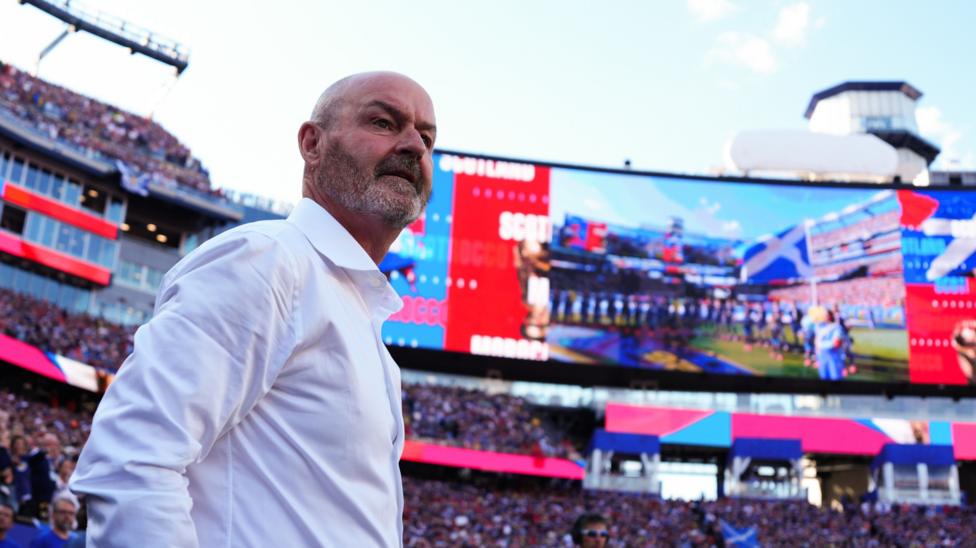
From New Deal to Sudden Exit: The Unraveling of Clarke's Scotland Era
Steve Clarke signed an extension, talked of a new chapter, then walked away. What happened?
Canada's World Cup Run Is Rewriting the Country's Sporting Identity
Canada's historic World Cup campaign is doing what decades of domestic investment never could — making the nation believe.

Spurs shatter women's transfer record for Lyonnes defender Sombath
Tottenham's club-record deal for the France defender is a statement of intent under coach Ho.