Gvardiol's Agony: VAR Denies Croatia in Stoppage-Time Heartbreak
A marginal offside call erased Gvardiol's stoppage-time leveller, sending Portugal through as Croatia's World Cup run ended in cruel fashion.
The Cruelest Margins
There are defeats that sting, and then there are exits that leave a generation staring at the ceiling wondering what might have been. Croatia's elimination from the World Cup at the hands of Portugal in Toronto belongs firmly in the latter category. Josko Gvardiol thought he had written himself into folklore with a stoppage-time header that would have dragged this knockout tie level, only for VAR to intervene with the kind of forensic precision that leaves no room for argument but every room for anguish.
The lines were drawn. The flag went up. The screen inside BMO Field told the story. Gvardiol had drifted a fraction too far beyond the last Portugal defender in the moment the ball was delivered, and the technology rendered its verdict without sentiment. Croatia's bench erupted in protest before collapsing into resignation. Portugal's defenders exhaled. The final whistle followed shortly after, and with it, the end of another chapter in Croatia's remarkable modern World Cup story.
Tactical Foundations: How Portugal Controlled the Shape
From the opening exchanges, it was clear that Roberto Martinez had prepared a game plan built around denying Croatia the central corridors they typically exploit. Portugal deployed a disciplined mid-block, sitting in a compact 4-4-2 shape out of possession that morphed into a 3-2-5 when building through the thirds. The wing-backs tucked inside when defending, ensuring that the half-spaces where Croatia's midfield trio thrive were congested and inhospitable.
This was not the expansive, possession-hungry Portugal of previous tournament iterations. Martinez's side were content to cede territory in non-threatening areas, inviting Croatia wide before compressing the pitch laterally once the ball entered the flanks. It was a calculated gamble: let Croatia have the ball where it cannot hurt you, and strike in transition when their defensive shape is stretched.
The approach bore fruit. Croatia, so accustomed to dictating tempo through midfield combinations, found themselves funnelled into cul-de-sacs. Their positional rotations, usually so fluid, were met with bodies in the right places at the right times. Portugal's defensive discipline was not glamorous, but it was ruthlessly effective. Cristiano Ronaldo equalized from the penalty spot, leveling the contest and setting the stage for the dramatic finale.
Croatia's Late Tactical Shift
The match's turning point did not come from a substitution or a formation tweak in the traditional sense. It came from a change in attitude. As the game entered its final phase, Croatia abandoned the patient build-up that had been suffocated for much of the contest and began committing numbers forward with an urgency that bordered on desperation but carried tactical intelligence.
Zlatko Dalic pushed his full-backs higher, essentially converting his defensive line into a back three with the ball, and instructed his centre-backs to step into midfield positions to create overloads. Gvardiol, operating in that advanced role from deep, became the focal point of Croatia's aerial threat. His movement across the back line was designed to exploit the small windows that open when a defending team is sitting deep and protecting a lead.
The Tactical Shift
The decisive moment was not a moment of individual brilliance but a product of positional adjustment. Croatia's delivery into the box came from a rehearsed wide position, and Gvardiol's run was timed to perfection, arriving at the near post with the kind of explosive movement that had troubled Portugal's centre-backs all evening. He connected cleanly. The net bulged. For approximately ninety seconds, it appeared that Dalic's gamble had paid off.
Then came the freeze frame. The technology showed what the naked eye could not: Gvardiol's shoulder, perhaps his boot, had strayed into offside territory by the narrowest of margins. In a tournament defined by fine margins, this was the finest of them all. The goal was chalked off, and with it, Croatia's last realistic chance of forcing extra time evaporated.
The VAR Debate: Precision vs Spirit
Once again, the conversation around VAR dominated the post-match discourse. The technology functioned exactly as designed: it identified an infringement that the on-field officials missed and corrected the decision. In purely procedural terms, the system worked.
But football is not played in procedural terms. The offside was marginal enough that it had zero impact on the actual outcome of the play. Gvardiol's position did not give him an unfair advantage in any meaningful sporting sense. He did not gain a yard on his marker. He did not wrongside the defence. He was, by the slimmest of technicalities, offside.
This is the tension that VAR continues to generate. The spirit of the offside law was written to prevent players from goal-hanging, from gaining clear and obvious advantages by stationing themselves behind defensive lines. Applying the law to a situation where a player's body part is millimetres beyond the line feels like a triumph of technology over sporting logic. Yet until the laws are amended, or a tolerance threshold is introduced, these decisions will continue to decide knockout matches.
"We gave everything in the last fifteen minutes. The players showed incredible character to push for the equaliser. The decision is what it is. We have to accept it, but it does not make it any easier." — Zlatko Dalic, post-match
Portugal's Defensive Maturity
Credit must go to Portugal for the way they managed the closing stages. Martinez's side showed a level of defensive composure that has not always been associated with Portuguese sides in major tournaments. The centre-back pairing was dominant in aerial duels, winning the majority of the contested headers that Croatia launched into the box in the final quarter of the match.
Their game management was equally impressive. Portugal slowed the tempo when they had the ball, forcing Croatia to chase and expend energy in pressing sequences that yielded little. Every throw-in taken slowly, every goal kick deliberated, every substitution timed to break rhythm: it was the work of a team that understood how to protect a lead under intense pressure.
This defensive resilience will be essential as Portugal advance deeper into the knockout rounds. The ability to absorb pressure and remain structurally sound in the dying minutes of a match is the hallmark of teams that go on to win tournaments. Martinez will know, however, that his side cannot rely on marginal offside calls to bail them out in every round.
Croatia's Tournament Legacy
For Croatia, this defeat marks what may be the closing of a golden window. Their recent World Cup record has been nothing short of extraordinary for a nation of fewer than four million people. A runners-up finish and a third-place finish in consecutive tournaments established them as one of the most overachieving football nations in history, but the core that powered those runs is aging.
Gvardiol represents the bridge between generations. At his age, he should have many more tournaments ahead of him, but the supporting cast around him will undergo significant turnover. The midfield engine that drove Croatia's deep runs will need to be rebuilt, and Dalic, should he continue, faces the challenge of blending emerging talent with the remnants of a squad that consistently punched above its weight.
The heartbreak in Toronto will linger. A goal that stood for less than two minutes, a moment of joy that became a moment of devastation, a match that was there for the taking in stoppage time. These are the margins that separate glory from grief at World Cup knockout stage football.
Looking Ahead
Portugal march on, and the tactical questions for Martinez become more complex with each round. Can this defensively disciplined approach hold against opponents with greater creative firepower? Will the reliance on transition football and set-piece threat be enough to break down the compact defences that later rounds invariably produce?
For now, Portugal will take the result and the performance. Martinez has built a side that is difficult to beat, that manages games intelligently, and that possesses the kind of individual quality in forward areas to punish any defensive lapse. The victory was ultimately sealed by Gonçalo Ramos, who was set up by a crucial cross from Rafael Leão, highlighting the depth of attacking talent at Portugal's disposal. Whether that combination is sufficient to lift the trophy remains the defining question of their tournament. The match was billed as a last dance for two icons; Luka Modrić, at 40, bade farewell to what will surely be his final World Cup, while Cristiano Ronaldo, after scoring and being substituted, plays on.
Croatia, meanwhile, begin the long process of reflection and renewal. The pain of this exit will fade, but the questions it raises about the future shape of their national team will persist. In Gvardiol, they have a player capable of leading the next generation. Whether the pieces around him can be assembled quickly enough to compete at the next European Championship is the challenge that awaits.
Updated: 2026-07-04 — Added details on Ramos' winning goal from Leão's cross, Ronaldo's penalty and substitution, and Modrić's likely final World Cup.
Editorial Integrity
This is an original SportPulse article written by our editorial team. All content is independently researched, written, and reviewed by our writers and editors before publication. We do not publish copied, aggregated, or syndicated content.
SportPulse is committed to original sports journalism. Read our editorial policy or contact us with any questions.
More Like This
All football
Ancelotti's Cold Calculus: Brazil's Patience Pays Off Against Japan
Carlo Ancelotti kept his nerve as Brazil fought back to sink Japan 2-1, revealing a tactical patience that could define their World Cup run.
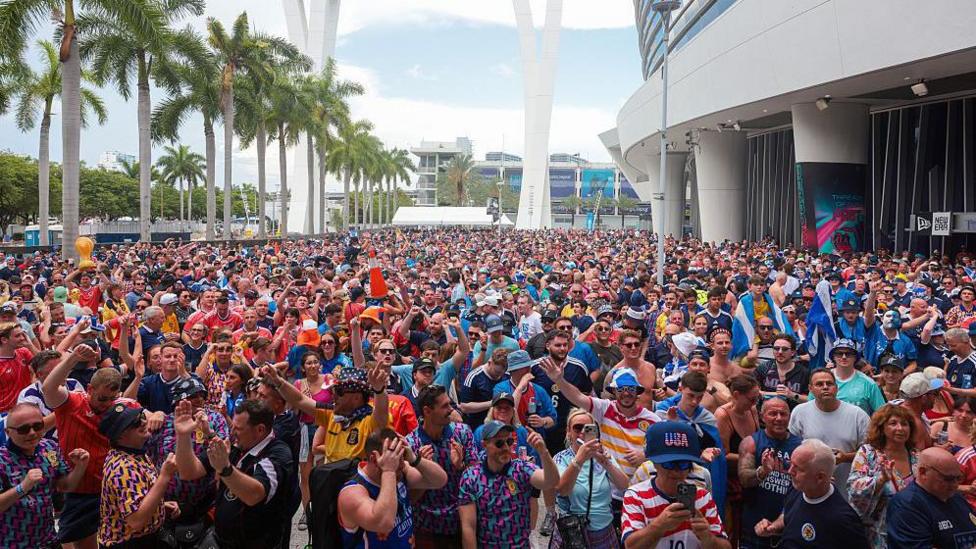
Tartan Army Takes America: Scotland Fans Winning Hearts at World Cup 2026
The Tartan Army's charm offensive across America has become one of the World Cup's best storylines off the pitch.
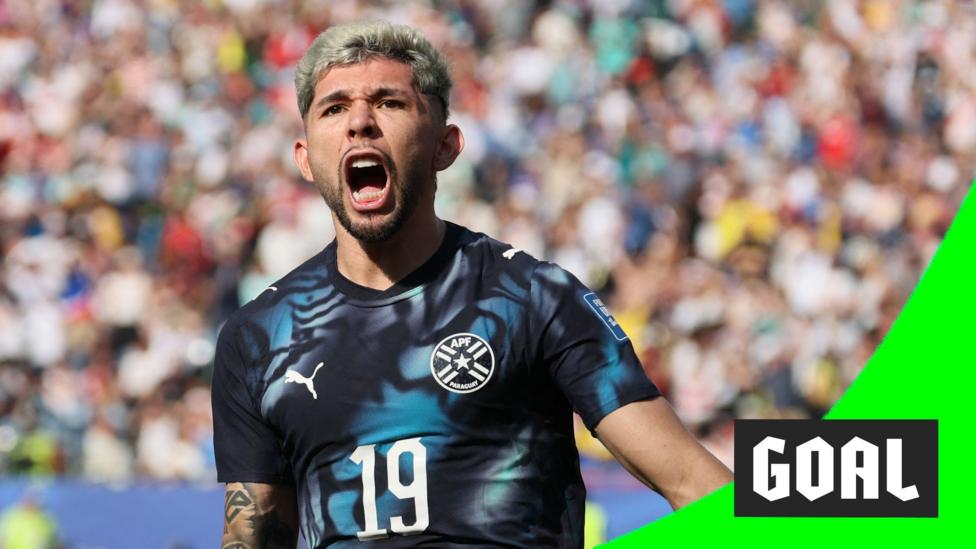
Enciso Stuns Germany as Paraguay Grab Shock Round-of-32 Lead
Julio Enciso's strike sends shockwaves through the tournament as underdog Paraguay lead mighty Germany in a knockout thriller.