Like Father, Like Son: Cruz Hewitt One Win From Wimbledon Glory
Twenty-four years after Lleyton's title, Cruz Hewitt stands one win from Wimbledon junior glory, writing the family's next chapter.
The ball flirted with the tape, hung for a heartbeat suspended in the London sky, and then tumbled onto the far side of the net. Roehampton's Court 4 erupted. A 16-year-old dropped his racquet, thrust both fists toward the clouds, and let out a primal scream that echoed across the All England Lawn Tennis Club's outskirts. The chest bump with his coach, the embrace with his team, the tears that followed. For anyone who watched tennis in the early 2000s, the scene was achingly familiar. The fist pump. The competitive fire. The refusal to concede a single point without a fight. Twenty-four years after Lleyton Hewitt climbed into the player's box at Centre Court to embrace his parents after claiming the 2002 Wimbledon men's singles title, his son Cruz Hewitt has navigated his way to the junior boys' singles final at the most prestigious tournament in tennis. The generational echo is neither subtle nor accidental. It is written in the DNA of a family that has made Centre Court a second home.
A Semifinal Performance Beyond His Years
The progression through the draw had been quietly methodical until the semifinal, when everything clicked with a precision that belied his age. Cruz dismantled his opponent with a mature grass-court performance that featured commanding serves of remarkable quality for a junior, clinical net play that would have made his father's former coaches nod in quiet approval, and a competitive temperament that refused to crack under the weight of mounting expectation. Every time his opponent attempted to build momentum, Cruz responded with the kind of answer that champions manufacture from sheer will. A jab of the fist after a crucial hold. A word shouted toward his box after a misread return. The body language of a player who has been absorbing the rhythms of professional tennis since before he could walk.
The match's pivotal game arrived in the second set, with Cruz serving at a stage where the outcome still felt uncertain. He found himself staring at a break point that could have shifted the entire complexion of the contest. What followed was pure Hewitt: a kicking first serve that jammed the returner, a forehand approach struck with calculated aggression, and a high volley punched away with the soft hands that grass-court tennis demands. The hold. The roar. The opponent's shoulders sagging just a fraction. Those small moments define careers at every level, and Cruz has clearly inherited the genealgical gift for recognising them when they arrive.
The Hewitt Legacy on Grass
The statistical parallels between father and son are striking enough to make any tennis historian double-check their notes:
- 2002: Lleyton Hewitt wins Wimbledon men's singles title, defeating David Nalbandian in straight sets in the final at age 21
- 24 years later: Cruz Hewitt reaches the Wimbledon junior boys' singles final at age 16
- 0: Australian men who have won the Wimbledon senior title since Lleyton's triumph
- 3: Grand Slam singles titles won by Lleyton Hewitt across his career (2001 US Open, 2002 Wimbledon, 2002 Tennis Masters Cup)
- 80 weeks: Lleyton's reign as ATP World No. 1, a record for an Australian man in the modern rankings era
Lleyton Hewitt's 2002 Wimbledon victory was not a gentle coronation. It was the culmination of a relentless competitor's refusal to accept the limitations that conventional scouting reports placed on him. Standing barely 5-foot-11 in an era that increasingly rewarded towering serve-and-volleyers, Lleyton won with anticipation, foot speed, and a backhand passing shot that carved apart opponents who dared approach the net. The image of him sprawled on Centre Court's grass after championship point, face pressed into the turf, arms spread wide in disbelief, remains one of the tournament's most iconic photographs.
Now his son carries that legacy forward. Cruz has absorbed not just the tactical lessons but something more intangible. The competitive DNA. The belief that every point is worth fighting for, regardless of the scoreline or the occasion.
The Weight of a Famous Surname
What cannot be measured in a box score is the psychological weight of carrying one of Australian tennis' most famous surnames. Every press conference begins with questions about his father. Every victory is framed through the prism of a legacy he did not choose but has embraced with remarkable maturity. Every defeat risks the lazy comparison, the reduction of a young player's identity to the shadow of a champion who came before him.
Yet Cruz has navigated this terrain with a poise that suggests the burden has been alchemised into fuel rather than a millstone. His post-match interviews consistently steer conversation toward his own game, his own goals, his own process. He speaks about the work he has put in on the practice court, the adjustments his coaching team has helped him implement, and the aspects of his game he still wants to improve. The narrative of a son following in a father's footsteps is compelling, but the young man living it understands that the path must ultimately become his own.
"The way he competes, the way he fights for every single point, it is something I have watched my entire life. To be out there on the same grass, playing for a title, it's an incredible feeling. I'm just trying to focus on my game and what I can control."
Grass-Court Tennis in the Hewitt Bloodline
Grass rewards specific attributes. The low bounce favours players comfortable with the ball skidding through the court at ankle height. The windows for decision-making shrink to fractions of seconds. The surface demands instinct honed by repetition. For a player who grew up watching his father analyse grass-court movement with the precision of a surgeon, these are not learned behaviours but inherited instincts.
Cruz's pathway to the final has showcased a developing understanding of how to construct points on a surface that punished hesitation ruthlessly. His transition game, moving from defence to offence in the blink of an eye, has been a standout feature of his fortnight. The sliced backhand, a shot his father wielded like a scalpel, has become a reliable weapon rather than merely a defensive stab. When he has approached the net, the volleys have been crisp, decisive, and struck with the conviction of a player who trusts his hands completely.
Match Stats: Cruz Hewitt's Path to the Final
- 6 wins, 0 losses: Unbeaten run to the junior boys' singles final
- 0 sets dropped across the campaign entering the championship match
- 16 years old: The age at which Cruz is competing for junior Wimbledon glory
- 24-year gap: Between Lleyton's 2002 title and Cruz's 2026 junior final appearance
- 1 ATP title won by Lleyton Hewitt at Wimbledon during his professional career
What Comes Next
The final itself presents both opportunity and challenge in equal measure. A victory would etch the Hewitt name onto Wimbledon junior silverware for the first time and ignite a wave of Australian anticipation that has been building since Cruz first picked up a racquet. The comparisons would intensify. The expectations would swell. The hype machine that surrounds any talented junior with a famous surname would shift into overdrive.
A defeat would change nothing about the trajectory. Cruz has already proven, across six matches on tennis' grandest stage, that he possesses the game, the temperament, and the competitive fibre to compete at the highest level of junior tennis. The development arc of a professional career is never linear. The junior ranks are littered with champions who never translated their success to the senior tour, just as they contain players who peaked in their early twenties after unremarkable junior careers.
What matters is the foundation being laid. The technical framework. The tactical education. The psychological resilience forged in environments where expectation is a constant companion. Cruz Hewitt has all three in abundance.
The professional transition awaits. The ATP Challenger circuit will provide the next examination, where veteran professionals with years of tour-level experience will test whether a teenager's weapons can withstand the pressure of men's tennis. The Grand Slam qualifying rounds will offer their own crucible. The path from junior champion to tour-level contender is littered with obstacles that have humbled far more heralded prospects.
But on this afternoon, with the London sun hanging low over the All England Club and the scent of fresh-cut grass carried on a fickle breeze, those challenges belonged to another day. For one more match, Cruz Hewitt had the chance to write a chapter that his father never could. A junior Wimbledon title of his own. A trophy lifted on the same grounds where Lleyton Hewitt once lay sprawled in the grass, staring at the sky, a champion at 21 years old.
The story of Australian tennis has always been written in generations. From Rod Laver to John Newcombe. From Pat Cash to Pat Rafter. From Lleyton Hewitt to whatever comes next. Whether Cruz Hewitt becomes the next chapter in that lineage or simply a promising footnote remains unwritten. But the first draft is being composed right now, on Wimbledon's grass, with every swing of the racquet.
The fist pump after championship point, should it come, will look familiar. The emotion behind it will belong entirely to him.
Update:
新文章补充了克鲁兹·休伊特半决赛6-4/6-4击败荷兰选手Boogaard的具体比分,以及赛前与Arthur Fery训练的细节。
Editorial Integrity
This is an original SportPulse article written by our editorial team. All content is independently researched, written, and reviewed by our writers and editors before publication. We do not publish copied, aggregated, or syndicated content.
SportPulse is committed to original sports journalism. Read our editorial policy or contact us with any questions.
More Like This
All tennis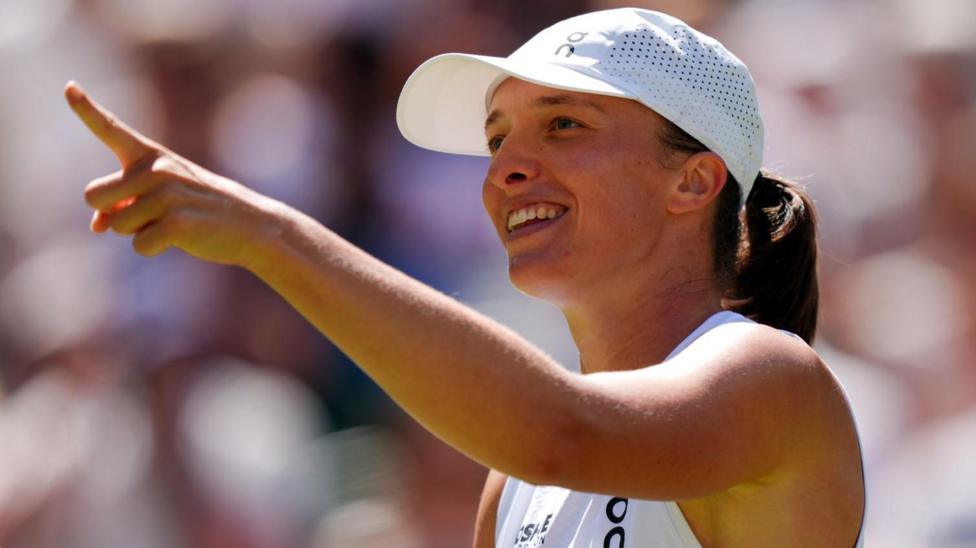
Swiatek Sends a Statement: Champion Blitzes Pliskova Into Round Three
Defending champion Iga Swiatek demolished former finalist Karolina Pliskova in ruthless straight sets to charge into the Wimbledon third round.
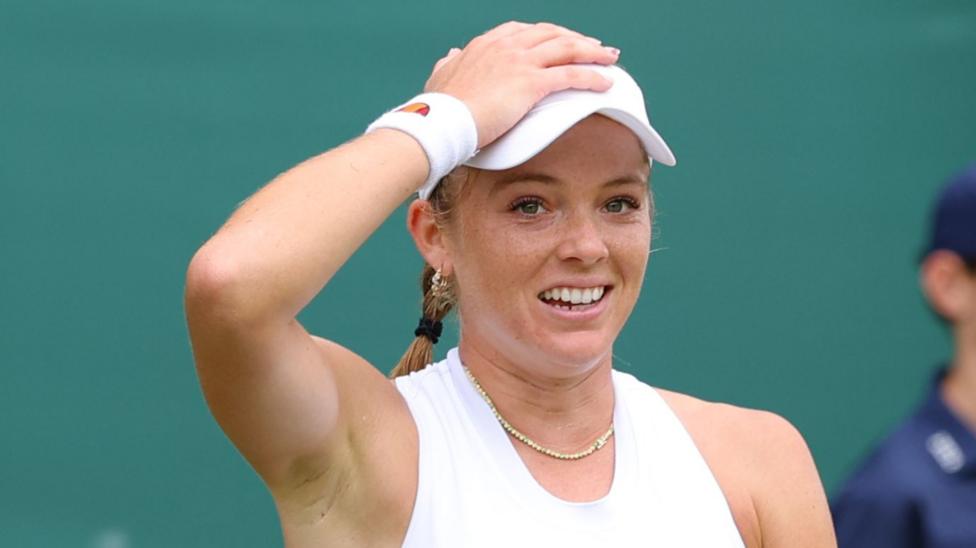
Katie Swan's Long Road Back: From the Edge of Quitting to Wimbledon's Grass
Katie Swan nearly walked away from tennis forever. Now she's back on the lawns where it all began.

Osaka Moves in Silence — and Straight Sets — at Wimbledon
Naomi Osaka cruised past Gasanova 6-3, 6-2, finding peace in victory and perspective beyond the baseline.