Cuba's Independent Press Was a Football Club Takeover in Disguise
A small team's fight for editorial independence mirrors the rebel factions challenging football's establishment.
The Newsroom Coup: A Tactical Playbook
Every great football uprising begins with a shared glance, a whispered plan on the training pitch. For the young writers at Havana's OnCuba magazine in 2014, their training ground was a cluttered balcony with sea views, their resource disadvantage a crippling lack of computers. Their insurgency wasn't plotted in a war room, but over beers, fueled by a raw, collective ambition: to stage a newsroom coup. Their target was publisher Hugo Cancio. Their prize was the infrastructure itself—the giant office, the scarce digital access, the tenuous connections. They didn't want to destroy the club; they wanted to take it over and install their own philosophy. This is the universal language of football's rebel factions, from the Boot Room revolution at Liverpool to the youth graduate mutiny at Ajax.
The parallels are striking. OnCuba functioned as an established first-team, with its entrenched hierarchy and resource allocation. The young university friends, granted mere "contributing roles," were the academy prospects. They weren't on the official roster, but they lived at the training ground. Their dream wasn't just to play; it was to fundamentally reshape the team's identity from the inside out. It's the same impulse that drives a generation of La Masia graduates to demand tactical tweaks, or a cohort of young Bundesliga coaches to challenge a club's rigid 4-4-2. The goal was cultural ownership.
The Formation: Shared Resources as a Tactical Flaw
The operational reality at OnCuba reveals a system ripe for disruption. The policy where only editors received personal computers created a bottleneck analogous to a football club's flawed transfer policy, hoarding resources for the established stars while crippling the development of the pipeline. The hour-long wait for shared equipment was dead time, tactical inertia. It stifled the rapid, collaborative iteration that defines modern creative output, much like a club's failure to invest in data analysis or youth scouting slows its evolution on the pitch.
This resource scarcity forged the group's identity. Their constant presence in the newsroom, their shared struggles with access, bonded them into a cohesive unit with a unified tactical vision. They were a counter-culture in waiting, a B-team operating with A-team ambition. They studied the existing system not to replicate it, but to identify its weaknesses—the points where pressure could be applied, the assets that could be repurposed for a new style of play.
Verdict: The foundation of any successful takeover is a core group with shared grievances and a tactical blueprint. OnCuba's young writers had both. Their disadvantage in resources became the catalyst for a unified strategic objective, mirroring the way financial disparity can, paradoxically, solidify a smaller club's identity.
The State as the Opponent: A Different Kind of Defense
But the story takes a turn that diverges sharply from a simple club power struggle. In football, the opponent is clear: the rival team, the federation, the financial fair play regulators. For the OnCuba insurgents, the ultimate opponent was the state itself, an entity with omnipresent defensive capabilities far beyond any tactical analyst. When they finally launched their independent venture, the response wasn't a boardroom negotiation. It was isolation, monitoring, and interrogation.
This introduces a layer of psychological warfare absent from the sporting analogy. A young midfielder defying his manager might face the bench. A journalist defying the state security apparatus faces a complete dismantling of their social and professional existence. The state's defense is not zonal marking but total surveillance. Its press is not a high line but a suffocating, omnipresent pressure designed to force errors in judgment and collapse any organizational shape.
The authors' description of being watched, of conversations becoming fraught with implied meaning, is the ultimate pressing trap. There is no safe space to turn, no outlet pass. The system aims to force the ball—their work and their very lives—into a place where it can be seized. This transforms the narrative from one of creative entrepreneurship into one of survival. The stakes escalate from editorial independence to personal freedom.
The Bottom Line: The conflict exposes the fundamental difference between challenging a sporting institution and challenging a political one. In sport, the rules are codified, if sometimes bent. In this arena, the defense writes the rules in real-time and employs tactics that would result in immediate disqualification in any regulated competition. The young writers weren't just playing against a better-resourced team; they were playing on a pitch where the lines were constantly redrawn by their opponent.
Legacy and the Long Game
What, then, is the legacy of such an attempt? In football, a failed takeover or a rebellion that gets quashed often fades into a footnote. But in the high-stakes world of independent journalism under authoritarianism, the act of trying carries immense weight. The very creation of an alternative publication, even if short-lived, creates a new tactical possibility in the minds of others. It proves that a different formation can be attempted.
The story of Cuba's first independent magazine is a case study in the asymmetry of the contest. The writers brought passion, a unified vision, and a desire for truth. The state brought the apparatus of control. Yet, the story persists, translated and published, a testament to the fact that some ideas cannot be fully pressed out of existence. Like a legendary match lost despite heroic play, it becomes part of the lore, inspiring the next cohort who gather on their own balconies, staring at their own horizons, whispering about their own coups.
The final score is never just about the immediate result. It's about whether the tactical ideas survive to be tried again. For the writers of OnCuba, their ideas—their specific, defiant style of play—have now entered the global archive. The match report is written. And in it, the small, resource-poor team, for a moment, made the giants defend.
This analysis reframes a personal narrative of Cuban independent journalism through the lens of football's universal themes of rebellion, resource disparity, and systemic challenge.
Editorial Integrity
This is an original SportPulse article written by our editorial team. All content is independently researched, written, and reviewed by our writers and editors before publication. We do not publish copied, aggregated, or syndicated content.
SportPulse is committed to original sports journalism. Read our editorial policy or contact us with any questions.
More Like This
All long-reads
The World Cup Guessing Game Keeping Football Obsessives Hooked
Daily World Cup trivia challenges are the latest addiction for football fans who live and breathe the tournament.
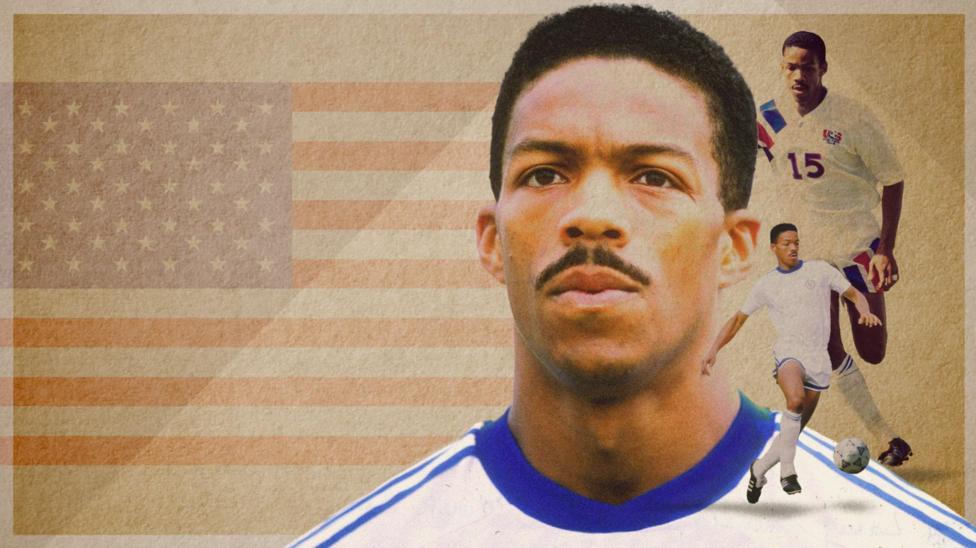
The Unthinkable Question That Drove USMNT Pioneer Desmond Armstrong
Desmond Armstrong faced ignorance at Italy 90, but his resolve reshaped the USMNT identity for a generation.
Garfield Sobers: Cricket's Ultimate All-Rounder Dies at 89
The man who could bat, bowl, field and captain at the highest level redefined what complete sporting excellence looked like.