Holders Luton Land Peterborough in EFL Trophy Draw as U21 Experiment Continues
The EFL Trophy draw is set, but the real story remains the Premier League U21 elephant in the room.
The Defending Champs Get a Familiar Foe
The 2026-2027 EFL Trophy draw has delivered its opening narrative: Luton Town, the competition's reigning holders, will face Peterborough United as they begin their defense of a trophy that continues to polarize opinion across the English Football League landscape.
On paper, it's a straightforward lower-league clash between two clubs with serious ambitions in League One and League Two respectively. But nothing about the EFL Trophy is straightforward anymore. This is a competition that has been reshaped, rebranded, and reimagined over the past decade, and the latest draw once again raises the question that refuses to go away: does the inclusion of 16 Premier League U21 sides help or hurt the tournament's credibility?
For Luton, the draw offers a chance to build momentum early. As holders, they carry the weight of expectation, and Peterborough represent exactly the kind of stubborn, organized opposition that can derail a title defense before it starts.
Format and the U21 Question
For those unfamiliar with the modern EFL Trophy, here's the lay of the land. The competition, formerly known as the Johnstone's Paint Trophy, the Checkatrade Trophy, the Papa Johns Trophy, and now simply the EFL Trophy, features 48 clubs from League One and League Two split into regional groups.
The twist? Those 48 EFL sides are joined by 16 invited Premier League U21 teams, creating a group stage format that blends senior professional football with elite academy development. It's a structure that has existed in various forms since 2016-2017, and the debate has barely cooled since.
The argument in favor is straightforward: young players from top-flight academies get competitive minutes against hardened, physical lower-league opponents. The argument against is equally clear: attendances drop, the competition feels diluted, and clubs who rely on cup runs for revenue see their prize money diluted across a bloated field.
The Attendance Problem
The numbers don't lie on this front. Since the U21 format was introduced, the EFL Trophy has seen notable dips in group stage attendance, with many League One and League Two fans actively boycotting matches featuring youth sides. When Sunderland played Stoke City U21s in a previous edition, the Stadium of Light saw a fraction of its usual cup crowd. Similar stories have played out at Portsmouth, Bolton, and Bradford.
The counterargument is that knockout rounds, when U21 sides are typically eliminated, see a resurgence in interest. The final at Wembley still draws a respectable crowd. But is a format that only works in the latter stages really working?
Luton's Title Defense: What It Means
Luton's status as holders is significant, and not just for the silverware in the cabinet. The EFL Trophy has historically served as a springboard for clubs on the rise. Portsmouth used their 2024 triumph as a catalyst for promotion. Rotherham's 2022 victory coincided with an upturn in league form.
For Luton, the challenge is maintaining focus across multiple fronts. A cup defense can be a distraction or a momentum builder, depending on how the manager rotates his squad. The early group stages against sides like Peterborough and likely one or two U21 teams offer a chance to blood fringe players without risking first-team cohesion.
But here's the uncomfortable truth about the EFL Trophy: for clubs with genuine promotion ambitions, it has often been treated as a second-tier priority. The real prize is the league. The trophy is a bonus.
Peterborough's Perspective
From Peterborough's side, this draw represents opportunity. The Posh have historically been competitive in this tournament, and a clash with the holders is exactly the kind of fixture that can galvanize a squad and a fanbase.
Peterborough's recruitment model, built on identifying undervalued talent and developing players for profit, means their squads are often young and hungry. The EFL Trophy group stage gives their fringe players and emerging talents a platform to prove themselves in a competitive environment without the pressure of a league fixture.
The Darragh MacAnthony ownership model has always valued cup runs as both a revenue stream and a morale booster. Expect Peterborough to take this draw seriously.
The Bigger Picture: What the U21 Invites Really Mean
Strip away the individual fixtures and the broader question looms: is the U21 format sustainable?
The Premier League clubs benefit from competitive minutes for their development squads. The EFL benefits from the financial contribution those Premier League clubs make to the competition's coffers. But the fans, the heartbeat of lower-league football, remain skeptical.
There have been whispers in recent seasons that the EFL is considering reducing the number of U21 invitations or restructuring the format entirely. The 2026-2027 edition, with its 16 invited youth sides, suggests the current model holds firm for now.
But the tension is real. When a League Two club draws a Premier League U21 side in a group stage dead rubber, the stands are half-empty and the atmosphere is flat. That's not good for anyone.
The Case For Keeping It
Let's play devil's advocate for a moment. The EFL Trophy, pre-U21 format, was struggling. Attendances were declining. The competition felt like an afterthought. The Premier League injection brought financial stability, increased media coverage, and a development pathway that benefits English football as a whole.
Young players like Cole Palmer, Harvey Elliott, and Curtis Jones all featured in EFL Trophy matches during their academy days. The competition served as a proving ground, a bridge between U23 football and senior professional football. That has value.
The question is whether that value outweighs the cost to the matchday experience for the clubs that actually call this competition home.
What to Watch For This Season
As the group stage draw takes shape, several storylines will dominate the early rounds:
- Luton's rotation policy: How seriously do the holders take the defense? Will key players feature, or will this be a squad-building exercise?
- U21 standout performances: Which Premier League academy prospects use the EFL Trophy as a launchpad? Every season produces one or two names that break through.
- Attendances: The perennial barometer. If group stage crowds continue to dip, expect renewed calls for format changes.
- The final destination: Will Wembley host another compelling final, or will the knockout rounds be dominated by the same handful of clubs?
The Verdict
The EFL Trophy draw for 2026-2027 gives us what it always does: a mixture of intriguing lower-league matchups and the ongoing experiment of integrating Premier League youth football into a senior competition.
Luton versus Peterborough is a solid tie, the kind of fixture that could produce a proper cup atmosphere. But the real story of this tournament won't be decided in the group stages. It will be decided in boardrooms and fan forums, where the debate over whether the U21 format helps or hinders continues to rage.
The Bottom Line: The holders have their opening assignment. The format remains unchanged. And English football's most controversial cup competition rolls on, loved by some, tolerated by many, and watched by fewer than it deserves.
Editorial Integrity
This is an original SportPulse article written by our editorial team. All content is independently researched, written, and reviewed by our writers and editors before publication. We do not publish copied, aggregated, or syndicated content.
SportPulse is committed to original sports journalism. Read our editorial policy or contact us with any questions.
More Like This
All football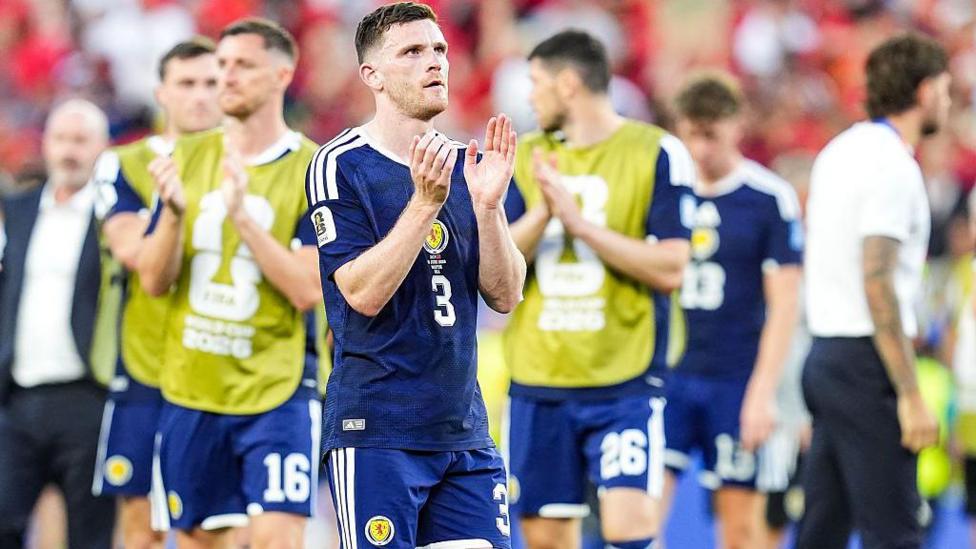
Scotland's Safety Net: How 48-Team Format Rewrites the Knockout Equation
With 32 of 48 teams advancing at the 2026 World Cup, Scotland's path to the knockouts has never been wider.
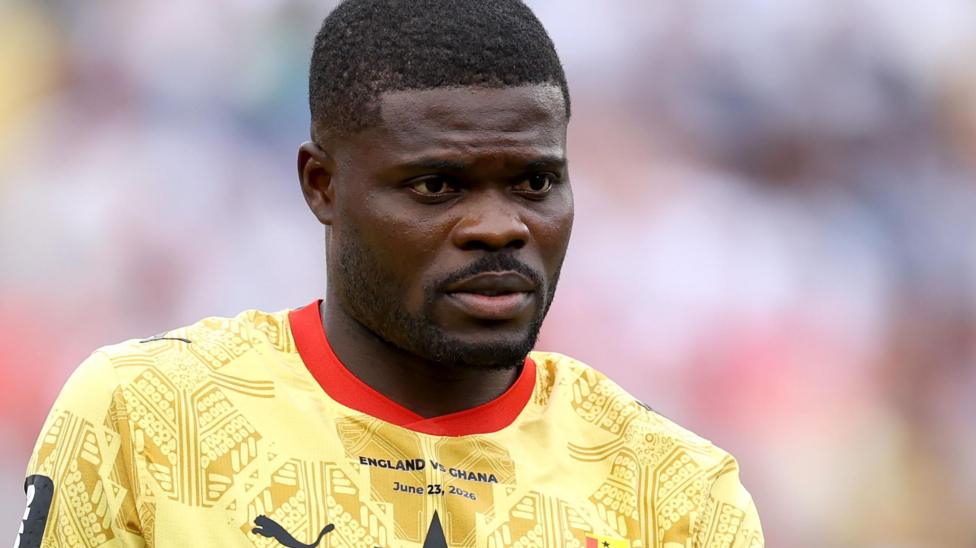
Spence's Cold Shoulder: The Partey Handshake Moment That Spoke Volumes
A viral pre-match clip between Djed Spence and Thomas Partey raises questions about football's unwritten codes before a World Cup showdown.
Fifa's Toxic World Cup: Harmful Posts Surge 14x
Fifa reveals a staggering 14-fold increase in harmful social media posts during this World Cup compared to 2022.