Spence's Cold Shoulder: The Partey Handshake Moment That Spoke Volumes
A viral pre-match clip between Djed Spence and Thomas Partey raises questions about football's unwritten codes before a World Cup showdown.
A Gesture That Stopped the Timeline
Football is a sport built on moments that last fractions of a second. A first touch that kills a dead ball. A through-ball weighted into a channel nobody else sees. And sometimes, a hand extended that never gets taken.
Footage circulating on social media from the pre-match proceedings of England's World Cup group stage clash with Ghana in Boston appears to show Djed Spence walking past Thomas Partey without engaging in the customary handshake. The clip, brief and without audio, has ignited debate across fan communities about intent, respect, and the invisible codes that govern football's pre-match rituals.
The incident, such as it appears, is small. But in the ecosystem of international tournament football, where every gesture is dissected and every body movement is loaded with narrative, small things carry outsized weight.
The Ritual: Why Pre-Match Handshakes Matter More Than You Think
To the uninitiated, the pre-match handshake line might seem like perfunctory theatre, a relic of sporting etiquette trotted out before referees signal kickoff. Ask any sports psychologist or long-serving captain, and they will tell you something different entirely.
The handshake line is football's opening gambit, a psychological chess move played in plain sight. It establishes hierarchy. It signals respect, or deliberately withholds it. When Sergio Ramos used to grip opponents' hands a fraction of a second too long, it was not friendliness. It was dominance. When Virgil van Dijk offers a perfunctory nod and releases early, it is indifference weaponized.
In tournament football, these micro-interactions carry amplified significance. Players who compete against each other week in, week out in domestic leagues suddenly find themselves on opposite sides of a national divide. Friendships tested, rivalries sharpened. The pre-match line becomes a stage where club loyalties and international allegiances collide.
Spence and Partey are not strangers. Both ply their trade in English football. Partey is a mainstay at Arsenal, a midfielder whose reading of the game and positional intelligence have made him indispensable when fit. Spence, the dynamic wing-back who burst into national consciousness during Nottingham Forest's memorable FA Cup run, has carved a reputation as one of England's most athletic wide defenders. Their paths cross in the Premier League ecosystem regularly.
Which is precisely why the footage has generated such intrigue.
Djed Spence: A Career Defined by Defiance
To understand the player, you have to understand the journey. Spence's trajectory has never been conventional. Developed in the Middlesbrough academy, he was loaned to Nottingham Forest where his electrifying performances on the right flank became a defining subplot of the 2021-22 season. His ability to carry the ball at pace, beat defenders one-on-one, and deliver from advanced positions attracted interest from elite clubs.
A move to Tottenham followed, but the integration was not seamless. Loan spells became necessary, and Spence found himself in the familiar cycle of English talent: too good to ignore, not quite trusted to start consistently at the highest level. His selection for the England World Cup squad represents a significant chapter, a validation of persistence.
Spence is of Ghanaian heritage, a detail that adds a layer of narrative complexity to this particular fixture. The tug-of-war between nations for dual-heritage players is one of modern international football's most politically charged dynamics. FIFA eligibility rules, shifting national allegiances, and the emotional weight of representing ancestral homelands versus countries of birth all converge in these matchups.
Whether the perceived handshake snub is connected to any of these broader themes is, at this stage, pure speculation. But the context exists, and ignoring it would be journalistic negligence.
Thomas Partey: The Arsenal Metronome in National Colours
Partey's importance to Ghana cannot be overstated. He is the midfield fulcrum, the player around whom tactical structures are built. At Arsenal, Mikel Arteta has used him as a single pivot, a box-to-box presence, and occasionally as part of a double pivot depending on the opposition's threat profile. His ability to receive under pressure, turn, and progress the ball through the lines is among the best in the Premier League.
For Ghana, that role expands. He becomes not just a midfielder but a leader, an emotional anchor for a squad that blends European-based experience with domestic league energy. His composure under pressure, his willingness to demand the ball in uncomfortable positions, and his capacity to dictate tempo make him the player England's coaching staff will have spent the most preparation time analyzing.
The optics of a perceived snub from a younger English player of Ghanaian descent carry their own charge, regardless of intent. Partey, a veteran of major tournaments and Champions League campaigns, is unlikely to be rattled by a pre-match gesture. But the narrative it generates can seep into a dressing room, provide bulletin-board material, and sharpen competitive edges.
The Tactical Shift: How Pre-Match Incidents Reframe Match Psychology
This is where analysis moves beyond the clip itself. Tournament football operates on thin margins. Matches between evenly matched international sides are frequently decided by moments of individual brilliance, set-piece execution, or psychological resilience in high-pressure phases.
Pre-match incidents, even trivial ones, can tip the psychological balance. If the Ghana squad perceived the gesture as disrespectful, it could galvanize a collective response. Football history is littered with examples of teams channeling perceived slights into performance.
Consider the broader tactical picture. England, under their coaching setup, will likely deploy a structured system prioritizing wide overloads and controlled possession phases. Spence's role as a wing-back or wide defender would be critical to that approach, tasked with providing width, overlapping runs, and defensive recovery.
Ghana, conversely, will look to exploit transitions. Partey's ability to break the first line of pressing and find forward runners quickly is central to their counter-attacking threat. If Spence is stationed on the same flank where Ghana look to launch transitions, the individual duel becomes a key tactical subplot of the match itself.
The handshake moment, viewed through this lens, becomes more than social media fodder. It becomes a psychological data point in a match where margins are razor-thin.
What the Footage Actually Shows, and What It Does Not
Responsible analysis demands a caveat. The footage circulating online is brief. It shows what appears to be Spence walking past Partey without engaging in the expected handshake. There is no audio. There is no wider context showing what happened immediately before or after. We do not know if words were exchanged off-camera. We do not know if a handshake occurred at a different point in the lineup.
Social media has a well-documented tendency to amplify ambiguity. A two-second clip can be stripped of context, captioned with assumption, and spread across platforms before any of the principals have the opportunity to clarify.
This does not mean the footage is meaningless. Body language in football is a legitimate area of analysis, and the clip shows what it shows. But responsible journalism requires acknowledging the gap between what is visible and what is being inferred.
The Bigger Picture: Tournament Football's Culture Wars
This incident, minor as it may be, touches on broader tensions in international football. The question of loyalty, identity, and representation haunts every World Cup squad selection. Players of dual heritage navigate complex emotional landscapes. Representing one country does not erase connection to another, and matches between a player's nation of birth and ancestral homeland create uniquely charged environments.
England's squad at this tournament features multiple players with strong ties to the nations they face in group play. This is not new, but the visibility of these connections has never been higher. Social media ensures that every interaction, every perceived slight, every familial connection is catalogued and broadcast.
For Spence, the narrative arc is straightforward in the tabloid sense but complex in the human one. He is an English international playing against Ghana, the country of his heritage, while footage of a perceived snub toward a Ghanaian icon circulates globally. The temptation to construct a simple storyline is immense. The reality is almost certainly more nuanced.
Looking Ahead: What This Means for Both Sides
The match itself remains the focal point. Whatever happened in the pre-match lineup, the 90 minutes in Boston will define the narrative far more than any handshake or lack thereof.
For England, the priority is establishing their tactical structure early. Wide overloads, controlled possession, and pressing triggers executed with precision. Spence's fitness and form will be critical to that approach.
For Ghana, the psychological fuel of perceived disrespect, however genuine, could provide the edge needed to unsettle a heavily favoured opponent. Partey's midfield dominance and Ghana's transition speed remain their primary weapons.
The handshake, or absence of one, will be forgotten by kickoff. What it revealed about football's culture, its unwritten codes, and the impossible emotional complexity of international tournament play will linger far longer.
"You represent your country. That is the only thing that matters when you cross that white line. Everything else is noise." — A sentiment echoed by multiple international coaches navigating similar dynamics in recent tournaments.
Editorial Integrity
This is an original SportPulse article written by our editorial team. All content is independently researched, written, and reviewed by our writers and editors before publication. We do not publish copied, aggregated, or syndicated content.
SportPulse is committed to original sports journalism. Read our editorial policy or contact us with any questions.
More Like This
All football
The 48-Club Gambit: How FIFA's Expansion Cements a Premier League Power Play
FIFA's Club World Cup expansion to 48 teams is a financial and political coup for Europe's elite, particularly the Premier League.
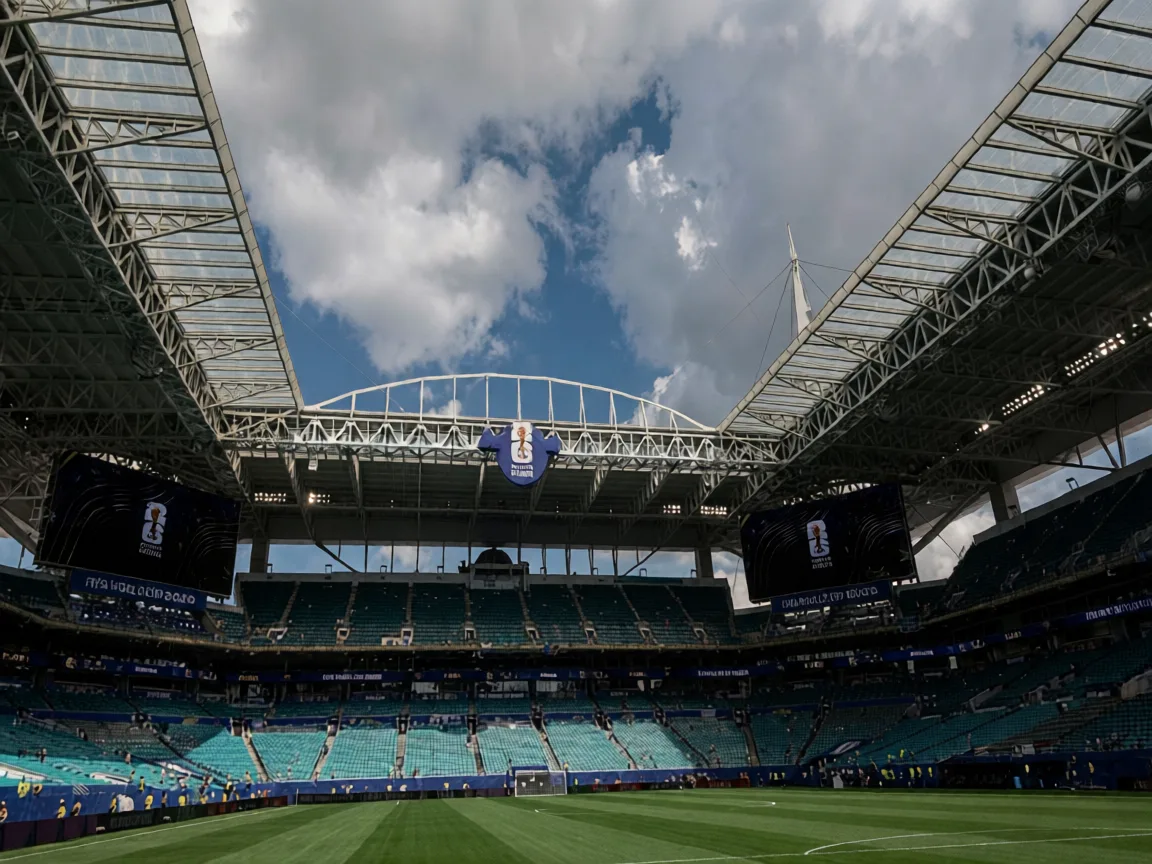
Empty Seats and Faded Dreams: The Bronze Medal Nobody Wanted
Roughly 7,000 unsold tickets expose the brutal truth: the third-place playoff is football's most uncomfortable compromise.
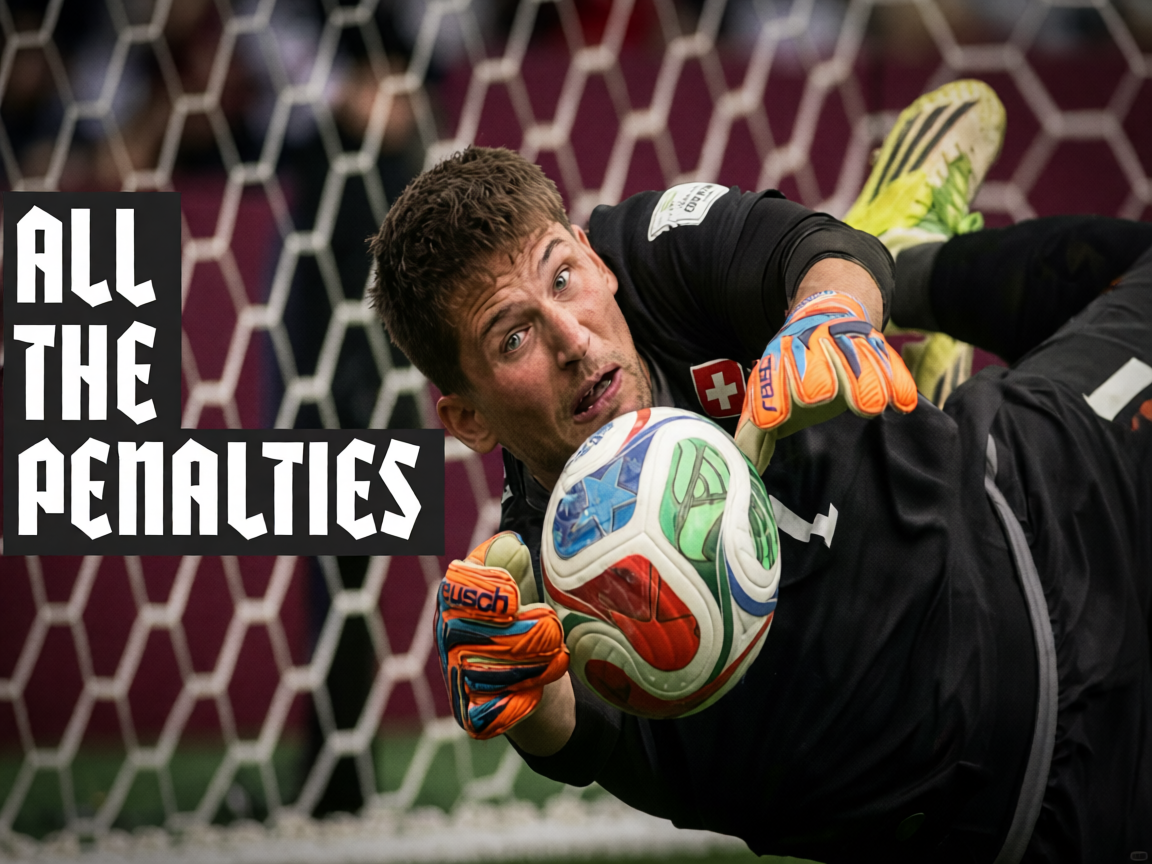
Switzerland's Shootout Composure Exposes Colombia's Mental Frailty
Switzerland advanced past Colombia 4-3 on penalties, exposing a brittle psychological edge in a tournament-defining shootout.