Empty Seats and Faded Dreams: The Bronze Medal Nobody Wanted
Roughly 7,000 unsold tickets expose the brutal truth: the third-place playoff is football's most uncomfortable compromise.
There is a particular kind of melancholy that settles over a stadium when the stakes are diminished. On Saturday, England and France will contest the World Cup bronze medal match, and roughly 7,000 tickets remain listed on FIFA's official ticketing portal. That figure is not merely a logistical inconvenience for tournament organisers. It is a stark, quantifiable reflection of football's most uncomfortable compromise: the third-place playoff, a fixture that exists primarily because television contracts and tournament tradition demand it, not because any participant genuinely desires it.
The empty seats tell a story before a ball is even kicked. They speak to the psychological chasm between competing for glory and competing for consolation. For England and France, two nations who arrived at this World Cup with genuine ambitions of reaching the final, this match represents something closer to mourning than celebration.
The Tactical Hangover
From a coaching perspective, the bronze medal match presents a unique set of challenges that no amount of tactical preparation can fully resolve. Sarina Wiegman and Hervé Renard must now motivate squads carrying the heavy weight of semifinal disappointment, and the tactical approach each coach adopts will reveal as much about their philosophical foundations as it does about their opponent's weaknesses.
Wiegman's England have operated primarily in a 4-2-3-1 structure throughout this tournament, with Lauren James serving as the creative fulcrum behind a single striker. The system relies on disciplined positional play and moments of individual brilliance from the attacking midfield trio. But against France's fluid 4-3-3, the midfield battle becomes a contest between England's double pivot and France's more aggressive central trio.
France, under Renard, have demonstrated a preference for wide overloads and quick transitions. Their full-backs push high, effectively creating a 2-3-5 in possession, while the wingers invert to occupy the half-spaces. This approach left spaces that better-organised opponents exploited in the semifinal, and Wiegman will have noted those vulnerabilities meticulously.
The Midfield Geometry
The key tactical battleground will unfold in the central corridors. England's 4-2-3-1 naturally creates a numerical disadvantage against France's 4-3-3 in the middle of the pitch, with England's number ten forced to drop deep to establish parity. This positional adjustment, shifting effectively to a 4-3-3 defensively, will determine whether England can control transitions.
France's midfield triangle, by contrast, is designed to dominate possession and progress the ball through the lines. Renard's side averages 58.3% possession across the tournament, a figure that reflects both their stylistic commitment and their occasional vulnerability to counter-attacks. England will likely accept a lower possession share, using their mid-block to absorb pressure before exploiting the spaces behind France's advanced full-backs.
Tactical Shift: The Semifinal Lessons
Both coaches face a fundamental decision: whether to repeat the tactical setups that fell short in the semifinals or to introduce variations that signal a fresh approach. This choice carries psychological weight as much as tactical logic.
England's semifinal defeat exposed a vulnerability to opponents who bypass the midfield press with direct vertical passing. The response typically involves dropping the defensive line deeper, compacting the space between the lines, and forcing opponents into wider areas. Wiegman may well adopt a 5-3-2 in the defensive phase, converting one full-back into a centre-back and using wing-backs to mirror France's wide threats.
France's own semifinal elimination revealed fragility when their high pressing structure was broken. Once the first line of pressure was bypassed, the gap between midfield and defence became a corridor for opposition runners. Renard's adjustment will likely involve a more measured pressing trigger, with the forward line delaying their engagement to maintain compactness.
The critical tactical shift, however, may come in the substitutions. Both managers will have noted the fatigue accumulating in their squads, and the bronze medal match offers an opportunity to rotate without the consequences of elimination. Expect both benches to be utilised earlier than in knockout fixtures, with tactical substitutions arriving before the 65th minute rather than the customary 75th.
What the Numbers Reveal
- 7,000 tickets remain unsold on FIFA's official platform as of matchday
- France's average possession of 58.3% reflects their dominant ball-control philosophy
- England's shot conversion rate of 14.2% in the knockout stages indicates a clinical efficiency that contrasts with their semifinal struggles
- France have attempted 42% of their attacks down the left flank, creating a predictable but effective pattern that England's right-back must neutralise
- Both teams have conceded 60% of their goals from set-piece situations, highlighting a shared vulnerability that could define a tight contest
"We play to win. That is always the objective, regardless of the context. The bronze medal is still a medal, and this team will compete." — This is the kind of declarative statement both coaches will emphasise publicly, though the internal conversations will be considerably more nuanced about motivation and rotation.
The Psychology of Consolation
No tactical system can fully compensate for the emotional flatness that follows a semifinal defeat. Players who spent months visualising a World Cup final must now recalibrate their competitive desires toward a match that, by definition, confirms their failure to reach the summit. Sports psychologists working with international teams describe this as a "motivational void", and coaches employ various strategies to bridge it.
Wiegman's approach has historically been pragmatic: she focuses on the process rather than the outcome. Her communication style emphasises collective responsibility and the performance itself as the reward. Whether that message resonates with players still processing the devastation of a semifinal loss will determine England's energy levels on Saturday.
Renard, by contrast, is more likely to invoke pride and legacy. France have never won a World Cup medal of any colour, and the historical significance of a bronze should not be dismissed lightly. The tactical challenge for Renard is channelling that emotional energy into structured performance rather than chaotic aggression.
The Broadcast Reality
The unsold tickets also reflect a broadcasting phenomenon unique to the modern era. With every World Cup match available via streaming and satellite, the incentive to attend a third-place playoff in person is diminished. For supporters who have travelled across continents, spending a matchday at the stadium carries expense and effort that the fixture's reduced stakes barely justify.
FIFA's ticketing model, which prices the bronze medal match at a premium comparable to group-stage fixtures, may also be a factor. A category-one ticket for this match costs nearly as much as a group-stage encounter between two marquee nations, a pricing strategy that assumes the World Cup brand alone justifies the outlay. The 7,000 unsold tickets suggest otherwise.
What Comes Next
For England, the bronze medal match serves as a bridge between cycles. Several key players are approaching the latter stages of their international careers, and Wiegman will use this fixture to evaluate the next generation. The tactical framework may shift toward integrating younger players into the established system, a process that demands patience and carries risk against a quality opponent like France.
France face a similar transitional moment. Renard's tenure has been defined by an attractive attacking philosophy, but the bronze medal match will be scrutinised for evidence of tactical adaptability. A victory offers a positive conclusion to a tournament that promised more; a defeat invites questions about whether the system本身 is robust enough at the elite level.
The 7,000 empty seats will be visible on television broadcasts worldwide, a silent rebuke to the idea that every World Cup match carries inherent meaning. But for the players on the pitch, the tactical contest will be real, the physical effort genuine, and the desire to conclude their tournament with a victory authentic, however diminished the stakes.
Saturday's match will not be remembered as a classic. It rarely is. But within its melancholy context, the tactical duel between Wiegman's structured pragmatism and Renard's expansive ambition offers a concluding chapter worthy of attention from those who understand that football's beauty is not confined to its highest stages.
The bronze medal match remains football's most honest fixture, stripped of glamour and exposed in its essentials. England and France will play because the schedule demands it. How they play, and what that reveals about their coaching philosophies, is what matters now.
Editorial Integrity
This is an original SportPulse article written by our editorial team. All content is independently researched, written, and reviewed by our writers and editors before publication. We do not publish copied, aggregated, or syndicated content.
SportPulse is committed to original sports journalism. Read our editorial policy or contact us with any questions.
More Like This
All football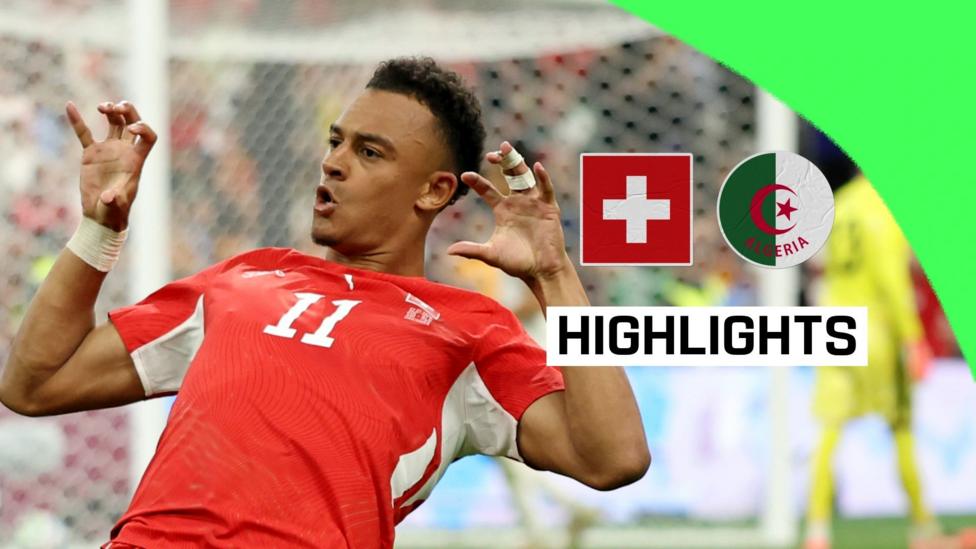
88 Years of Hurt: Switzerland Shatter Their World Cup Curse
Ndoye and Embolo fire Switzerland past Algeria, ending an 88-year knockout stage drought that haunted generations of Swiss football.

Kane Rescues England as DR Congo Push Three Lions to the Brink
Harry Kane bails out a disjointed England after DR Congo's tactical discipline threatens a historic World Cup upset.
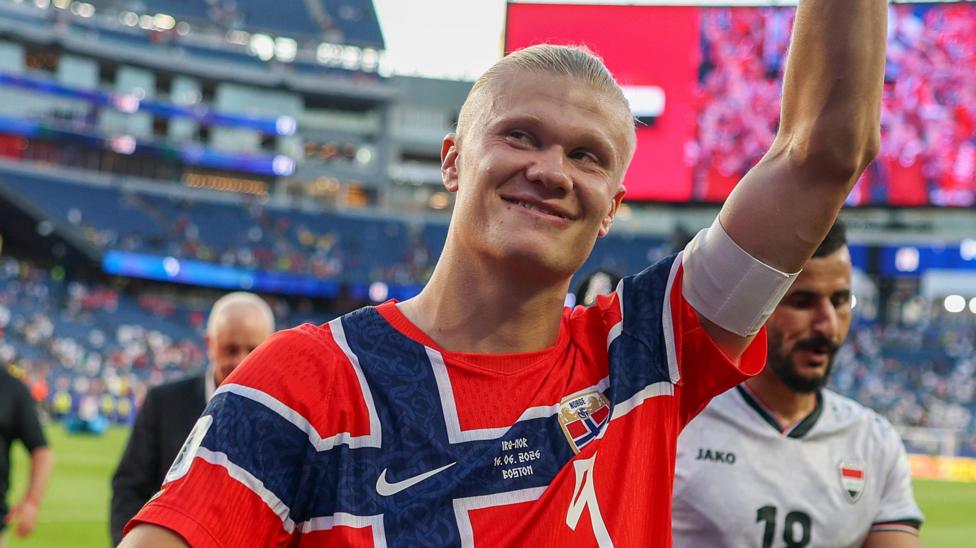
No Stage Too Big: Haaland Scores on World Cup Debut
Erling Haaland's debut goal habit reaches the biggest stage of all as Norway's talisman announces himself at the World Cup.