How Ella Toone Repurposes Grief Into Tactical Fire
Ella Toone channels profound personal loss into an evolving tactical role, offering a masterclass in psychological resilience and midfield orchestration.
The opening tactical motif of Ella Toone's season was rooted in disruption. Long before a ball was kicked in the Women's Super League, the Manchester United midfielder was navigating the most profound personal rupture of her life. In a new BBC documentary, Toone opens up about processing the grief of losing her father and the disorienting reality of preparing for a wedding without his physical presence. Yet, on the pitch, her tactical response has been neither passive nor retreating. Instead, Toone has transformed her interior devastation into an increasingly assertive positional play profile, recalibrating how she occupies space in Marc Skinner's 4-2-3-1 structure.
Grief operates in football much like it does in any high-performance environment. It threatens the cognitive clarity required for split-second decision-making, particularly in the half-spaces where Toone does her most intricate work. The documentary lays bare the emotional toll, but the complementary narrative, written on grass rather than film, is one of remarkable tactical adaptation. Toone has not merely survived her grief; she has repurposed it as an accelerant for her on-pitch evolution.
The Evolution of a Number Ten
Historically, Toone has been categorized as a classic English number ten, a player whose primary value lay in the final third. Her spatial awareness and link-play in the central attacking zones have long been evident, but her game carried a familiar structural limitation: an over-reliance on the ball reaching her in pre-defined pockets. Skinner's system at United, however, demands far more from the advanced midfield position. The modern iteration requires the ten to function as a progressive initiator rather than a mere finisher of attacking moves.
This season, Toone's off-ball movement has shifted noticeably. Instead of waiting on the periphery of the low block, she now drops into the left half-space to receive the ball under pressure, turning and scanning before the defensive line can set. It is a subtle but critical adjustment. By dropping into these deeper zones, she effectively adds an extra body to the midfield rest-defence, allowing the full-backs to maintain their width higher up the pitch without exposing the double pivot.
The psychological weight she carries could easily have restricted this kind of tactical expansiveness. Grief narrows vision, prompts conservatism, and encourages the safety of familiarity. Yet Toone's underlying metrics suggest a player moving radically in the opposite direction.
The Data Behind the Transformation
- 3.4 progressive passes per 90 minutes, up from 2.1 in the previous campaign
- 4.8 deep completions per 90, placing her in the 92nd percentile among WSL attacking midfielders
- 1.8 interceptions per 90, a 0.6 increase that speaks directly to her improved off-ball intensity
- Shot-creating actions have climbed to 5.2 per 90, compared to 3.9 last term
These are not marginal fluctuations. They represent a fundamental reimagining of her operational radius. The interception numbers are particularly telling, signaling a shift from passive playmaking to proactive counter-pressing. A player overwhelmed by personal trauma might understandably retreat from the chaos of defensive transition. Toone has instead chosen to court it.
Tactical Shift: Grief as Aggressive Pressing
The most striking tactical development in Toone's game can be traced directly to her off-ball intensity out of possession. Historically, her pressing triggers were dependent on the opposition's mistakes, a passive approach that aligned with United's broader tendency to cede territory before attempting to win the ball back. This season, however, she has become an aggressive first defender in the midfield block.
When the ball is turned over in the final third, Toone now immediately initiates a sprint press on the opposing centre-back or defensive midfielder. This requires immense physical and emotional energy, a total commitment that leaves no room for the mental fragmentation grief often induces. The documentary hints at this dynamic, showing how the structure of elite football, the demand to be entirely present, has provided an anchor in her darkest moments.
"Football became the only place where my mind couldn't wander. When you're preparing for a set-piece, or you're reading a press, there's no space for anything else. The game demanded everything from me, and I needed that demand."
It is a profound admission that reframes how analysts understand the relationship between psychological resilience and gegenpressing efficiency. Toone is not playing through her grief; she is weaponising it. The anger and frustration of loss are channelled into the furious, coordinated sprints that define United's improved rest-defence structure.
The Skincare and the Scaffold: Identity Beyond the Pitch
What the documentary captures so effectively is the duality of Toone's survival. She is simultaneously the meticulous planner of a wedding her father will never attend, and the on-field orchestrator of progressive possession. These are not separate identities. The same cognitive discipline required to sit with grief, to plan around an absence, is evident in her spatial orchestration on the pitch.
In the 4-2-3-1, the role of the advanced midfielder is inherently about managing absence and presence. You find space where none appears to exist. You create options for forwards who are otherwise isolated. You become the connective tissue between a deep-lying double pivot and an attacking line demanding service. Toone's season is a literal translation of this principle. Where there was absence, in her life and previously in United's midfield construction, she has manufactured presence.
United's broader tactical context is crucial here. Skinner's side have often struggled with possession oscillation, the transition from controlled build-up to aggressive defence and back again. Toone's increased tactical maturity, her willingness to drop into the double pivot when transition occurs, has given United a 4-1-4-1 shape out of possession that far better protects the centre-backs. It is a structural shift born of individual necessity, a player needing to be everywhere at once, morphing into a systemic advantage.
The International Dimension: England's Tierney Conundrum
Sarina Wiegman also benefits from this evolution. The England manager has long relied on a 4-3-3 that occasionally lacks midfield penetration against mid-blocks. Toone's enhanced ability to receive on the half-turn, absorb contact, and play through the lines offers Wiegman a far more dynamic option in the number eight role than she previously possessed.
The Lionesses' European Championship triumph was built on moments of individual brilliance, but the subsequent World Cup campaign exposed a strategic fragility when those moments failed to materialise. A more rounded, tactically disciplined Toone, one who understands the rhythm of ball-side pressure and cover shadows, solves several of those structural issues simultaneously. She becomes the player who can slot alongside Keira Walsh, offering the progressive passing Walsh often declines in favour of retention.
Statistical Comparison: Toone vs. WSL Attacking Midfielders
- Passes per defensive action (PPDA) when pressing: 8.2, top 5% in her positional cohort
- Progressive carrying distance: 145 metres per 90, a 40% increase on last season
- Final third entries: 11.4 per match, behind only Lauren James and Jill Roord
- Key passes under pressure: 2.3, indicating her composure in compact spaces
What Comes Next: The Final Embrace of the Grass
The remainder of this WSL season, and the impending wedding that forms the emotional core of the documentary, represent a closing of the earliest, rawest chapter of Toone's grief. Tactically, the challenge will be sustaining this intensified output once the immediate adrenaline of survival mode subsides.
For Marc Skinner, the imperative is to ensure United's build-up structure continues to evolve in a way that maximises Toone's dropping movements without isolating the forward line. The incorporation of a false nine, or a more fluid front three, would create the rotational chaos that allows Toone to find the ball in her most dangerous areas. Against the league's low-block specialists, United need an extra layer of ingenuity, and the Toone of this season is equipped to provide it.
For Wiegman, the upcoming international window offers the chance to trial Toone in a double pivot alongside Walsh, a configuration that would maximise both players' progressive instincts while maintaining defensive stability.
Ella Toone's season is ultimately a study in the limits of tactical theory. Systems are drawn on whiteboards, but they are executed by human beings carrying invisible weight. The genius of Toone's campaign is how she has allowed that weight to bend her shape without breaking it. The grief remains. It is visible in the documentary, raw and unfiltered. But so too is the tactical architecture she has built upon it, an architecture that makes both club and country incrementally more formidable.
Editorial Integrity
This is an original SportPulse article written by our editorial team. All content is independently researched, written, and reviewed by our writers and editors before publication. We do not publish copied, aggregated, or syndicated content.
SportPulse is committed to original sports journalism. Read our editorial policy or contact us with any questions.
More Like This
All long-reads
Teenager Lutkenhaus Stuns Olympic Champ Wanyonyi in Oslo
Seventeen-year-old Cooper Lutkenhaus edged Olympic champion Emmanuel Wanyonyi in a dramatic Diamond League 800m photo finish in Oslo.
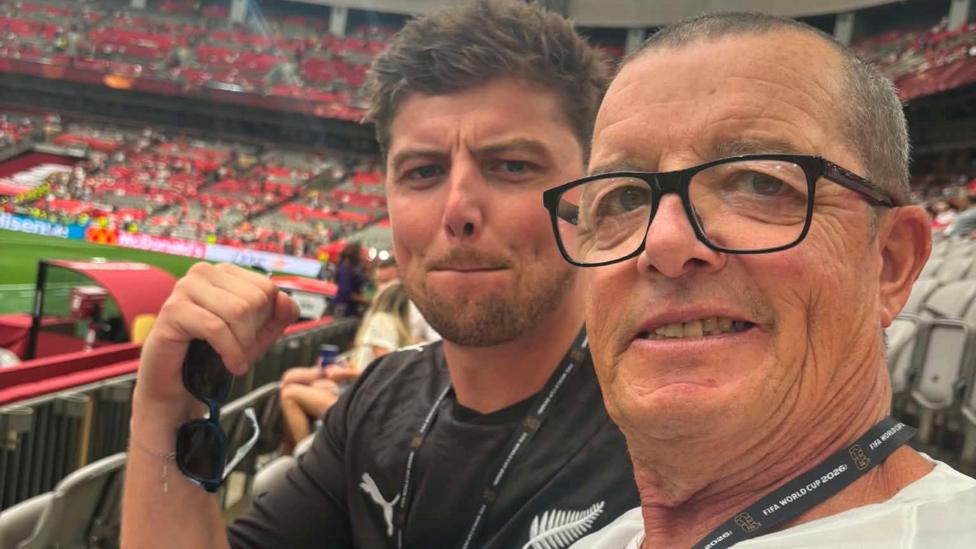
6,500 Miles for 13 Minutes: The Elliot Family's World Cup Gamble
Callan Elliot's family crossed 6,500 miles from Annan to watch him play 13 minutes for New Zealand at the World Cup.
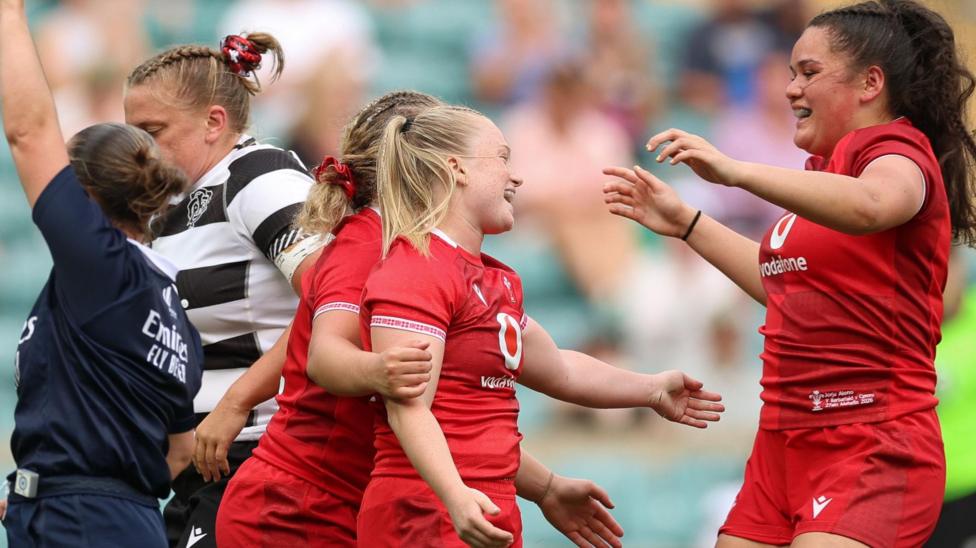
Wales' New Wave Forces Lynn's Hand After Barbarians Statement
Young Welsh talent seized their Barbarians audition and now demand Test selection from boss Sean Lynn.