From League Two to Record Fees: Anderson's Meteoric Ascent Defies Convention
From League Two loans to British record territory, Anderson's trajectory is one of modern football's most compelling development stories.
The Unlikely Origins of a Record-Breaking Valuation
When Elliot Anderson pulled on the blue and white quarters of Bristol Rovers in January 2021, few outside of Tyneside or the Scottish youth system could have predicted the trajectory that would follow. Here was a 19-year-old loanee, sent out by Newcastle United to League Two football's fourth tier, a level where tactical sophistication often gives way to physical attrition and direct play. Yet it was precisely this environment that forged the foundations of a player now valued in the region that would make him the most expensive British footballer in history.
The journey from the Memorial Stadium to the summit of British transfer valuations is not merely a story of talent finally surfacing. It is a case study in how modern player development, tactical intelligence, and systemic trust can converge to produce something extraordinary. Anderson's arc from League Two loanee to potential record-breaker deserves deeper examination than the headline number alone suggests.
Tactical Roots at Bristol Rovers
Anderson arrived at Bristol Rovers as a technically gifted but physically slight attacking midfielder. Joey Barton's side, fighting to climb out of League Two's lower reaches, needed immediate contributions rather than long-term development projects. What happened next was instructive for how elite clubs should think about loan placements.
Rather than shielding Anderson from the rough edges of lower-league football, Barton deployed him centrally, trusting him to receive under pressure in congested midfields. Eleven appearances and two goals may not sound transformative on paper, but the data underneath told a different story. Anderson was consistently among Bristol Rovers' most progressive passers, his willingness to turn and carry the ball forward under physical duress marking him out as something different from the typical loanee.
The tactical environment at Bristol Rovers was critical. Barton's side played a 4-3-3 shape that asked its central midfielders to be both ball carriers and press resistors. Anderson, operating as the most advanced of the three, learned to find pockets of space between opposition lines, a skill that would become his calling card at a far higher level. League Two defenders do not give you time or space out of respect for your reputation. They give you nothing. Anderson had to manufacture his own advantages, and the habits he built under that pressure became permanent features of his game.
The Newcastle Breakthrough
Returning to Newcastle, Anderson faced a squad in transformation under new ownership and Eddie Howe's coaching staff. The competition for minutes was fierce. Bruno Guimarães, Joelinton's reinvention as a midfield dynamo, and Sandro Tonali's arrival meant that breaking into Howe's preferred 4-3-3 system required more than raw ability. It demanded tactical literacy.
Anderson demonstrated exactly that. His ability to operate in half-spaces, to receive on the half-turn between opposition midfield and defensive lines, and to transition the ball quickly from defence to attack fitted Howe's system with a naturalness that suggested he had been designed for it. The loan at Bristol Rovers had not been incidental to this development; it had been foundational.
What has made Anderson so valuable to Newcastle and so attractive to the clubs prepared to pay a record fee is the combination of progressive carrying, press resistance, and tactical versatility. He can operate as a left-sided interior midfielder in a 4-3-3, as a number ten behind a lone striker, or even in a deeper role where his ball-carrying ability can bypass pressing structures entirely. This versatility is not the vague, catch-all kind that agents list on social media profiles. It is a genuine, demonstrated capacity to execute different roles at a high level within the same match.
The Numbers Behind the Valuation
Anderson's statistical profile paints a picture of a midfielder who combines creative output with structural reliability. His progressive carries per 90 minutes place him among the elite midfielders in the Premier League, while his defensive contribution metrics show a player who does not simply drift in and out of defensive phases. He presses with intensity, recovers possession in advanced areas, and transitions the ball efficiently when Newcastle win it back.
More importantly for the clubs circling with record-breaking bids, Anderson's age profile makes him an exceptional long-term investment. He is still in the early stages of what should be a decade-long peak, meaning any acquiring club would be paying for prime years rather than a depreciating asset. The current British transfer record, set at £105 million by Declan Rice's move from West Ham to Arsenal in 2023, reflects a market where elite British midfielders command a premium due to homegrown quotas and the scarcity of players who combine technical quality with Premier League-proven physicality.
Anderson ticks every box. He is homegrown, versatile, progressive in his passing and carrying, tactically intelligent enough to operate in multiple systems, and still young enough that his ceiling remains largely theoretical. The fee being discussed would be staggering for a player who was on loan at Bristol Rovers just over three years ago, but in the context of the modern market, it is not irrational.
Tactical Shift: Why Anderson Fits Every System
The tactical argument for Anderson at the highest level rests on a fundamental principle: he creates advantages in the moments between structure and chaos. When a team is transitioning from defence to attack, the pitch is at its most disorganised. Defensive shapes are incomplete, pressing triggers have not yet been established, and the ball carrier has a brief window where individual quality can exploit positional uncertainty.
Anderson thrives in these transitional moments. His carrying ability means he can receive the ball in tight areas and progress it before the opposition re-establishes their defensive block. His decision-making in these phases, whether to carry, play a forward pass, or recycle possession, is remarkably mature for a player of his age. This is a skill set that translates across tactical systems because every elite team depends on transitional quality to break down organised defences.
At Newcastle, Howe has used Anderson in a system that demands controlled aggression, pressing high and attacking with pace but always within a structured framework. The most impressive aspect of Anderson's development has been his ability to maintain tactical discipline while still expressing the creative instincts that made him stand out at youth level. He does not freelance. He operates within the system but elevates it through moments of individual quality.
The Financial and Cultural Context
A record-breaking British transfer would carry significance beyond the football pitch. Anderson's path through the lower leagues, his gradual development, and his rise through a domestic academy system represent a model that the Premier League has long aspired to but rarely produced at this level. Too often, British clubs have spent enormous sums on foreign imports while their own academy products stagnate or depart. Anderson's trajectory suggests that when the development pathway is handled correctly, domestic talent can reach the same heights as any continental export.
"You can see the hunger in him. Every training session, every match, he wants to improve. That mentality, combined with the technical ability he already has, is what separates good players from potentially great ones." — Joey Barton, reflecting on Anderson's loan spell at Bristol Rovers
The financial implications for Newcastle would also be significant. A fee of that magnitude would provide substantial reinvestment capability, allowing the club to address multiple areas of their squad while complying with the Premier League's Profitability and Sustainability Rules. It is a dynamic that forces difficult decisions even for the wealthiest clubs: retaining a homegrown talent versus maximising financial return to strengthen the collective.
Looking Ahead
The next chapter of Anderson's career, whether it unfolds at Newcastle or at a new destination, will be defined by how he handles the pressure that accompanies a record fee. Players who carry that label are scrutinised differently. Every misplaced pass, every quiet match, every tactical adjustment that reduces their influence is magnified through the lens of what they cost.
For the acquiring club, the tactical integration will be the most fascinating element. Anderson's versatility means he could slot into virtually any elite system, but the specific role he is asked to play will determine whether the investment is maximised. Used as a ball-carrying interior midfielder in a possession-heavy system, he could be transformative. Deployed in a more conservative role where his creative instincts are suppressed, the value proposition changes considerably.
What is certain is that the trajectory from League Two to record-breaking territory has been earned through a combination of natural talent, tactical education, and relentless competitive development. Anderson's story is not yet complete, but it has already become one of the most compelling case studies in modern British football development. The next transfer window, and the tactical decisions that accompany it, will determine whether this remarkable ascent reaches its ultimate conclusion.
Editorial Integrity
This is an original SportPulse article written by our editorial team. All content is independently researched, written, and reviewed by our writers and editors before publication. We do not publish copied, aggregated, or syndicated content.
SportPulse is committed to original sports journalism. Read our editorial policy or contact us with any questions.
More Like This
All football
Ocean of Blue: Cape Verde’s World Cup Dream Ends in Triumphant Homecoming
Praia erupted as the Atlas Lions returned, their World Cup journey defying odds and rewriting African football history.
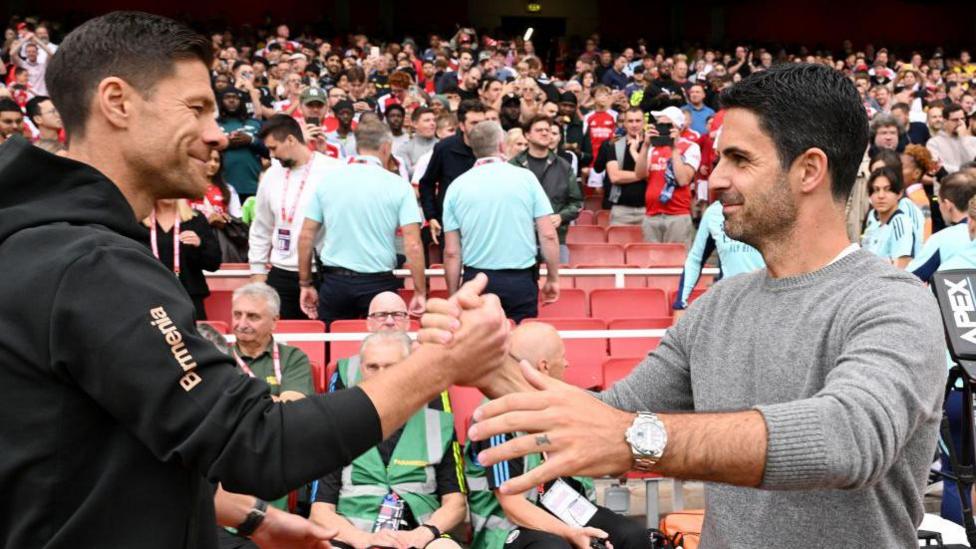
One Tiny Basque Club Shaped Three Premier League Managers
Arteta, Alonso, and Iraola all walked the same San Sebastián pitches before reaching England's dugouts.

Saliba Back Injury Forces Arteta to Rebuild Arsenal's Defensive Foundation
William Saliba's extended absence strips Arsenal of their defensive anchor and demands tactical recalibration from Mikel Arteta.