England v Argentina: The Rivalry Defined by Absence
Two decades without a fixture has preserved a rivalry built on empire, war, and a mutual fascination neither nation would ever admit to.
A Rivalry Forged in Empire
England and Argentina have not shared a football pitch for competitive or friendly purposes in over two decades. The fixture exists only in memory, bound by history and sharpened by silence.
The narrative is often flattened into a simple grudge match, a tale of mutual hatred distilled into ninety minutes of hostility whenever the fixture draws near. But the truth underpinning this rivalry is far more complex than animosity alone.
It began not with contempt but with cultural paternalism, as British influence shaped Argentina into what an imperial mindset might term a 'faithful son'. The export of British customs included polo, the ritual of afternoon tea, and crucially, the game of football itself. England did not just give Argentina a sport. They gave them a mirror in which to see themselves, a foundation upon which an entire national identity would eventually be built.
That foundation inevitably cracked, giving way to decades of nationalist rejection. Argentina sought to step out of the British shadow, not just politically but culturally. Football became a primary vehicle for that assertion of independence. The student wanted to surpass the teacher, and the teacher was not always gracious about the challenge.
The Boiling Point
The geopolitical tension reached a devastating peak with the Falklands War in 1982. The conflict over the islands transformed a sporting rivalry into something bearing the weight of real bloodshed. Every subsequent football meeting between the two nations carried the unsheddable burden of a conflict that cost real lives and scarred a generation.
When the two sides met at the 1986 World Cup in Mexico, the match became one of the most famous in the history of the sport. Diego Maradona's 'Hand of God' goal and his astonishing second goal, a mesmerizing solo run past half the English team, crystallized the rivalry into pure footballing mythology. The brilliance was undeniable. The symbolism was heavy with the weight of a recent war.
"That goal was a kind of symbolic revenge. It was more than just a goal. It was a settling of accounts with the English." — Maradona reflecting on the 1986 encounter
Four years later, at the 1990 World Cup in Italy, the teams met again in a quarterfinal that ended with a penalty shootout. The match was ugly, fragmented, and thick with tension. England triumphed on penalties, claiming a small slice of vengeance for the hurt of Mexico City. The scenes at the end, with players exhausted both physically and emotionally, showed two nations who understood exactly what was at stake whenever they shared a pitch.
The 1998 World Cup in France delivered another iconic chapter. A young David Beckham was sent off for kicking out at Diego Simeone, transforming a second-round clash into a national referendum on petulance and redemption. England exited on penalties once again. The narrative of English suffering at Argentine hands, whether by divine hand or cruel spot-kick, continued to grow. Every meeting wrote a new verse in a poem that seemingly had no end.
The Scarcity Paradox
The last significant competitive meeting between England and Argentina came in the group stage of the 2002 World Cup in Japan. Beckham converted a penalty to secure a 1-0 victory for England, exorcising some of the demons from Simeone and St-Etienne. Since that day, the fixture has vanished from the calendar. The two teams have simply not played each other.
This absence has become the most powerful force preserving the rivalry. In an era defined by over-saturated, commercialized sport, where elite teams play each other constantly in bloated club competitions and international fixtures are squeezed into every available window, scarcity is a rare and precious commodity.
Lionel Messi, arguably the greatest player in the history of Argentine football, has never faced England in a competitive match. He will likely retire without ever experiencing the unique pressure of this particular fixture. The absence of Messi versus England adds a layer of what-might-have-been to a rivalry that already brims with unfulfilled chapters. The two nations have produced some of the greatest players the world has ever seen, yet the modern generation has been denied the stage to write their own chapter.
The scarcity has kept the romance alive. When fixtures are played annually, they lose their meaning. Familiarity breeds not contempt but apathy. The England and Argentina fixture cannot breed apathy because it is never played. It simmers constantly, warming itself on historical embers, waiting for a stage grand enough to justify its return.
The Underlying Fascination
Beneath the political hostility and the footballing needle, there exists a deep, mutual fascination between the two nations. They probably revere each other far more than either would ever care to admit.
The English appreciate Argentine football with a romanticism they rarely afford their own game. The flair, the passion, the unscripted drama of Argentine performances often align with what the English wish their own football could be. The cult of Maradona in England is built on a respect for sheer, unbridled genius that transcends national loyalty.
Argentine football culture, for its part, carries an underlying respect for the English footballing tradition. The legacy of the British clubs built in Buenos Aires at the turn of the century still stands. The rivalry is not built on a lack of understanding. It is built on a profound understanding of what the other represents.
This is why a revival of the fixture would be so compelling. The raw facts of a football match would carry the immense weight of history. The two teams would not just be playing for a result. They would be playing for a century of tangled cultural, political, and emotional threads.
A hypothetical meeting at the 2026 World Cup would box office entertainment of the highest order. The tournament, jointly hosted by the United States, Canada, and Mexico, provides a neutral stage far from the charged atmospheres of London and Buenos Aires. The distance might allow the football to breathe while still carrying the weight of the past.
What It Means
The England versus Argentina rivalry stands as a testament to the power of absence in modern football. While other fixtures are diluted by repetition, this one has been preserved by twenty years of silence. The deep, complicated truth beneath the supposed animosity makes it a rare cultural artifact. The fixture is a clash of two nations bound by history, separated by conflict, and preserved by the sheer unlikelihood of ever meeting again on the pitch. As long as they stay apart, the myth only grows stronger.
Editorial Integrity
This is an original SportPulse article written by our editorial team. All content is independently researched, written, and reviewed by our writers and editors before publication. We do not publish copied, aggregated, or syndicated content.
SportPulse is committed to original sports journalism. Read our editorial policy or contact us with any questions.
More Like This
All long-reads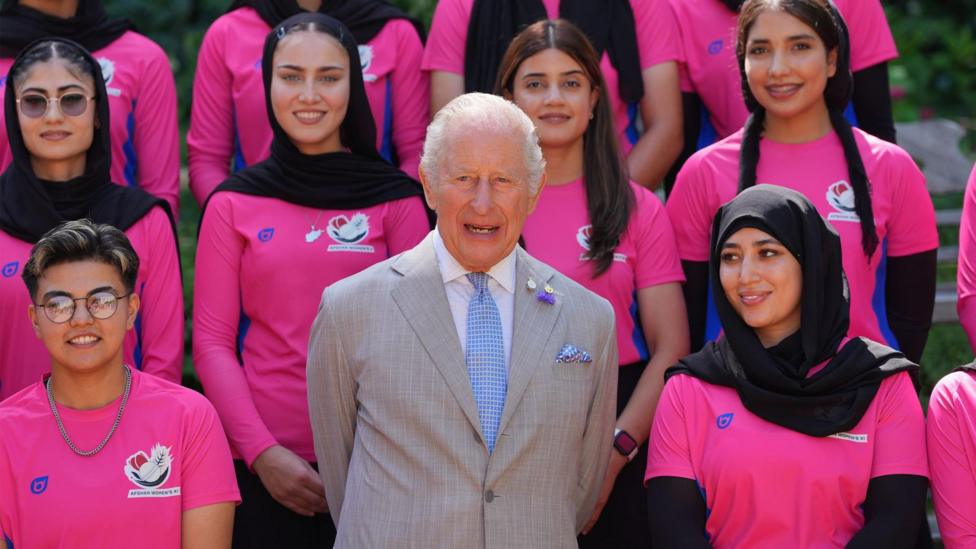
King Charles Backs Cricket Team That Can't Play: A Stand for Afghan Women
King Charles meets the exiled Afghan women's cricket team, spotlighting a fight for recognition against the Taliban's sports ban.

Hampshire Pull Clear as The Blaze Surge in Women's T20 Blast Shake-Up
Hampshire's ruthless consistency opens a two-point gap at the summit while The Blaze leap into second with statement win over Essex.

Cordina Charged With Assault: From Ring Glory to Legal Peril
Former super-featherweight world champion Joe Cordina faces assault and weapon threat charges, threatening to derail a career built on razor-thin margins.