Who Carried England's Attacking Firepower Against Croatia?
England's frontline faced a familiar Croatian test — here's who stood out and why it matters going forward.
The Question That Keeps Coming Back
Every time England line up against Croatia, the same scrutiny surfaces: who is carrying the attacking burden? It's a fixture that has defined generations of Three Lions heartbreak and redemption, from the 2018 World Cup semi-final in Moscow to the Euro 2020 group stage at Wembley. When Alex Howell sat down to rate the players after this latest encounter, the central question wasn't about the result alone. It was about identity — who England's most dangerous attacking threat truly was.
That question has never been more complicated. England's forward options have exploded in depth and quality over the past two years, creating a selection headache that previous managers would have envied. The days of relying on a single talisman are over. This is a squad where four or five players can legitimately claim to be the most threatening on any given night.
The Croatia match offered another data point in an ongoing debate. And the ratings told a story worth unpacking.
A Rivalry Built on Tactical Chess
Croatia are never easy opponents for England, regardless of what the fixture list might suggest on paper. Since that gut-wrenching 2-1 defeat in the 2018 World Cup semi-final, every meeting between these two nations has carried a psychological edge that defies their respective FIFA rankings.
Luka Modrić may be in the twilight of his international career, but Croatia's midfield structure remains one of the most disciplined in European football. They press in coordinated waves, deny central passing lanes, and force opponents wide into less dangerous areas. For England's attackers, this means the margin for creative error is razor-thin.
That context makes the question of England's biggest attacking threat even more revealing. Against a side that specifically aims to neutralize attacking fluency, individual brilliance and tactical intelligence separate the effective from the invisible.
The Candidates: Who Brings What
England's current attacking pool is stacked. Assessing who posed the greatest threat against Croatia means examining not just raw output but the quality of chances created, the movement that opened space for teammates, and the moments that forced Croatian defenders into uncomfortable decisions.
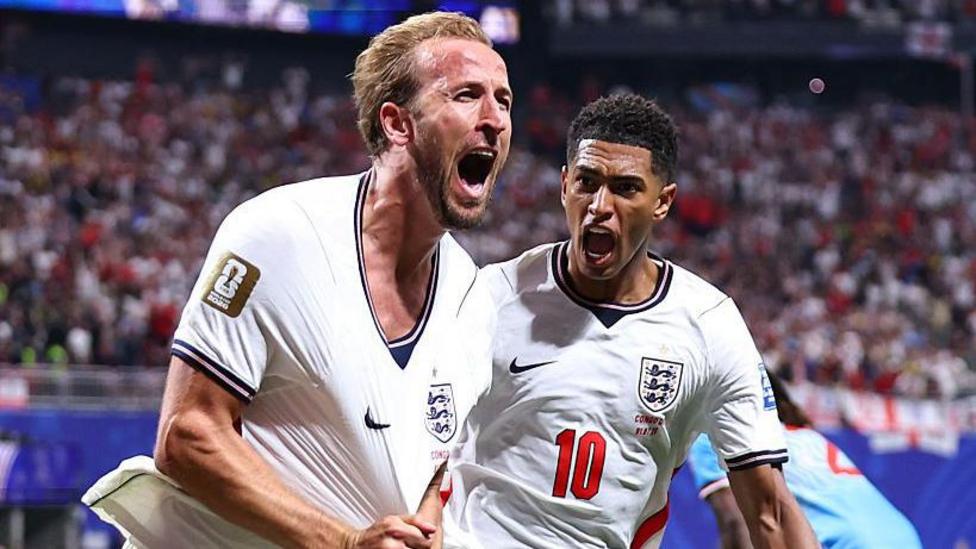
Jude Bellingham has become the gravitational center of England's attacking play since his move to Real Madrid. His ability to receive the ball between the lines, turn under pressure, and drive at defenders with pace and power makes him a nightmare for structured midfields like Croatia's. His positional awareness is elite — he drifts into pockets that don't appear to exist until he occupies them.
Bukayo Saka offers something different. His directness on the right flank, his willingness to take on full-backs one-on-one, and his increasingly reliable end product have made him one of the most complete wide forwards in international football. At Arsenal, he has developed into a player who combines volume with efficiency — a rare combination.
Phil Foden brings the creative chaos factor. On his day, he is arguably England's most technically gifted player. His close control in tight spaces, his ability to find angles that others cannot see, and his finishing from range make him a constant threat. The challenge has always been consistency at international level — translating Manchester City form into the Three Lions shirt.
Then there is Harry Kane, whose movement and link-up play remain underrated even after years of elite production. Kane drops deep to orchestrate, pulls centre-backs out of position, and finishes with the composure of a player who has scored at every level. His presence alone changes how opponents defend, creating the space others exploit.
The Tactical Framework
Understanding who was the biggest threat requires looking at how England set up. The formation and pressing structure dictate where chances originate and which players receive the ball in the most dangerous positions.
England's recent tactical evolution under their current setup has emphasized width and verticality. The full-backs push high, the wingers stay wide to stretch the pitch, and the midfielders make late runs into the box. This system is designed to create overloads on the flanks and numerical advantages in the final third.
Against Croatia's compact defensive shape, this approach tests the patience and precision of England's attackers. Quick combinations in tight spaces, intelligent off-ball runs, and the ability to beat a man one-on-one become the primary tools for breaking through.
The player who thrives most in this environment is the one who can combine individual quality with tactical discipline — someone who reads the game as well as they play it.
"You need players who can unlock a defense with a single touch or a single run. But you also need players who understand the collective shape and when to take risks. That balance is everything at this level." — Analysis of England's attacking approach
What the Ratings Reveal
Player ratings are inherently subjective, but they serve a purpose: they force a hierarchy. In a squad this talented, separating the standout from the solid is both difficult and essential.
The ratings from the Croatia match highlighted a crucial truth about this England team. The biggest attacking threat is not always the player who scores or assists. Sometimes it is the player who occupies two defenders, who forces the opposition to commit extra bodies, or whose movement creates the half-yard of space that leads to a goal three passes later.
This is where advanced metrics and traditional scouting reports align. The best attackers do not just produce — they elevate everyone around them. Against a well-organized Croatian side, that elevation was visible in different forms from different players.
The Dressing Room Dynamic
There is an energy inside the England camp that feels different from previous eras. The attacking players genuinely compete with each other for starting spots, but the competition breeds improvement rather than resentment. Training sessions are intense, and the standard has risen because every forward knows that a dip in performance could cost them their place.
This internal rivalry is England's greatest weapon. When Bellingham, Saka, Foden, and Kane are all pushing each other, the beneficiary is the team. The coaching staff has cultivated an environment where selection headaches are welcomed rather than feared.
After the Croatia match, the mood was focused. Players know that the depth of attacking talent means no one can afford complacency. That pressure is exactly what drives performance at the highest level.
The Numbers Behind the Threat
Looking at England's recent attacking output in competitive fixtures paints a clear picture:
- England have scored in every competitive match across their recent run of fixtures
- The team's expected goals (xG) per match has increased significantly compared to the same stage of the previous campaign
- Multiple players are contributing to the goal tally rather than relying on a single source
- Chances created from wide positions have increased, reflecting the tactical emphasis on flanks
- England's shot conversion rate has improved, suggesting better decision-making in the final third
These numbers reflect a team that is not just talented but tactically coherent. The attacking threat is distributed, making England harder to defend against and less vulnerable to the loss of any single player.
What It Means
The Croatia match reinforced what many already suspected: England's attacking strength lies in its collective depth rather than individual dependency. The biggest threat is not one player — it is the system that makes every forward dangerous.
For the challenges ahead, this is both a blessing and a tactical consideration. Opponents cannot simply shut down one player and expect to neutralize England. But the coaching staff must continue to manage egos, maintain tactical clarity, and ensure that the wealth of attacking options translates into consistent tournament performances.
History tells us that talent alone does not win trophies. England have had talented squads before. The difference now is that the depth of quality in attack creates genuine competition for every starting spot. If that dynamic continues to drive standards upward, the answer to who is England's biggest attacking threat might soon become irrelevant — because the real answer will be all of them.
The next set of fixtures will provide further evidence. But after this latest Croatian examination, the signs are encouraging. England's frontline is not just talented. It is dangerous in ways that are becoming increasingly difficult to contain.
Editorial Integrity
This is an original SportPulse article written by our editorial team. All content is independently researched, written, and reviewed by our writers and editors before publication. We do not publish copied, aggregated, or syndicated content.
SportPulse is committed to original sports journalism. Read our editorial policy or contact us with any questions.
More Like This
All football
Scaloni Baffles by Benching Messi: Tactical Rest or Deeper Message?
Argentina's decision to bench their record-breaking World Cup scorer for the Jordan clash reveals Scaloni's meticulous tournament management.
Storm Clouds Gather as England-Mexico Knockout Tie Faces Rescheduling
A looming storm system threatens to disrupt England's World Cup last-16 clash with Mexico, forcing organizers into a tactical scheduling pivot.

France Survive Paraguay War But Morocco Holds The Blueprint
France's ugly win over Paraguay exposed tactical frailties that Morocco, masters of tournament disruption, are perfectly equipped to exploit.