Scaloni Baffles by Benching Messi: Tactical Rest or Deeper Message?
Argentina's decision to bench their record-breaking World Cup scorer for the Jordan clash reveals Scaloni's meticulous tournament management.
The Calm Before the Knockout Storm
Lionel Scaloni has never been a manager who leaves things to chance. So when he confirmed that Lionel Messi, the World Cup's leading scorer and Argentina's talismanic heartbeat, will start the final group fixture against Jordan on the bench, the decision carried a weight that transcended simple rotation. This was a statement about how Argentina intend to navigate the deeper waters of this tournament.
The Albiceleste have already done the hard yards. With qualification effectively secured and group supremacy within reach regardless of the Jordan result, Scaloni is afforded a rare luxury in tournament football: the chance to manage his most precious asset without the anxiety of consequence. But make no mistake, this is not a casual punt. It is a calculated chess move in a campaign that demands Messi be at his sharpest when the stakes spike.
Why Jordan, Why Now?
The arithmetic of group-stage progression is well understood. Argentina's position means the Jordan match functions less as a must-win and more as a controlled environment for Scaloni to test depth, rest key bodies, and fine-tune tactical variations that could prove decisive in the knockout rounds. Messi has shouldered an enormous creative and goalscoring burden across the opening fixtures, and the physical toll of consecutive high-intensity starts in tournament conditions cannot be understated.
Scaloni's approach echoes a pattern seen in the best-run international squads. Didier Deschamps regularly rotated his French frontline during successful group phases. Luis Enrique experimented with Spain's shape in dead-rubber matches. The principle is universal: protect your stars, expand your tactical playbook, and enter the elimination rounds with a full deck.
What makes this decision particularly interesting is the signal it sends to the rest of the squad. Every player on Argentina's bench knows now that they are not merely passengers. The manager trusts them to execute a game plan without the safety net of the greatest player of his generation orchestrating from the first whistle. That psychological injection of confidence, the feeling of being valued and trusted, can prove invaluable when a substitute is called upon in a high-pressure quarter-final or semi-final.
The Tactical Shift
With Messi removed from the starting 4-3-3 or 4-4-2 shape that Scaloni has favored, Argentina's attacking structure will necessarily shift. The central creative burden falls elsewhere, likely onto the shoulders of players who have operated in Messi's shadow throughout the campaign. Expect a more direct, vertically aggressive approach against Jordan, with wider forwards asked to stretch the defensive block rather than cutting inside to combine with a dropping Messi.
This is where Scaloni's coaching acumen will be most visible. Without Messi's gravitational pull drawing defenders inward, Argentina's half-spaces open up differently. The midfield will need to compensate by advancing higher and more frequently, turning the match into a platform for energetic box-to-box runners to demonstrate their worth. The pressing triggers may also shift; with a more mobile front line, Argentina could adopt a higher, more aggressive gegenpressing structure in the opening half, looking to suffocate Jordan's build-up before they can settle into a low block.
Jordan, for their part, will be aware of the opportunity. Facing Argentina without Messi in the lineup is a psychological reprieve, even if the squad depth Scaloni can deploy remains formidable. Their defensive game plan, likely built around denying Messi space between the lines, becomes irrelevant. The tactical homework changes entirely, and in tournament football, last-minute adjustments to an opponent's unexpected lineup can create a disorientation that even well-organized sides struggle to overcome.
Managing the Body, Managing the Mind
There is another dimension to this decision that goes beyond the physical. Tournament football is as much a mental marathon as a tactical one. The constant media scrutiny, the weight of national expectation, the isolation of camp life — all of it accumulates. For a player of Messi's stature, the spotlight never dims, not even on a matchday where he is named among the substitutes.
A day off the pitch, even if only for 60 or 70 minutes before a potential cameo, offers a mental reset. It allows Messi to observe the game from a different vantage point, to study defensive patterns and spatial weaknesses from the bench with the detached clarity that only a spectator's perspective provides. Some of the greatest players in World Cup history have spoken about how brief rest periods in the group stage sharpened their instincts for the knockout rounds. Scaloni, meticulous and player-centric in his management style, clearly subscribes to this philosophy.
"The most important match is always the next one, but the most important player must be ready for the decisive one." — Lionel Scaloni's approach to tournament squad management, as consistently reflected in his decision-making patterns.
Argentina's Depth Under the Microscope
Every squad rotation is also an audition. The players who start against Jordan will know that this is their opportunity to stake a claim for meaningful minutes when the competition reaches its business end. Scaloni has built a group with genuine positional versatility, and this match offers him a live-fire test of combinations that might otherwise only exist in training.
The defensive structure should remain largely unchanged, with Scaloni reluctant to disrupt the cohesion of a back line that has been solid throughout the group phase. The changes will cluster in the attacking third and central midfield, where Argentina's depth is most pronounced and where the tactical margin for experimentation is widest.
This is also a chance to evaluate how Argentina function without their talisman in a competitive context. The hypothetical of a Messi injury or suspension is one no Argentine fan wants to entertain, but responsible tournament preparation demands it. If the unthinkable happens in a knockout round, Scaloni needs to know exactly how his team adapts, which partnerships click, which patterns of play survive the removal of their primary creative catalyst.
Looking Ahead: The Knockout Calculus
The real significance of this decision will be measured not against Jordan, but in the matches that follow. If Messi returns to the starting lineup refreshed, sharp, and decisive in a Round of 16 clash, then Scaloni's gamble will have been vindicated completely. The knockout rounds are where World Cup legacies are forged, and Argentina's path will demand their best player operating at peak capacity across potentially three grueling matches.
Opponents in the elimination rounds will have studied Argentina's group-stage footage exhaustively. By resting Messi and potentially altering the team's attacking shape for the Jordan match, Scaloni introduces a layer of tactical ambiguity into that scouting process. Do opponents prepare for the Messi-centric Argentina of the first two matches, or the more distributed, direct version that may emerge against Jordan? That uncertainty, even marginal, can be a genuine competitive advantage at the highest level.
Argentina's next opponents will face a fresh Messi and a coaching staff that has used every available minute to refine their tactical toolkit. In a tournament defined by fine margins, that preparation may prove to be the difference between a premature exit and a deep, trophy-chasing run. Scaloni is playing the long game, and every move he makes is designed with the final in mind.
Editorial Integrity
This is an original SportPulse article written by our editorial team. All content is independently researched, written, and reviewed by our writers and editors before publication. We do not publish copied, aggregated, or syndicated content.
SportPulse is committed to original sports journalism. Read our editorial policy or contact us with any questions.
More Like This
All football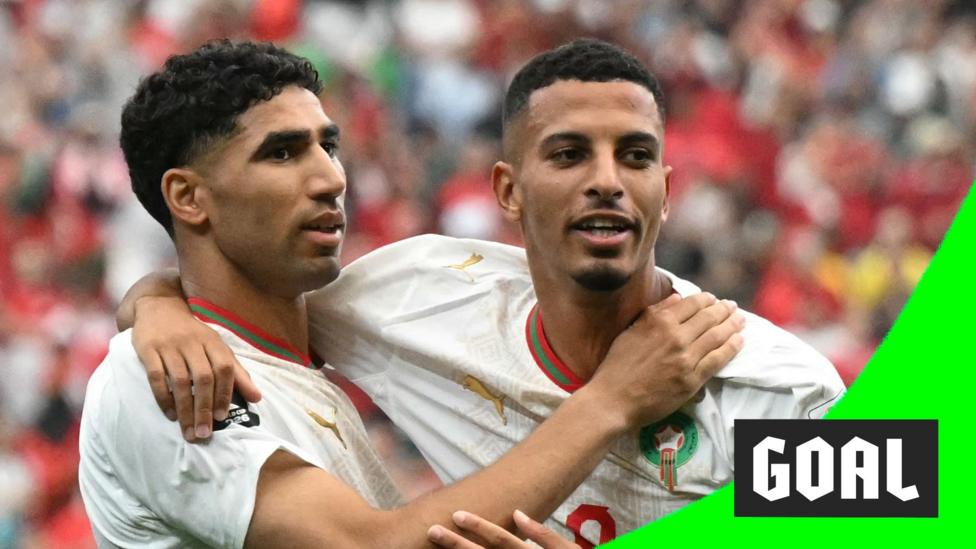
Ounahi Orchestrates Morocco's Tactical Symphony Against Canada
Azzedine Ounahi's opener against Canada showcased Morocco's midfield structure and positional discipline in the 2026 World Cup last 32.
52 Clubs Revolt: 'We Feel Betrayed' Over WSL Third Tier Takeover
A supermajority of National League clubs demand an emergency vote to block WSL academy sides from joining the third tier.

Scotland's Orange Cone Lands in Boston on a Mental Health Mission
An orange traffic cone flew first-class from Glasgow to Boston, greeted by a bagpiper, governor, and mayor for mental health awareness.