England's Right-Back Conundrum and the Gordon Question
Two selection headaches define England's tactical identity heading into Mexico — and neither has an easy answer.
A Formation Built on Uncertainty
England enter the Mexico fixture carrying legitimate structural concerns that no amount of squad depth can paper over. The right-back position, once a position of embarrassing riches, has become a genuine source of anxiety for the coaching staff. The question is not simply who starts there on the night — it is what that selection signals about the tactical identity England intend to build heading into competitive fixtures.
The problem is layered. Kyle Walker offers recovery pace and experience in a back four, but his form at club level has fluctuated. Trent Alexander-Arnold provides an entirely different profile — a playmaking full-back whose passing range can unlock deep blocks but whose defensive positioning remains a talking point. Kieran Trippier, versatile and tactically disciplined, lacks the dynamism of either but brings set-piece quality and positional reliability.
Each option reshapes the team's build-up structure. Select Alexander-Arnold and the right winger must compensate defensively. Pick Walker and you surrender the creative output from wide areas. Choose Trippier and the ceiling drops but the floor rises. This is the kind of decision that sounds minor in a pre-match press conference but ripples through every phase of play.
The Anthony Gordon Dilemma
The second pressing question — whether Anthony Gordon has done enough to warrant a starting berth — is equally revealing about where England's attacking philosophy stands. Gordon has been one of the most consistently dangerous wide players in the Premier League, combining aggressive ball-carrying with an improved end product that has elevated his stock considerably.
His profile fits what England often lack on the left side: directness, willingness to run at defenders in one-on-one situations, and the tactical discipline to track back when required. In an era where England's attacking play can drift into sterile possession, Gordon's urgency with the ball is a genuine asset.
The counterargument is straightforward. Established starters have tournament pedigree. Bukayo Saka remains the first-choice on the right. Phil Foden can operate across the forward line. Jack Grealish, when fit and firing, offers a different kind of left-sided threat. The depth chart is crowded, and Gordon must demonstrate not just club form but international chemistry.
What the Tactical Profile Demands
Mexico present a specific test. They typically set up in a compact 4-3-3 or 4-2-3-1, with disciplined midfield pressing and quick transitions through wide areas. Against such a structure, England need wingers who can stretch the defensive line horizontally and create overloads in the half-spaces.
Gordon's ability to attack the byline and deliver crosses — or cut inside onto his stronger foot — makes him a natural fit for breaking down organized defensive blocks. His pressing intensity also helps England win the ball back higher up the pitch, which is critical against teams content to absorb pressure and counter.
However, if England opt for a more conservative approach — perhaps a 3-4-2-1 with wing-backs providing width — the left forward role changes entirely. In that system, Gordon's strengths are partially absorbed by the wing-back behind him, and a more creative, centrally-oriented player might be preferred.
The Right-Back Decision Cascades Everywhere
This is what makes the right-back question so tactically significant. It is not an isolated selection — it dictates the entire right flank's behavior.
If Alexander-Arnold starts at right-back, the right-sided midfielder or winger can tuck inside, knowing the full-back will occupy the wide channel and deliver from deep. That transforms Saka's role from touchline winger to inside forward, opening central passing lanes.
If Walker gets the nod, the right winger must hold width and create from advanced positions, because Walker's overlapping runs, while effective, lack Alexander-Arnold's final-third precision. England's attacking structure becomes more reliant on crossing from wide rather than through-ball combinations.
The coaching staff must decide which attacking model they prefer before naming the right-back. The selection order of operations is inverted from what many assume: the tactical system picks the defender, not the other way around.
Tactical Shift: Mexico's Pressing Triggers
The match's turning point — or the key tactical subplot to monitor — will be how England handle Mexico's pressing traps. Mexico tend to trigger their press when the ball moves to a central midfielder's weaker foot or when a full-back receives under pressure near the touchline.
Against such triggers, the right-back's composure on the ball becomes paramount. Alexander-Arnold's comfort in tight spaces and ability to play through the press with long diagonals could be the solution. Walker's preference to carry the ball forward or play safe passes might actually feed into Mexico's pressing game.
On the left, Gordon's willingness to receive in tight areas and dribble out of pressure provides a natural press-breaker. His acceleration from a standing start is among the best in the England squad, and that raw speed in transition can punish Mexico for committing numbers forward.
The Bigger Picture: What This Match Really Tests
Friendly or not, this fixture is a diagnostic tool. England's coaching setup will use the Mexico game to stress-test principles that matter in competitive matches: build-up under pressure, wide overloads against compact defenses, and defensive transitions when possession is lost in advanced areas.
"Every selection tells the players what we value. If we pick for control, we communicate that. If we pick for dynamism, that's a different message entirely."
The right-back choice and the Gordon decision are proxies for a larger philosophical question. Does England want to dominate possession patiently, or do they want to attack with vertical speed and risk?
Looking Ahead: System Before Names
The real takeaway from this selection debate should be that England's depth, often celebrated as a strength, now demands a clearer tactical framework. You cannot simply pick the eleven best players and hope cohesion emerges. The Mexico match offers a low-stakes environment to commit to a system and evaluate who thrives within it.
Gordon deserves his opportunity — not because he is definitively better than the alternatives, but because his profile answers specific tactical questions that remain unresolved. The right-back slot should be selected last, not first, determined by the attacking shape chosen ahead of it.
Mexico will be organized, disciplined, and dangerous in transition. If England get the structure right, the individual quality should take care of itself. If the tactical foundation remains muddled, no amount of talent on the team sheet will provide clarity when it matters most.
Editorial Integrity
This is an original SportPulse article written by our editorial team. All content is independently researched, written, and reviewed by our writers and editors before publication. We do not publish copied, aggregated, or syndicated content.
SportPulse is committed to original sports journalism. Read our editorial policy or contact us with any questions.
More Like This
All football
Ramsey Takes the Oxford Dugout: A Gamble Rooted in Footballing Pedigree
Former Arsenal midfielder Aaron Ramsey enters management at Oxford United, bringing Wenger-era principles to League One's tactical landscape.
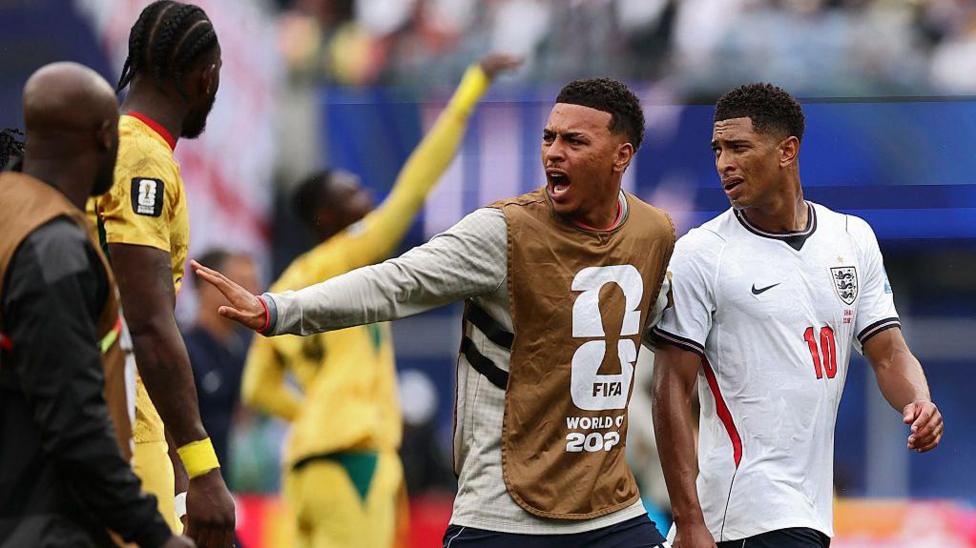
Tuchel Shields Bellingham After Queiroz Touchline Clash
Thomas Tuchel backs Jude Bellingham following a heated touchline altercation with Carlos Queiroz, reframing the incident through a tactical lens.
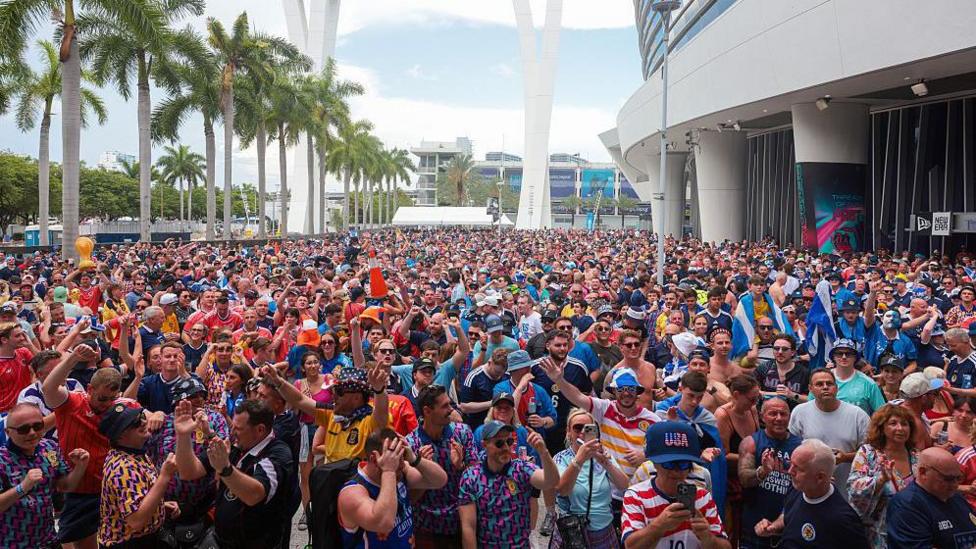
Tartan Army Takes America: Scotland Fans Winning Hearts at World Cup 2026
The Tartan Army's charm offensive across America has become one of the World Cup's best storylines off the pitch.