Why the Football Newsletter Is Winning the War for Your Attention
In an era of doom-scrolling and algorithm fatigue, the humble email digest is football media's quiet overachiever.
The Newsletter Renaissance Nobody Predicted
There was a time, not long ago, when the email inbox felt like a relic. Social media had supposedly killed it. Twitter (now X) was where football discourse lived and died. Instagram Reels captured the highlights. TikTok delivered the memes. YouTube gave you tactical breakdowns over your morning coffee. The idea that a curated email, landing in your inbox every weekday afternoon, could compete with all of that seemed absurd.
And yet here we are.
The Guardian's Football Daily, formerly known as The Fiver, is one of the clearest examples of a broader shift in how supporters consume the sport. It is not alone. The Athletic's suite of team-specific newsletters, David Ornstein's transfer columns landing directly in inboxes, Fabrizio Romano's Substack-style updates, Tifo Football's tactical briefings, Jonathan Wilson's long-form reflections at The Guardian, Rory Smith's dispatches at The New York Times. The football newsletter is not just surviving the attention economy. It is thriving in it.
Why Email Beats the Algorithm
The reason is deceptively simple: control. In an ecosystem where algorithms decide what you see, when you see it, and how much of it you actually get, the email newsletter hands that power back to the reader. You open it when you want. You read it at your pace. There is no infinite scroll designed to trap you for forty-five minutes. No rage-bait thread engineered to spike engagement metrics. No autoplay video you never asked for.
For football fans specifically, this matters enormously. The modern supporter is bombarded. On a typical matchday Saturday in the Premier League, there are ten simultaneous games generating goals, controversies, injuries, tactical shifts, and managerial meltdowns. Add the Championship, La Liga, Serie A, Bundesliga, Ligue 1, and the various continental competitions, and the information volume becomes genuinely unmanageable.
A well-curated newsletter does the filtering for you. It compresses the chaos into something digestible. The Guardian's own pitch for Football Daily captures this perfectly: a roundup of football news and gossip delivered with editorial voice. That last part is the key. Not a feed. Not a wire service dump. A voice.
The Economics of the Football Inbox
There is a hard-nosed business case behind the newsletter boom, and it is worth understanding because it shapes what you read.
First, email subscribers are exponentially more valuable than social media followers. A newsletter list is owned media. The Guardian does not depend on Meta's algorithm to reach its Football Daily readers. It does not need Elon Musk's platform to stay visible. It has a direct line, unmediated, to hundreds of thousands of inboxes. For publishers navigating the collapse of display advertising revenue and the squeeze on referral traffic from social platforms, that direct relationship is existential.
Second, newsletters drive remarkably high engagement rates. Industry benchmarks place open rates for media newsletters between 40% and 55%, with click-through rates that dwarf social media performance. Compare that to the roughly 2-5% of your Twitter followers who actually see any given post, and the economics become starkly clear. You are better off with 100,000 email subscribers than with 1,000,000 Twitter followers.
The Athletic understood this early. Their entire subscription model is built on newsletter-first distribution. Ornstein's transfer exclusives land in inboxes before they trend on social media. By the time a rumor is doing the rounds on X, subscribers have already read the authoritative version with context, sourcing, and analysis. That asymmetry is a competitive moat.
The Tone Problem: Why Most Football Newsletters Fail
Not every newsletter succeeds, and the failures are instructive. The ones that work share a common trait: they have editorial personality. The Guardian's Football Daily describes itself as "belligerent, sometimes intelligent, and very occasionally funny." That self-awareness is the entire pitch. Readers do not need another dry factual summary. They can get that from push notifications and Google alerts.
What they want is perspective. Curation with a point of view. A writer who will tell them not just that Manchester United lost, but why it matters, what it reveals about the systemic dysfunction at Old Trafford, and whether the underlying performance data actually suggests things are as bad as the scoreline indicates.
The newsletters that struggle tend to be the ones that mistake aggregation for journalism. A list of headlines with links is not a newsletter. It is an RSS feed wearing a different hat. The successful operators understand that voice is the product. Barry Glendenning's irreverence, Jonathan Wilson's intellectual rigor, Ornstein's meticulous sourcing, Sid Lowe's literary warmth in his La Liga dispatches from Spain. These are not incidental features. They are the reason people subscribe.
The Social Media Exodus Is Real
The timing of the newsletter resurgence is not coincidental. The deterioration of Twitter/X as a reliable football news platform has accelerated the migration. The platform's algorithmic changes, the rise of engagement farming accounts that fabricate transfer rumors for clicks, and the general degradation of discourse have pushed serious football fans toward more controlled information environments.
Consider the transfer window. During a typical summer window, the volume of fabricated or misleading transfer claims on social media spikes dramatically. A 2023 study by Football Benchmark noted that engagement on transfer-related content on X increased by over 300% during July and August, with a corresponding surge in unverified claims. Fans who want accuracy, not noise, have increasingly turned to newsletter-based reporting where reputation and accountability matter.
The Reddit football community has partially filled this gap too, with subreddit-specific discussion threads offering curation through upvoting. But Reddit lacks the editorial voice and the push delivery model. A newsletter arrives. Reddit requires you to go looking.
What This Means for Football Journalism
The newsletter boom reflects something deeper about the relationship between football and the media that covers it. The sport's global audience now spans over 5 billion people across 200-plus countries. The Premier League alone generates an estimated £6 billion in annual revenue. That scale demands media infrastructure that can serve fragmented, passionate, hyper-informed audiences.
The newsletter model is uniquely suited to this because it allows for granular segmentation. You can subscribe to a general football digest, or a newsletter focused solely on your club, or one that covers only the transfer market, or one that analyzes tactical trends across European leagues. The specificity is the selling point.
This also has implications for how football stories break. The traditional news cycle, where a story appears in a morning newspaper, gets debated on afternoon phone-ins, and becomes yesterday's news by evening, has been disrupted for years. But the newsletter model creates a new kind of rhythm. Stories develop throughout the day. The afternoon newsletter contextualizes what happened, synthesizes the noise, and points toward what is coming next. It serves a function that neither the morning paper nor the live social feed can replicate.
The Bottom Line
The football newsletter is not a trend. It is a structural adaptation to an information environment that has become hostile to attention and hostile to trust. In a media landscape where every platform is fighting to keep you scrolling, the newsletter respects the transaction: here is what happened, here is what it means, now go live your life.
The Guardian's Football Daily, The Athletic's portfolio, Ornstein's columns, and the growing ecosystem of independent football newsletter creators are all betting on the same principle: that curation beats volume, that voice beats virality, and that the inbox, of all places, is where serious football fans want their game served.
They are not wrong. The numbers back it up. The engagement proves it. And the continued growth of the format suggests that the football newsletter has not yet reached its ceiling.
For publishers, the message is clear: build the list. For fans, the advice is simpler still: clean out your inbox and make room. Football's best analysis is coming to you, whether the algorithm wants it to or not.
Editorial Integrity
This is an original SportPulse article written by our editorial team. All content is independently researched, written, and reviewed by our writers and editors before publication. We do not publish copied, aggregated, or syndicated content.
SportPulse is committed to original sports journalism. Read our editorial policy or contact us with any questions.
More Like This
All football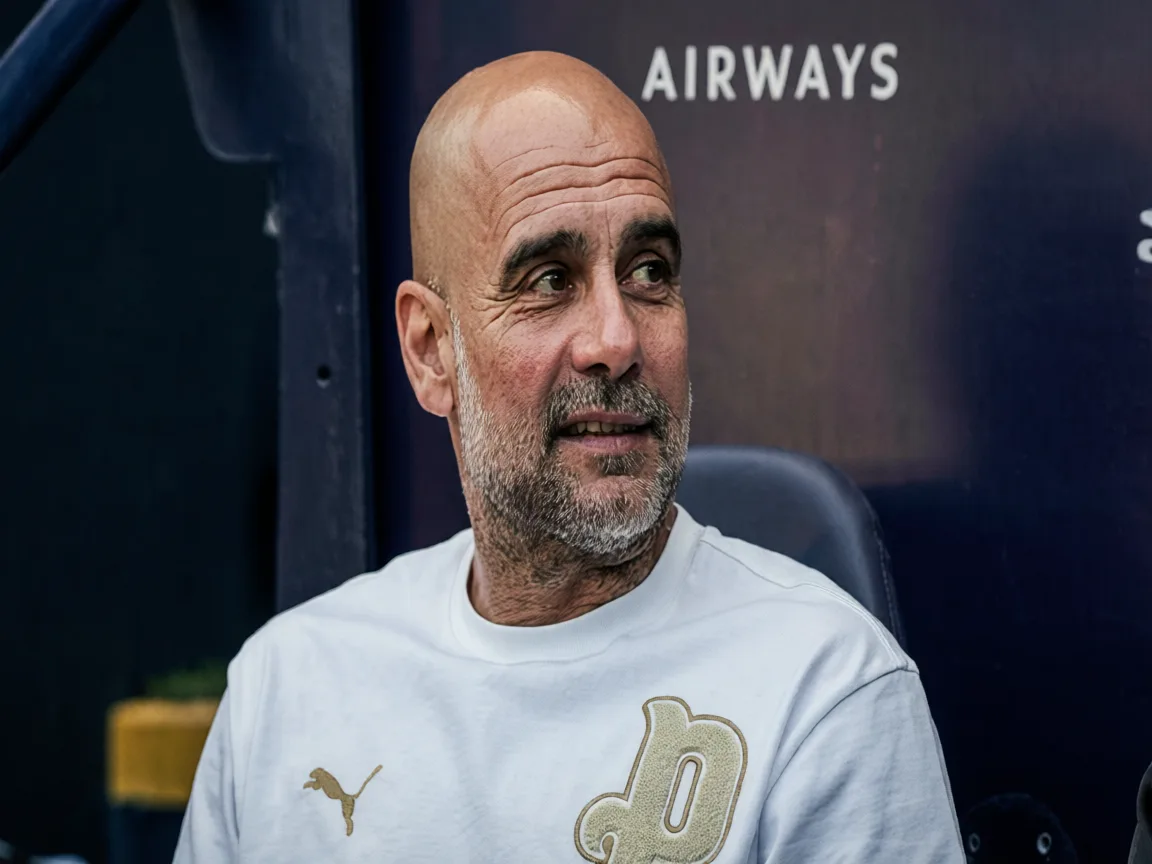
Guardiola and Italy: A Tactical Marriage That Could Reshape International Football
Pep Guardiola speaks fluent Italian and Italy wants him. England should be watching very closely.

From Stuttgart Hip-Hop Nights to Wembley: Tuchel's Unlikely Road to England
Thomas Tuchel's journey from unconventional beginnings to England's dugout makes him a World Cup history-maker in waiting.
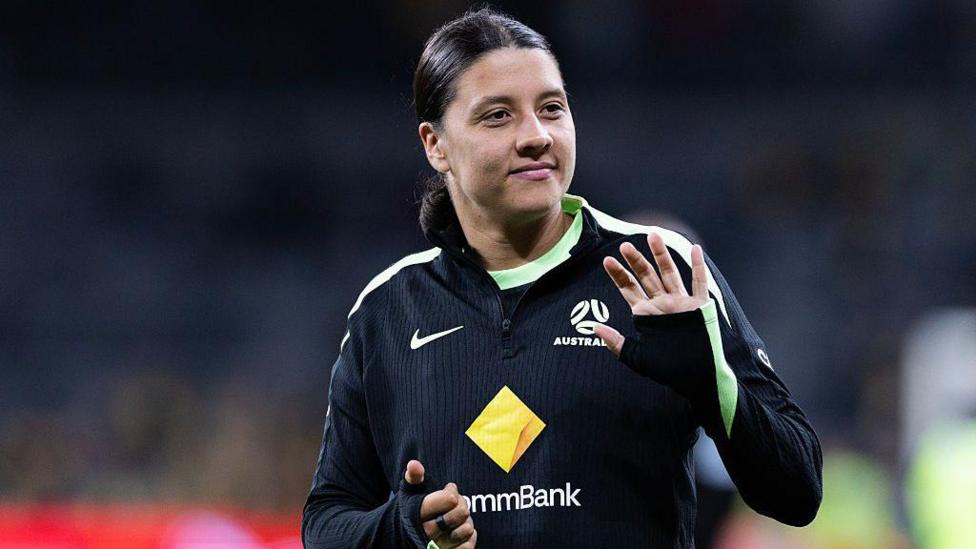
Sam Kerr Returns to the NWSL as Gotham FC Land a Generational Striker
Australia's all-time leading scorer reunites with Gotham FC on a four-year deal after five trophy-laden years at Chelsea.