Through the Lens: How Football's Greatest Tactical Stories Are Told in a Single Frame
The best football photographs don't just capture goals — they reveal the tactical architecture that shapes modern matches.
The Frame That Tells the Whole Story
There is a particular kind of football photograph that stops you mid-scroll. Not the goal celebration, not the sliding tackle, not the manager berating the fourth official. It is the wide-angle shot, usually taken from an elevated position behind one goal, that captures 22 players in a single frame — and in that frame, the entire tactical architecture of a match reveals itself.
The Guardian's Sport in Focus newsletter curates the most striking sporting images of each week, and among its selections, football photographs occupy a unique space. Where a rugby scrum or a tennis rally tells its story through physical confrontation, a single football image can encode an entire tactical philosophy. The distance between the defensive line and the midfield block. The width of the wingers relative to the half-spaces occupied by interior midfielders. The pressing trigger visible in the body orientation of a centre-forward. These are not aesthetic accidents. They are evidence.
In the modern era of football analysis, where data dashboards and expected goals models dominate pre-match preparation, the photograph remains an undervalued tactical document. It is immediate. It requires no algorithm to interpret. And when framed correctly, it tells you more about a coach's intentions in one second than a post-match press conference does in fifteen minutes.
Positional Play in Pixels
Consider the evolution of football photography alongside the evolution of tactical thinking. In the 1970s and 1980s, matchday images tended to isolate individual duels: the striker versus the goalkeeper, the full-back lunging into a tackle. The photographic convention mirrored the way football was discussed — as a series of individual contests, moments of brilliance or error.
The shift began with the broadcast revolution. As television cameras adopted wider angles and tactical analysis shows like Match of the Day began freezing frames to illustrate positional structures, photographers started capturing the same spatial relationships. The modern football photograph, at its best, is a freeze-frame of positional play.
When Pep Guardiola's Manchester City line up in their characteristic 3-2-4-1 build-up shape, with the full-backs inverting into half-spaces and the single pivot sitting beneath a diamond of interior players, a well-composed photograph from behind the goal line captures the entire system in one breath. You can see the triangles. You can see the third-man runs developing. You can see the opposition's pressing structure reacting — or failing to react — to the positional rotations.
This is not decoration. It is tactical documentation.
The Pressing Photograph
Perhaps the most instructive images in modern football photography are those that capture pressing in action. A high press is, at its core, a spatial proposition: compress the pitch, deny time on the ball, force errors in dangerous areas. The effectiveness of a press is measurable through data — PPDA (passes per defensive action), high turnovers, recovery zones — but it is visible in a photograph in a way that data sometimes struggles to convey.
The angle of the pressing player's run. The cover shadow cast across the passing lane. The defensive line pushing up to within 25-30 metres of the halfway line, reducing the space between the lines to a suffocating corridor. These elements, captured in a single frame, communicate the intensity and coordination of a pressing system with visceral clarity.
Jürgen Klopp's Liverpool at their gegenpressing peak were a photographer's dream. The moment of turnover, with four or five red shirts converging on the ball carrier from multiple angles simultaneously, told the story of a team whose defensive identity was built on collective aggression and spatial compression. The images were chaotic, kinetic, and unmistakable in their tactical meaning.
The Emotional Architecture
Football photography is not purely tactical, of course. The best images operate on multiple registers simultaneously. A photograph of a manager in the technical area — arms outstretched, jaw set, eyes locked on the far-side full-back who has drifted five metres out of position — contains both emotional drama and tactical information. The tension in the frame is the tension of a system under stress.
This dual register is what makes football photography distinctive among sports imagery. A cricket photograph captures the physics of a cover drive. A Formula 1 image captures the engineering of aerodynamic downforce. But a football photograph, at its finest, captures something more elusive: the relationship between structure and chaos, between the coach's plan and the game's refusal to conform to it.
When a centre-back steps out of the defensive line to close down an advancing midfielder, and the photograph captures the gap that opens behind him — a gap that, fractions of a second later, will be exploited by a through-ball — the image becomes a document of tactical failure frozen in time. You can see the decision. You can see its consequences about to unfold. The beauty and the tragedy are inseparable.
The Bundesliga's Visual Language
It is worth noting that German football photography, in particular, has embraced this tactical dimension with unusual sophistication. The Bundesliga's broadcast and photographic coverage has long favoured wider angles and more patient framing than its English or Spanish equivalents, allowing viewers and readers to see the full shape of teams in possession and in transition.
This is not coincidental. German football culture, shaped by the influence of pressing-oriented coaching and the systematic thinking of figures like Ralf Rangnick, has always foregrounded structure and spatial relationships. The photographic tradition reflects the analytical one. When you look at Bundesliga matchday photography, you are often looking at positional play rendered visible — the kind of image that a coach might pin to a tactics board during a video session.
Digital Dimensions
The digital age has transformed football photography in ways that extend far beyond distribution. The availability of broadcast freeze-frames, tactical screenshots, and annotated images on social media has created a new visual literacy among football audiences. Supporters now routinely identify pressing structures, build-up shapes, and defensive transitions from still images alone. The photograph has become a tool of collective analysis.
This democratisation has its risks. A single frame can be misleading — a moment of transition captured mid-rotation can make a well-organised team look chaotic, or vice versa. Context matters. The phase of play, the moment in the match, the scoreline all affect what the image actually represents. A 4-3-3 in the 89th minute while chasing a goal looks nothing like a 4-3-3 in the 23rd minute at 0-0.
Yet the appetite for tactical imagery is undeniable. Accounts dedicated to analysing single frames — drawing arrows, shading zones, identifying pressing traps — have amassed followings in the hundreds of thousands. Football's visual language has expanded, and the photograph sits at its centre.
What Comes Next
As the season progresses into its congested autumn phase, with European competition and domestic fixtures colliding, the tactical narratives will only intensify. The midweek Champions League nights under the lights produce some of the most striking images in the sport: the geometric precision of a Guardiola build-up against a low block, the furious counter-pressing of a Bundesliga side in transition, the disciplined 5-4-1 shape of a team defending a lead in the knockout rounds.
Each of these moments, if captured with the right eye, becomes more than a photograph. It becomes a tactical document, an emotional artefact, and a piece of football's ongoing visual archive.
The lens does not lie. In a sport increasingly dominated by data and models, the photograph remains football's most honest narrator — showing us, in one frozen instant, exactly what happened and, more importantly, why it happened.
Elena Rossi is the tactical analysis editor at SportPulse, covering European football's strategic landscape.
Editorial Integrity
This is an original SportPulse article written by our editorial team. All content is independently researched, written, and reviewed by our writers and editors before publication. We do not publish copied, aggregated, or syndicated content.
SportPulse is committed to original sports journalism. Read our editorial policy or contact us with any questions.
More Like This
All long-reads
UK Moves to Shield World Cup and Crown Jewel Sports From Streaming Paywalls
New government legislation could rewrite the rules of sports broadcasting, keeping the biggest events free for UK viewers.

Why the World Cup Still Conquers Our Summers
No sporting event on earth hijacks ordinary life quite like the World Cup, turning weddings and sleepless nights into folklore.
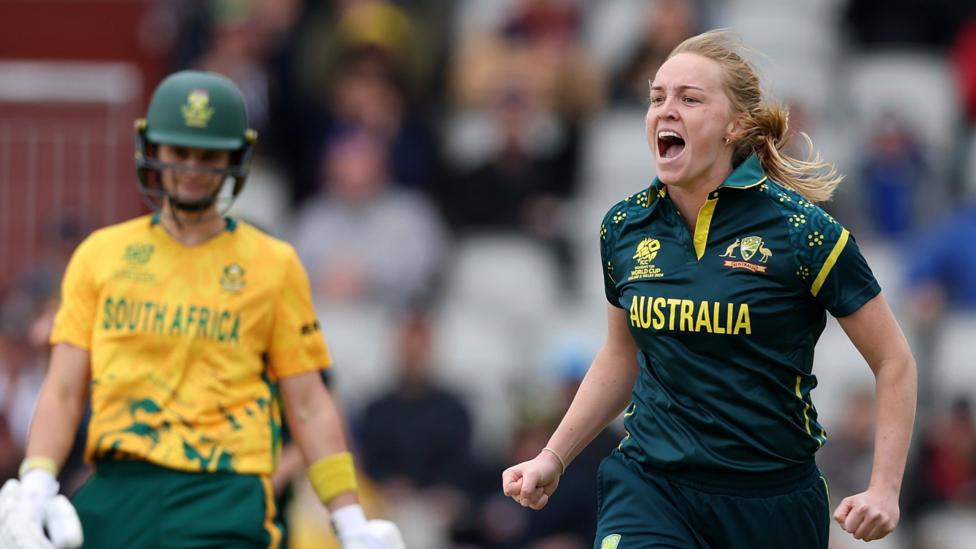
Bigger Bats, Bolder Scoops: The Tactical Evolution Reshaping Women's T20 Cricket
The Women's T20 World Cup revealed a sport in rapid tactical flux, from record run rates to fearless shot-making innovation.