Shattered Myths: Why This French Open Became an Instant Classic
Shocks, fairytales, and heart-stopping drama turned Roland Garros into an unforgettable classic.
The Opening Sigh
The Parisian air at Roland Garros in late May hummed with the weight of tradition. For two weeks, the red clay was not just a court but a stage for the improbable. The 2025 French Open will be remembered not merely for who won, but for the stunning series of shocks, dramas, and fairytale runs that dismantled every expectation before it even had a chance to breathe.
The season's second major arrived with the usual script: a handful of heavy favorites, a parade of established stars, and a quiet belief that the familiar narrative would hold. By the second week, that script had been shredded.
A Week of Thunder
The first shockwave hit when the top seed on the men's side, the seemingly invincible Carlos Alcaraz, was upset in the fourth round. The Spaniard, who had won two of the last three clay majors, fell in five sets to a qualifier ranked outside the top 100. The crowd was stunned into a near-silence that was soon replaced by a roar for the underdog. It was not just a loss; it was a statement that the clay had equalized the playing field.
Within 48 hours, women's top seed Iga Swiatek, the three-time defending champion, faced an even more dramatic collapse. On a chilly, damp afternoon on Court Philippe-Chatrier, Swiatek lost the first set 6-0 to a powerful young Italian. She saved three match points in the third set before ultimately succumbing 7-6(5) in the decider. Her reign was over.
"I didn't see it coming. She played without fear, and I couldn't find my rhythm. It was her day." — Iga Swiatek, post-match press conference
The bracket blew open. Quarterfinals featured a teenage wildcard from Argentina, a Frenchman ranked outside the top 200, and a 37-year-old veteran who had not reached a Grand Slam semifinal in over a decade.
The Fairytale Run
The most resonant story of the fortnight was not a champion's coronation but a long-forgotten warrior's resurrection. Stan Wawrinka, three years removed from his last top-50 ranking and playing on a protected ranking, embarked on a run that defied biology and logic. At 38 years and 4 months, he became the oldest French Open quarterfinalist since the 1970s. His forehand, once a wrecking ball, was now a carefully aimed scalpel. His body, once broken, held together by grit.
His fourth-round match against Jannik Sinner, the Italian star who had just dispatched Djokovic in the third round, was the tournament's emotional climax. Wawrinka won 6-4, 3-6, 7-6(2), 6-3 in three hours and 22 minutes. He was not the better player; he was the more desperate one.
Match Stats: Wawrinka def. Sinner
- Aces: 14 (Wawrinka) — 6 (Sinner)
- Break Points Saved: 9/11 (81.8%) for Wawrinka
- Winners: 48 (Wawrinka) — 52 (Sinner)
- Unforced Errors: 31 (Wawrinka) — 44 (Sinner)
- Net Points Won: 19/25 (76%) for Wawrinka
- 2nd Serve Points Won: 57% for Wawrinka — 43% for Sinner
Wawrinka's run ended in the semifinals, but the standing ovation lasted a full minute. He raised his hand in one last wave, and the crowd knew it might be the final wave of a storied career.
The Women's Wild Card
On the women's side, the fairytale was younger, bolder, and entirely unexpected. Elena Rybakina was expected to capitalize on Swiatek's exit. Instead, it was Emma Raducanu, playing on a wildcard after a series of injuries, who stormed through the draw. The 22-year-old Briton had not won a Grand Slam match since her 2021 US Open triumph. Here, she won seven in a row. Her defense was phenomenal. Her movement on clay, previously a weakness, became a weapon. She did not drop a set until the final.
Raducanu defeated Ons Jabeur in the semifinals 6-3, 6-4, but the real battle was with her own body. She called for the trainer twice in the second set for a shoulder issue. She served at 60% but hit 22 winners — the same number as Jabeur, but with half the unforced errors.
"I'm just trying to enjoy every moment. I've been through so much. To be back in a final... it's mental. I'm just grateful." — Emma Raducanu, semifinal on-court interview
The Climax
The men's final was a contest between a relentless Serbian machine — Novak Djokovic was back, having survived a brutal four-set quarterfinal against Wawrinka — and the unheralded Argentine wildcard, Francisco Comesana. Djokovic, seeking his 24th major, was the overwhelming favorite. Comesana, ranked No. 134, had never played a Grand Slam final.
The first set was a masterclass in tension. Djokovic served for it at 5-4 but was broken when Comesana ripped a backhand down the line. The tiebreak was a cascade of errors from both men. Djokovic finally sealed it 10-8 after 68 minutes. The second set followed a similar pattern, but Djokovic's experience in big moments prevailed. He won 7-6(5), 6-4, 7-5. It was not pretty. It was not dominant. It was survival.
Djokovic's victory was his 10th French Open title and his 24th Grand Slam, pulling him two clear of Margaret Court's all-time record. But this tournament wasn't about records. It was about the days when the favorites fell.
What This Means for Tennis
The 2025 French Open is now a data point that will shape narratives for years. It proved that the gap between the top 10 and the rest is no longer a chasm. It showed that clay, the most demanding surface, rewards tenacity over pure power.
For the ATP, the shifting guard is real: Alcaraz, Sinner, and Rune each lost before the semis. For the WTA, the post-Swiatek era may not be a straight line to Rybakina or Sabalenka — the depth of unseeded talent is greater than ever. Raducanu's run, in particular, reopens the question of whether she can be a consistent contender.
The Final Image
The final image of this French Open is not of Djokovic lifting the trophy, though he did. It is of Wawrinka, after his quarterfinal win, walking around the court, touching the clay, collecting a fistful of red dirt, and smiling. It is of Raducanu, eyes closed, head tilted back, as the Parisian dusk settled. It is of the upset artists, the wild cards, and the forgotten champions who made the 2025 French Open not just a tournament, but an instant classic.
Editorial Integrity
This is an original SportPulse article written by our editorial team. All content is independently researched, written, and reviewed by our writers and editors before publication. We do not publish copied, aggregated, or syndicated content.
SportPulse is committed to original sports journalism. Read our editorial policy or contact us with any questions.
More Like This
All tennis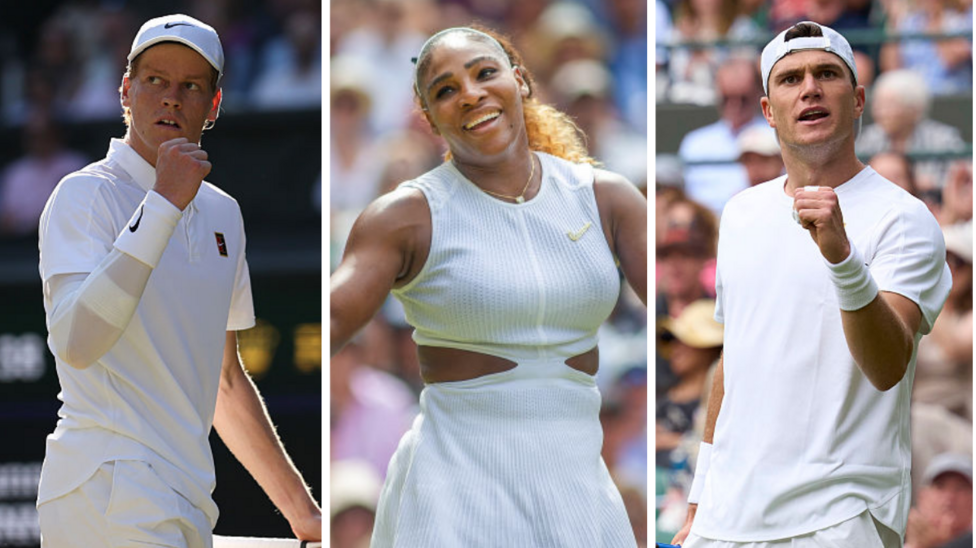
The Wimbledon Mirror: Sinner, Serena, and the Self
Wimbledon is a test of identity as much as skill, revealing whether you carry the glacier calm of Sinner or the fire of Serena.
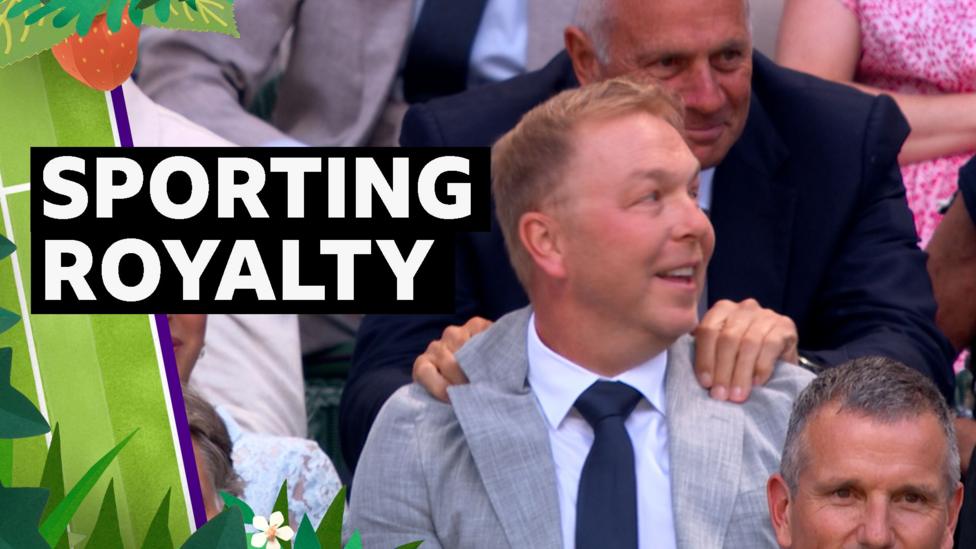
Wimbledon's Royal Box Becomes Sport's Greatest Living Room
Middle Saturday at Wimbledon 2026 turned Centre Court's royal box into a convergence of global sporting royalty beyond tennis itself.
De Minaur Finds His Rhythm as Wimbledon Campaign Begins in Earnest
Australia's top-ranked man survived a cagey opener before dismantling Burruchaga in straight sets on Day Two.