Mendy to Hearts: Tenth Signing Marks Aggressive Summer Rebuild
Hearts secure Forest Green captain Laurent Mendy as their tenth summer signing, signalling an aggressive squad overhaul at Tynecastle.
Hearts' Summer of Relentless Acquisition
Heart of Midlothian have agreed a deal to sign Forest Green Rovers captain Laurent Mendy, making him the tenth player to walk through the Tynecastle doors this summer. That number alone tells a story of a football club operating in a very specific gear. This is not targeted surgery. This is open-heart reconstruction performed at breakneck speed.
Double-digit signings in a single transfer window is abnormal for almost any club outside the financial elite. For a Scottish Premiership side that finished 3rd in the 2023-24 campaign, trailing 61 points behind the Old Firm duopoly, the message from the boardroom is unambiguous: the squad that existed in May is not the squad they believe can push the ceiling higher. Mendy's arrival is the latest statement in a relentless campaign of renewal.
The Bottom Line: Ten signings is not rotation. It is a declaration of institutional dissatisfaction with the status quo, and a willingness to bet heavily on a rapid, high-volume cultural reset.
Why Mendy Fits the Profile
Laurent Mendy arrives in Edinburgh not as a household name, but as the on-field general of a League Two side. Forest Green Rovers' campaign was defined by struggle, and when teams are struggling, leadership becomes a premium currency. That Mendy retained the armband in adverse conditions speaks to a player whose tactical discipline and vocal presence in the dressing room survived the pressure of a relegation fight.
For Hearts, the player profile is paramount. A captain at League Two level may not arrive in the Scottish Premiership ready to dominate the starting XI immediately, but he arrives with captaincy muscle. The traits required to wear an armband — midfield tenacity, decision-making under duress, and spatial awareness — are habits forged through repetition and responsibility.
Statistical Context
- 3rd place finish for Hearts in the 2023-24 Scottish Premiership.
- 10 summer signings represents a nearly 50% turnover of a standard first-team squad.
- 61-point gap between Hearts and the league leaders, underscoring the immense reconstruction required to bridge the divide.
- 0 prior top-flight appearances in Scottish football for Mendy, highlighting a classic development project.
Verdict: Bringing in a player who has already shouldered the captain's armband at any professional level is a low-risk, high-upside play. The physical and mental demands of leadership at the base of the football pyramid often harden players for the unforgiving environment of Scottish top-flight football.
The Tactic of Volume
There is a distinct strategy at play here that goes beyond simply identifying individual targets. Hearts' recruitment team has opted for volume, a policy that carries inherent risk but also addresses the specific structural frailties of a squad that found itself stretched thin in crucial moments last season.
When you sign ten players in a single window, you are effectively acknowledging two things. First, the existing squad lacked sufficient quality or depth. Second, you believe that introducing fresh bodies and forcing them to compete for positions will organically raise the performance floor of the entire team.
The risk, of course, is fragmentation. Squad chemistry is a fragile alchemy. A manager tasked with integrating a third of a new squad in the span of a few months faces arguably the most demanding challenge in the sport. Training ground cohesion takes time to develop, and time is exactly what Hearts do not have with the new season approaching rapidly.
The Bottom Line: Volume acquisition is a high-wire act. Success depends on a manager capable of forging unity from chaos, and a recruitment strategy that prioritizes not just individual names, but tactical and psychological compatibility.
What This Means for Scottish Premiership Dynamics
The broader implications stretch beyond Tynecastle. Hearts' aggressive market behavior complicates the established narrative of the Scottish Premiership, a league often criticized for its predictability. The gap between the Old Firm and the rest has been a structural certainty for years, but teams like Hearts are now investing with the intent to at least narrow the chasm, if not immediately challenge the duopoly.
For the clubs positioned around Hearts — the likes of Aberdeen, Hibernian, and Motherwell — this transfer aggression cannot be ignored. A 3rd-place finish is valuable for European qualification, offering critical coefficient points and revenue that can fund future windows. It is essential for clubs in that upper-mid tier to accumulate European nights to build their financial and sporting capital. If Hearts hit the ground running with their reconstructed squad, the pressure on their immediate rivals to respond in kind will be immense.
The Pressure Test: Intensity and Adaptation
Mendy's transition from League Two to the Scottish Premiership will be scrutizined from Day One. The intensity of Scottish top-flight football, particularly in the midfield battleground, is a notorious shock to the system for players arriving from lower-tier English football. The physical demands are uncompromising, the tactical breakdown is severe, and the atmosphere at grounds like Tynecastle offers no hiding place.
The player's physical readiness becomes a critical baseline. Adapting from the pacing of League Two to the relentless tempo of Premiership combat is a non-trivial adjustment. However, he arrives at a club where the manager will have the flexibility to deploy him in a system that can absorb growing pains, surrounded by new teammates who are similarly eager to prove their worth.
Verdict: Mendy's success at Hearts will not be measured in his first month, but in his ability to sustain intensity across a demanding 38-game league campaign plus cup commitments. His prior experience as a captain suggests the psychological resilience to weather the inevitable adjustment period.
What Comes Next at Tynecastle
The business of assembling a nearly new squad is only half the battle. The real challenge for Hearts unfolds when the competitive matches begin and the theoretical balance sheets give way to the unforgiving reality of ninety-minute examinations.
The coaching staff must now transition from recruitment to integration. Ten new players means ten different tactical orientations, ten sets of individual instructions, and ten personal adaptations to the club's philosophy. The manager's job is not merely to select the best eleven, but to construct a cohesive unit from a pile of disparate parts.
Laurent Mendy represents the final piece of this initial phase of construction. His signing closes the chapter of wholesale acquisition and opens the chapter of assembly. The Tynecastle hierarchy has delivered the raw materials. Now begins the delicate, demanding process of building a team capable of both consolidating 3rd place and mounting meaningful pressure on the established order.
For Hearts supporters, the optimism of a ten-signing summer must quickly be matched by patience. Chemistry is not purchased. It is engineered on the training pitch, tested in the opening months, and validated over a grueling campaign. Mendy, wearing his new colors, may yet prove to be a quiet cornerstone of that ambitious rebuild.
Editorial Integrity
This is an original SportPulse article written by our editorial team. All content is independently researched, written, and reviewed by our writers and editors before publication. We do not publish copied, aggregated, or syndicated content.
SportPulse is committed to original sports journalism. Read our editorial policy or contact us with any questions.
More Like This
All football
UEFA Declares War on FIFA Over Balogun Suspension Saga
UEFA accuses FIFA of crossing a red line by lifting Folarin Balogun's ban, sparking a governance crisis that could reshape football's power structure.
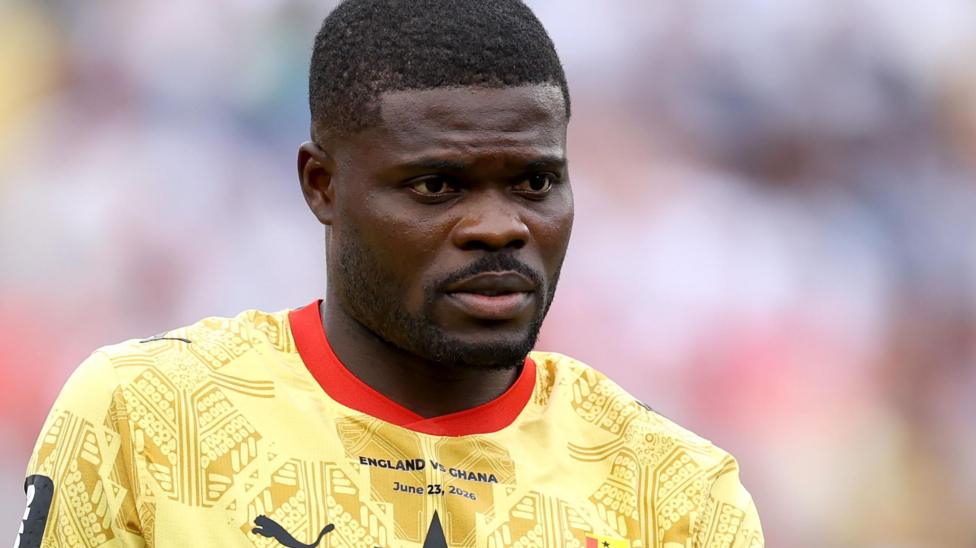
Spence's Cold Shoulder: The Partey Handshake Moment That Spoke Volumes
A viral pre-match clip between Djed Spence and Thomas Partey raises questions about football's unwritten codes before a World Cup showdown.

Premier League Clubs Circle as Nakamura Eyes England Move
Japan's electric winger Keito Nakamura wants the Premier League after turning heads at the World Cup.