UEFA Declares War on FIFA Over Balogun Suspension Saga
UEFA accuses FIFA of crossing a red line by lifting Folarin Balogun's ban, sparking a governance crisis that could reshape football's power structure.
UEFA has drawn a battle line. By publicly accusing FIFA of crossing a "red line" in overturning Folarin Balogun's suspension, European football's governing body has ignited a institutional conflict that reverberates far beyond a single World Cup knockout match.
The decision to clear the USA striker for Monday's last-16 clash against Belgium was slammed by UEFA as "incomprehensible and unjustifiable." That language is not standard diplomatic friction. It is a declaration.
UEFA president Aleksander Ceferin endorsed the extraordinary statement after days of conspicuous silence during the tournament. His decision to break that silence with such firepower signals a calculated escalation.
The Spark That Lit the Fuse
Balogun was shown a red card in the USA's win over Bosnia and Herzegovina. The suspension that followed carried an automatic one-match ban. Belgium's football association filed an appeal against the initial disciplinary ruling, seeking a review of the incident's disciplinary classification.
FIFA's disciplinary committee then lifted the suspension. In the space of hours, a player who had been ruled out of the most important American knockout match in years was suddenly available for selection.
But the reversal was not merely a procedural outcome. Sources have told the Guardian that Donald Trump made three calls to FIFA, starting from Wednesday, to ensure that the change was made. The political lobbying campaign directly pressured the world governing body to overturn the ban, adding a dimension of political intervention that has left the football world reeling.
Timing is the flashpoint here, not just the decision itself. Allowing a key player to suit up because of a successful appeal — one driven by political pressure at the highest level — on the eve of a World Cup last-16 tie effectively sidelines the opposing federation.
For Belgium, the brief relief was real but ultimately hollow. The Belgian FA was left "astonished" by FIFA's decision after lobbying by Trump to reverse the suspension. They were built to face a depleted American attack. Tactical blueprints built around exploiting gaps left by Balogun's absence were torn up overnight. The Belgium coaching staff were left scrambling to reconfigure their defensive shape.
The Precedent Problem
UEFA's fury is rooted in precedent. The structure of football's disciplinary system depends on appeals being heard and resolved within clear, predictable timelines. If FIFA can retroactively adjust suspensions on the eve of fixtures — under pressure from a former U.S. president no less — the competitive integrity of any tournament becomes suspect.
"Crossing a red line. Incomprehensible and unjustifiable."
That quote, embedded in UEFA's official statement, was not drafted in haste. It was deliberate. It was sanctioned at the highest level of European football governance.
The Power Play Behind the Rhetoric
This conflict is not purely about disciplinary procedure. It is about control, jurisdiction, and the ongoing turf war between two governing bodies that have fundamentally different visions for football's future.
FIFA president Gianni Infantino has spent years consolidating power and expanding FIFA's commercial and political reach. The 2026 World Cup, the first to feature 48 teams and span three nations, is his signature project. He has built an empire of staged spectacles and cemented alliances with member federations worldwide.
Ceferin, by contrast, has positioned himself as the defender of Europe's established order. Under his leadership, UEFA has resisted FIFA's attempts to expand club competitions and pushed back against proposals threatening the European football calendar. He has taken on state-backed interests, breakaway leagues, and now FIFA itself.
A Federation Left in the Cold
The environment inside the Belgium camp following the ruling was one of controlled frustration. The Belgian FA's astonishment was shared by a large proportion of the football world, stunned that political lobbying could override established disciplinary process. Sources closed to the federation indicated a profound sense of helplessness.
"We prepare for one match, we receive another."
That sentiment, echoed across federation channels, captured the feeling of a system that had failed the national team. Coaches and players alike were left questioning whether the process was broken.
Tactically, the reversal forces carelessness. A coach who spends three days drilling his defenders to handle a false nine must now pivot to a traditional center forward at the eleventh hour. The late adjustment strains a squad and reveals a weakness in the governing framework.
The Broader Context
The Balogun affair — now widely dubbed "Balogun-gate" — arrives at a deeply fraught moment for the global game.
The 2026 World Cup has already been beset by logistical concerns over the expanded format. Questions have been raised over rest periods, travel distances, and competitive balance across the group and knockout stages.
UNSA has enough to manage with a squad spread across multiple continents and leagues. Add a politically charged legal fight between two governing bodies — compounded by the revelation of direct political intervention from Trump — into the mix, and the tournament begins to feel oversized and unmanageable.
For Belgium, the timing is particularly cruel. Their golden generation has been rewritten with a new generation of talents expected to deliver in North America. Instead, they opened the knockout stage embroiled in a procedural fight that no football federation should have to fight on the pitch's doorstep.
UEFA's Calculated Escalation
Ceferin's silence earlier in the tournament was strategic. He chose his moment to intervene with maximal impact. The effect was to recast the story from a procedural misstep into a constitutional crisis.
By labeling FIFA's decision as crossing a "red line," UEFA is preparing the ground for a broader campaign. They are testing how much support exists among other federations for a formal challenge to FIFA's disciplinary authority. If UEFA can build a coalition, the institutional balance of power shifts.
Key Points of Contention
- Procedural timing: Appeals overturning suspensions on the eve of fixtures call into question the entire disciplinary framework
- Political interference: Trump's three calls to FIFA represent an unprecedented level of external political pressure on football's governing body
- Competitive balance: Tactical plans built around enforced absences are rendered useless
- Jurisdictional overreach: UEFA views FIFA's maneuvering as an abuse of executive power during its flagship event
- Institutional warfare: The public rebuke signals a breakdown in the delicate accord between the two bodies
The Stakes for Everyone
The rules themselves are not arcane or complex. A red card carries an automatic ban. An appeal can be filed. A committee can rule. That structure works only if the timeline is predictable and the forces influencing the committee are not contestable.
By choosing the 2026 World Cup as the battleground, UEFA has calculated that public and federation pressure will be at their maximum. Every federation is watching. Every federation has a stake. The match between USA and Belgium is not the real fight. The real fight is about the institutions that govern football and who controls the rules.
What It Means
The implications of this row extend far beyond this tournament. The Balogun decision could become the catalyst for a formal overhaul of FIFA's disciplinary process.
If UEFA follows through on its rhetoric, we can expect challenges to FIFA's authority over tournament discipline, proposals for independent arbitration panels, and a broader push to limit the world governing body's executive power. The power struggle between Ceferin and Infantino has been simmering for years. This sanctions it into open conflict.
World Cup knockout football should drive the global conversation. Instead, a grave political fight threatens to supersede the action on the pitch. That is bad for football. But for a sport increasingly governed by institutional ambition, it was also inevitable.
Updated: 2026-07-06 — Added details of Trump's three calls to FIFA pressuring the Balogun red-card reversal and the Belgian FA's "astonished" reaction.
Editorial Integrity
This is an original SportPulse article written by our editorial team. All content is independently researched, written, and reviewed by our writers and editors before publication. We do not publish copied, aggregated, or syndicated content.
SportPulse is committed to original sports journalism. Read our editorial policy or contact us with any questions.
More Like This
All football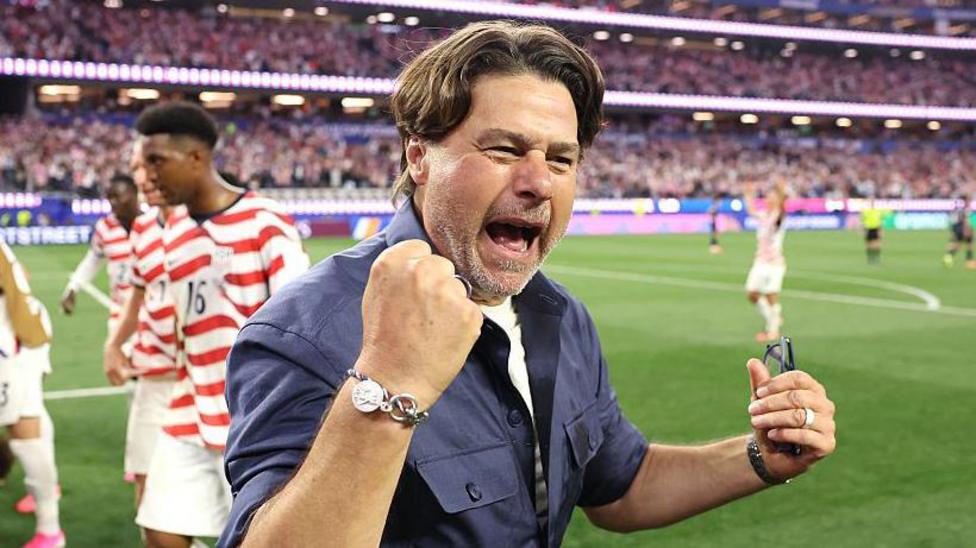
Pochettino Has US Believing World Cup Glory Is Possible
Mauricio Pochettino isn't just managing the USMNT—he's rewiring their psychology to genuinely believe they can lift the 2026 World Cup.
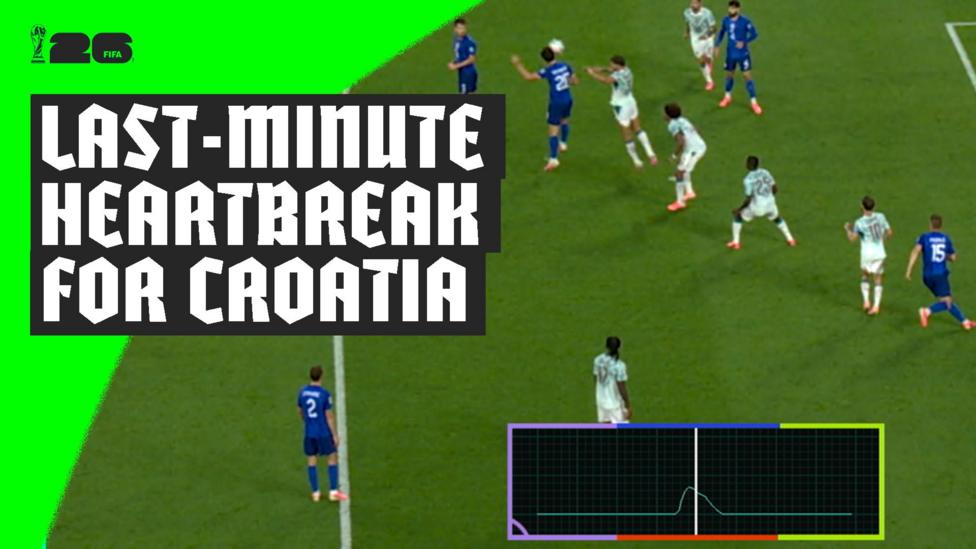
Gvardiol's Agony: VAR Denies Croatia in Stoppage-Time Heartbreak
A marginal offside call erased Gvardiol's stoppage-time leveller, sending Portugal through as Croatia's World Cup run ended in cruel fashion.
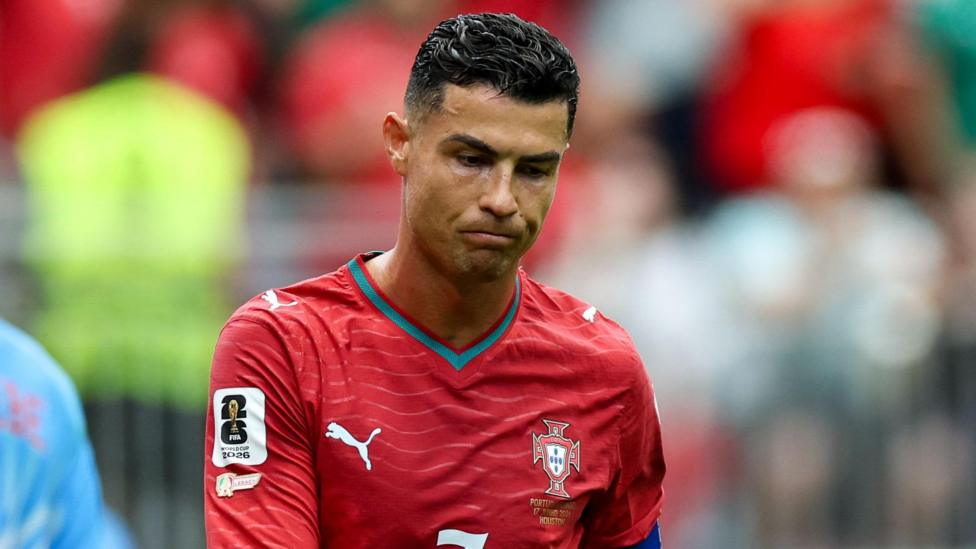
Portugal's Ronaldo Dilemma: Loyalty vs. Tactical Reality
Cristiano Ronaldo's international decline forces Portugal to choose between legendary loyalty and tactical evolution ahead of the Uzbekistan clash.