When Nations Fracture: How Iran's Political Fault Lines Shaped Its Sporting Soul
The MEK's wild arc from revolutionary fighters to exile power players mirrors the fractures running through Iranian sport itself.
There is a particular silence that settles over an athlete carrying the weight of a nation that cannot agree on what it is. You hear it in the pause before an Iranian wrestler steps onto the mat at the Olympics, in the fraction of a second before a footballer in the Team Melli shirt touches the ball at a World Cup. It is the silence of a country whose identity has been fractured, reforged, and fractured again, and whose sporting sons and daughters must perform under the gravity of all those unresolved arguments.
This week, a resurfaced Guardian long read from 2018 reminds us just how wild those arguments have been. Arron Merat's piece chronicles the Mujahedin-e Khalq, or MEK, an organization that fought for the 1979 Iranian revolution, then against it, then alongside Saddam Hussein's Iraq in a brutal eight-year war, and which has spent recent decades courting Western hardliners from its exile camps. They have been called terrorists, cultists, and champions of democracy, sometimes all in the same news cycle. Their story is one of the strangest in modern geopolitics. But it is also, in ways rarely explored, a story about sport, identity, and what happens when a nation's political fractures run so deep that even the playing field becomes a battlefield.
The Revolution and the Exile
The 1979 Islamic Revolution did not merely topple a Shah. It shattered the idea of Iran itself into competing visions. The MEK, founded in the 1960s as a Marxist-Islamist guerrilla movement, initially allied with Ayatollah Khomeini's forces. But the marriage collapsed almost immediately. By 1981, the group was waging an armed insurgency against the very government it had helped install. Thousands of its members were executed. The survivors fled, many eventually settling in Camp Ashraf in Iraq under Saddam Hussein's protection, fighting alongside Iraqi forces against their own homeland during the Iran-Iraq War.
That betrayal, as Tehran frames it, or that principled exile, as the MEK frames it, created a wound that has never healed. And sport, inevitably, became one of the arenas where that wound was displayed.
Iran's national teams have always carried the impossible burden of representing a state that millions of Iranians, both inside and outside the country, fundamentally contest. For the MEK and its sympathizers, the Islamic Republic's flag is an insult. For the government in Tehran, any Iranian who competes under a different banner is a traitor. For the athletes themselves, there is often no safe ground at all.
Football as Political Theater
Nowhere is this tension more visible than in football. Iran's national team, Team Melli, has been a site of political contestation for decades. The 1998 World Cup match between Iran and the United States in Lyon remains one of the most politically charged fixtures in tournament history. Players posed together for a joint photo, an act of sportsmanship that was read by some as diplomacy, by others as capitulation, and by exile groups as a grotesque normalizing of the Islamic Republic's legitimacy on the world stage.
The MEK and affiliated exile organizations have historically viewed any international engagement with Iran's government, including in sport, as a form of appeasement. When Team Melli qualified for the 2018 World Cup in Russia, the group's political wing, the National Council of Resistance of Iran, issued statements condemning what it called the regime's use of sport to launder its image. They were not entirely wrong. The Islamic Republic has long understood the propaganda value of athletic success, funneling resources into wrestling, weightlifting, and football while using national team victories as proof of the revolution's vitality.
But the athletes themselves exist in a far more complicated space. At the 2018 World Cup, Iranian players were photographed with women fans in the stands, a subtle but real challenge to the regime's gender segregation policies. Several players have spoken, carefully, about the pressures of performing for a government whose actions they may privately oppose. Others have defected entirely. Dozens of Iranian athletes across multiple disciplines have sought asylum at international competitions over the past two decades, vanishing between events, leaving behind their gear, their teammates, and the flag they no longer wish to carry.
The Exile's Sporting Identity
The Iranian diaspora, estimated at over four million people worldwide, includes a significant population with MEK sympathies or direct organizational ties. For them, sport is not merely entertainment but a domain of identity politics. Which Iran do you cheer for when Iran plays? The Islamic Republic's team? A hypothetical free Iran? Or do you withdraw entirely from the spectacle?
This question has no clean answer, and the MEK's own relationship with sport is revealing. The organization has run elaborate cultural and athletic programs within its camps, particularly during its years at Camp Ashraf and later Camp Liberty in Iraq. Former members have described mandatory physical training regimes that blurred the line between athletic discipline and ideological conditioning. Football tournaments, volleyball matches, and group exercise sessions were organized not merely for health but as tools of group cohesion, and, critics allege, control.
The comparison to other political movements that have used sport as a binding agent is not incidental. From the Spartakiads of the Soviet Union to the mass gymnastics displays of North Korea, authoritarian and revolutionary movements have long understood that the athlete's body can be made to speak the language of ideology. The MEK, whatever its stated democratic aspirations, has not been immune to this impulse.
Sanctions and the Sporting Cold War
The geopolitical sanctions imposed on Iran, which have intensified and relaxed in cycles since the 1979 revolution, have had direct consequences for sport. Iranian football clubs have faced FIFA suspensions over government interference. Iranian athletes have been barred from international competitions, not for doping or misconduct, but because the flags they carry are politically contested. The International Olympic Committee has repeatedly found itself navigating the impossible terrain between sporting neutrality and geopolitical reality.
For exile organizations like the MEK, sanctions are a political tool, and their sporting consequences are collateral they accept. The logic is straightforward: if isolating the Islamic Republic internationally weakens the regime, then losing access to global sport is a price worth paying. Tell that to the young wrestler who has trained his entire life for a shot at an Olympic medal. Tell that to the footballer whose club cannot participate in the Asian Champions League because of a political dispute he had no part in creating.
The tension is irreconcilable. Sport demands participation. Geopolitics demands exclusion. And the athletes are caught in between, their careers measured in tournament cycles while the political arguments that shape their opportunities are measured in decades.
The MEK in the Trump Era and Beyond
Merat's 2018 piece highlighted how the MEK had become a favorite of Trump White House hardliners, figures like John Bolton and Rudy Giuliani, who attended the organization's lavish annual rallies in Paris and praised it as a viable democratic alternative to the Islamic Republic. This alliance was transactional, of course. The MEK offered a ready-made Iranian opposition movement that hawkish American officials could point to when arguing for maximum pressure on Tehran. The hardliners offered the MEK something it had sought for decades: legitimacy.
The sporting implications of this alliance were indirect but real. As U.S.-Iran tensions escalated in 2019 and 2020, the conditions under which Iranian athletes could compete internationally deteriorated further. Visa restrictions, banking sanctions, and the general atmosphere of hostility made it harder for Iranian teams to travel, harder for Iranian sports federations to operate, and harder for Iranian fans to attend events abroad.
The Biden administration's approach shifted the tone, but the underlying fractures remain. The MEK continues to operate, to lobby, to hold its rallies, and to position itself as the voice of a free Iran. Its critics, and there are many both inside and outside Iran, call it a cult with no democratic credentials, pointing to its history of violence, its authoritarian internal structure, and its collaboration with Saddam Hussein during a war that killed an estimated one million people.
What Sport Reveals That Politics Cannot
Here is what the MEK story ultimately teaches us about sport and national identity: the playing field is never neutral. Every time an Iranian athlete steps onto an international stage, they are navigating a political landscape shaped by revolution, exile, sanctions, and competing claims to legitimacy. The wrestler who wins gold does not merely win gold. He becomes a symbol, claimed by the government as proof of national greatness, claimed by the diaspora as a reminder of what Iran could be, and claimed by no one at all if he dares to express a political opinion.
The MEK's arc, from revolutionary fighters to Saddam's allies to Trump's favorite dissidents, is one of the most bewildering narratives in modern political history. But its sporting dimension, the way it has shaped and been shaped by the politics of Iranian athletic identity, deserves more attention than it has received.
Sport does not resolve political conflicts. It illuminates them. It makes them visible in ways that press conferences and UN resolutions cannot. When an Iranian footballer refuses to sing the national anthem before a World Cup match, or when an exile community organizes a counter-event during the same tournament, the fractures are not healed. They are displayed.
And perhaps that display is itself valuable. Not because it leads to resolution, but because it forces us to see the human cost of geopolitical games that are played far above the heads of the athletes who must live with the consequences. The MEK's story is wild, as Merat's piece rightly says. But the story of sport inside that wildness, the athletes who train, compete, defect, or endure, is the part that most urgently needs telling.
The next time Iran takes the field at a major tournament, watch the faces of the players during the anthem. Watch what they do with their hands, where they direct their eyes, whether they sing or stay silent. In that moment, you will see more about the state of Iranian politics than any long read, however brilliant, could convey. You will see what it costs to carry a fractured nation on your shoulders, and to play anyway.
Editorial Integrity
This is an original SportPulse article written by our editorial team. All content is independently researched, written, and reviewed by our writers and editors before publication. We do not publish copied, aggregated, or syndicated content.
SportPulse is committed to original sports journalism. Read our editorial policy or contact us with any questions.
More Like This
All long-reads
The Chaos Principle: Coaching Football's Unruly Talent and the Illusion of Control
Managing volatile genius on a football pitch mirrors a universal truth: control is always negotiated, never absolute.
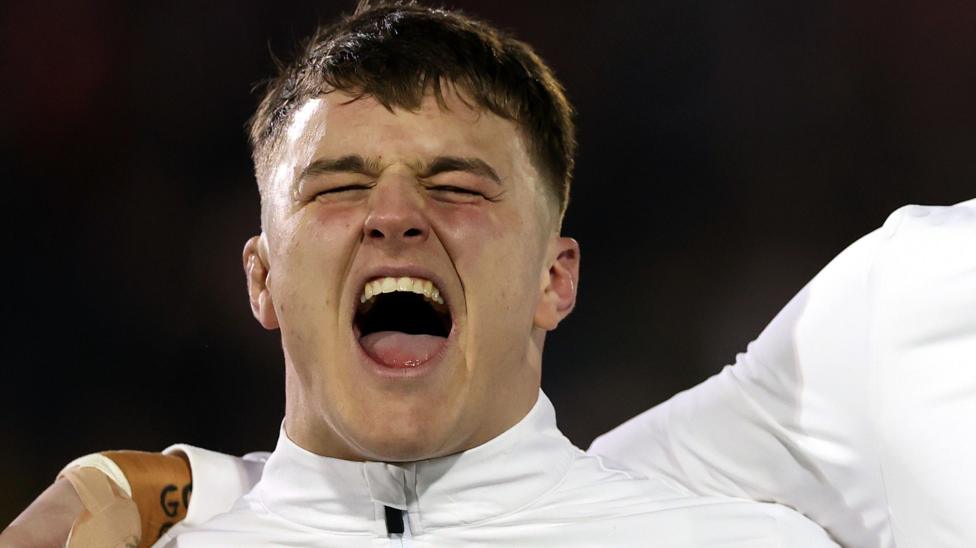
Kelly Red Card Exposes England U20 Tactical Fragility in Semi-Final
Seb Kelly's headbutt dismissal exposed England U20's tactical fragility and ended their World Rugby U20 Trophy bid.
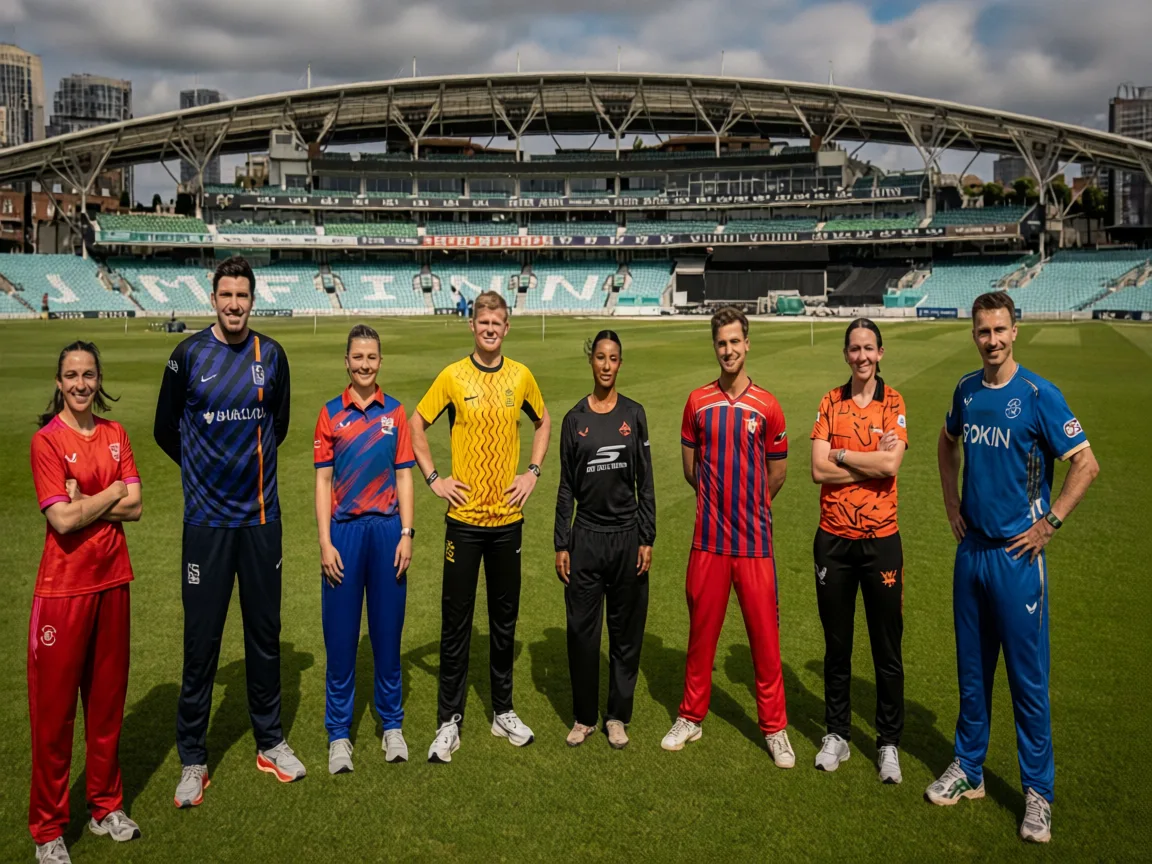
The Hundred 2026: What's Changed and Why It Matters
The Hundred returns in 2026 with structural tweaks, commercial shifts, and competitive implications worth dissecting.