How Sinner and an Entire Nation Conquered Tennis
Jannik Sinner didn't just win for himself. He crowned a sweeping Italian renaissance that reshaped the entire tennis hierarchy.
There is a specific silence that falls over a stadium when a point is too good to applaud immediately. It is a microsecond pause, a collective intake of breath, before the roar swallows the air. In 2024, Italian tennis lived inside that silence and turned it into a symphony.\n\nImagine the red dust of Foro Italico, sun-bleached and history-soaked, suddenly carrying the weight of a new empire. For most of the Open Era, that narrative remained a longing, perpetually unfulfilled. For decades, the peninsula that shaped the ATP tour's most aesthetically glorious tournament could barely produce a contender to survive its second week.\n\n## The Southpaw Ghost and the Long Drought\n\nTo understand the magnitude of this Italian renaissance, you must first appreciate the depth of the famine. Since Adriano Panatta lifted the Roland Garros trophy in 1976, toppling Bjorn Borg on the Parisian clay, Italian men's tennis operated in a state of prolonged hibernation. There were intermittent flashes. Corrado Barazzoni offered a modicum of grit. Francesco Mosca and Renzo Furlan punched above their weight. But the summit of the sport remained shrouded in alpine fog.\n\nThe drought was so severe that it became cultural. Italian sports fans directed their seasonal passion toward football, cycling, and the chaotic poetry of domestic Serie A derby days. The Foro Italico crowds in the nineties and odds were raucous, partisan, and desperate. They cheered for visiting champions because they had no genuine standard-bearer of their own. They celebrated Andreas Seghers reaching a Grand Slam quarterfinal at Wimbledon in 2003 as though he had won the tournament itself. Italian tennis was a beautiful, sun-drenched relic. It was an architectural marvel with no living tenants.\n\n## The Alpine Prodigy\n\nThen came the boy from San Candido. Jannik Sinner arrived not with a sprint, but with a glacier's slow, inevitable pressure. Hailing from the German-speaking region of South Tyrol, a valley closer to Innsbruck than Naples, Sinner brought an alpine temperament to a Mediterranean sport. He was ice where his predecessors were fire.\n\nHis ascent was methodical, surgical, almost terrifying in its precision. Sinner does not play tennis with visible emotion; he plays it with a calculator. He dismantles opponents through sheer repetition of quality, grinding them down with brutal, flat groundstrokes that skid through the court. When he claimed his first major at the 2024 Australian Open, fighting back from two sets down against Daniil Medvedev, it felt like a coronation foretold.\n\n### The Mathematics of Dominance\n\nThe numbers Sinner posted throughout the season bordered on the absurd. Consider the statistical ledger of his peak.\n\n- He held the World No. 1 ranking with an iron grip, accumulating over 8,000 ranking points at his zenith.\n- His match record for the season stood at a staggering 70-6, a win percentage exceeding 92%.\n- He captured eight titles across all surfaces, including Grand Slams on hard and clay courts.\n\nSinner became the first Italian man to hold the top spot in the computer rankings, a barrier broken not by a clay-courter but by a player whose baseline mastery neutralizes every surface on the tour.\n\n## A Collegiate Conquest: The Davis Cup\n\nYet, Sinner is merely the apex of a much broader, systemic transformation. To witness Italian tennis in its current state is to observe a structural overhaul in real time. TheItalian Tennis Federation (FIT) did not stumble into this golden age. They orchestrated it.\n\nAnd the crowning achievement of that system was not an individual major. It was a collegial conquest.\n\nIn November 2024, Italy successfully defended the Davis Cup, defeating Slovakia in the final to capture their second consecutive title. This was not just a victory predicated on Sinner's brilliance. It was a team effort forged in Malaga, where Lorenzo Musetti contributed crucial rubber and Simone Bolelli provided veteran doubles savvy. The previous year, they had broken a 47-year Davis Cup drought. To defend it required a depth that Italian tennis had never possessed.\n\nMatteo Arnaldi beating Benjamin Bonzi in the first rubber of the 2024 final was the symbolic confirmation. Here was a player ranked outside the top thirty, stepping onto the biggest stage and delivering a clean, ruthless victory. The baton was not just carried by Sinner; it was distributed across an entire generation.\n\n### The Depth of the Bench\n\nThe supporting cast elevates this from a one-man story to a national epic. Matteo Arnaldi, a fiery Ligurian, has bullied his way into the top thirty. Lorenzo Musetti, with his sweeping one-handed backhand and artistic temperament, captured bronze at the Paris Olympics. Luciano Darderi and Flavio Cobolli have claimed ATP titles.\n\nThis isn't just a golden generation. It is a golden infrastructure. The Italian system has married the traditional clay-court apprenticeship with modern hard-court aggression. The academies around the country, bolstered by federation funding and corporate investment, have created a pipeline of talent immune to the usual demographic dips.\n\n## The Women's Vanguard\n\nAnd even this expanded narrative remains incomplete. The golden age is not exclusively male. Jasmine Paolini authored one of the most compelling stories of the modern WTA Tour. A diminutive Tuscan with a fighter's heart, Paolini reached the finals of both Roland Garros and Wimbledon in 2024. She became a top-ten player and secured an Olympic gold medal in women's doubles alongside Sara Errani.\n\nPaolini's ascent shattered the demographic ceiling for Italian women. For years, the legacy of Francesca Schiavone's 2010 French Open title stood as a lone monument. Paolini transformed that monument into a movement. Her partnership with Errani, a tour veteran who once reached the world No. 1 doubles ranking, symbolizes the connection between Italy's tennis past and its explosive present.\n\n## The Mediterranean Blueprint\n\nStrip away the romanticism, and the tactical blueprint reveals itself. Italy has mastered the art of the modern baseline. Sinner hits his forehand with a flick-heavy western grip that generates extreme topspin. But his true weapon is raw repetition. He doesn't hit impossible angles; he hits the same impossible angle fifty times in a set.\n\nThe federation pinpointed this mechanical consistency as the future of the sport. They scoured the country for athletes who could endure this brand of physical attrition. The results are evident. Arnaldi hits with brutal depth. Musetti combines spin with artistry. Cobolli plays with relentless aggression. The Italian style is no longer a defensive counter-punch. It is a relentless, suffocating offense.\n\n> They didn't win by accident. Italy built a colossus out of clay and conviction.\n\nImpetus has been a byword in Italian tennis for the last five years. Domestic tournaments have proliferated. The ATP Finals find their home in Turin, the Next Gen ATP Finals in Milan. Italy hosts more professional tennis events than any other European nation. The ecosystem feeds itself.\n\n## The Unwritten Catalogue\n\nThis is the architecture of a dynasty. Italian tennis has transformed from a nostalgic pastime into an industrial complex. They have the World No. 1, the defending Davis Cup champions, multiple Grand Slam finalists, Olympic gold medalists, and a deep bench of precocious challengers.\n\nThe silence that preceded the roar has been replaced by a continuous, deafening applause. Jannik Sinner may lead the orchestra, but the symphony belongs to an entire nation. The golden age has arrived, and it shows no signs of fading into the Mediterranean sun.\n\nThe challenge now is no longer reaching the summit. It is the far more demanding task of refusing to descend.
Editorial Integrity
This is an original SportPulse article written by our editorial team. All content is independently researched, written, and reviewed by our writers and editors before publication. We do not publish copied, aggregated, or syndicated content.
SportPulse is committed to original sports journalism. Read our editorial policy or contact us with any questions.
More Like This
All tennis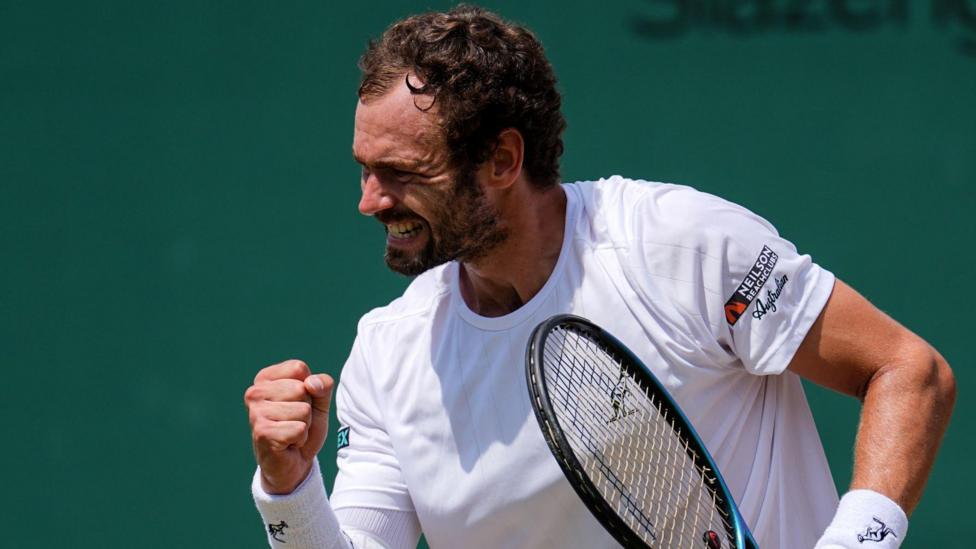
Wimbledon Qualifiers Hunt Bigger Prey After Shocking Upsets
Roman Safiullin and Shintaro Mochizuri survived qualifying chaos to reach Wimbledon's main draw, eyeing monumental assaults on Novak Djokovic and Jannik Sinner.
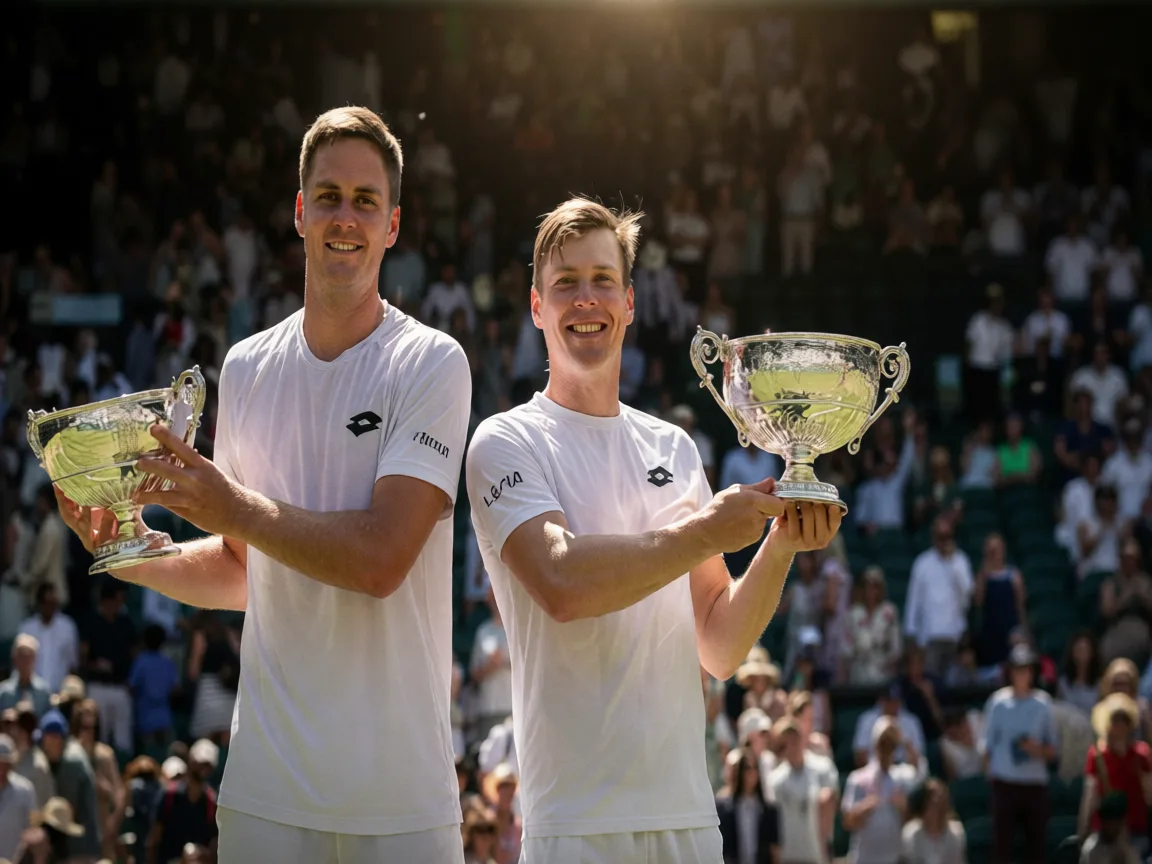
Patten Conquers Centre Court Again: The Unlikely British Doubles King
Henry Patten captures his second Wimbledon men's doubles crown with Harri Heliovaara, cementing a partnership built on nerve and tactical genius.

The Dolomite Diamond: How Jannik Sinner Became Tennis's Unstoppable Force
From a tiny Alpine village to world No. 1, Sinner's rise is the most improbable story in modern tennis.