Ken Bates Dies at 94: The Chairman Who Reshaped English Football
The controversial owner who modernized Chelsea and polarized Leeds leaves a complex legacy of ambition, survival, and structural transformation.
The death of Ken Bates at the age of 94, announced by Chelsea Football Club, closes a chapter in English football history that bridged the agonizing transition between the old-place culture of the 1980s and the corporate conglomerate reality of the modern game. Bates was never merely an administrator. He was a tactical operator in the boardroom who dismantled the old Cecil Parish-FC model and rebuilt two of England's sleeping giants through sheer financial engineering and a confrontational management philosophy that defined the Premier League era.
For a generation of supporters raised on the concept of clubs as global brands and multi-club ownership portfolios, it is difficult to imagine the decrepit state of English football when Bates first entered the equation. Aligning his vision of the club not with fan culture but with balance-sheet reality, he fundamentally altered the structural metabolism of Chelsea. First, he made the cold calculation that the stadium itself was the primary asset, using the redevelopment of Stamford Bridge as an audacious financial leverage tool rather than simply an infrastructural upgrade.
Attempting the complete transformation of the stadium into a modern, all-seater arena, the Chelsea Village concept was born — a sprawling corporate hospitality and hotel project that functioned as a commercial enclosure of the grounds. The ultimate execution of the project was deeply flawed and financially ruinous, yet it reflected a financial philosophy that was decades ahead of its time. The Ladbrookes logotype branding and crude fight with property developers were merely the most visceral symbols of a period when freehold ownership of the ground itself was the existential football battle.
The Stamford Bridge Reconstruction
When Bates acquired control of Chelsea in 1982, paying the symbolic sum of £1 for a club saddled with debts and facing extinction, it was less a rescue and more a hostile corporate raid. The Stamford Bridge pitch was a notoriously poor surface, the West Stand was a dilapidated eyesore, and the old Shed End terrace was earmarked for mandatory redevelopment following the Taylor Report. The notion that the club could survive without a fundamental restructure of its physical operating base was an illusion.
The 4-3-3 attacking football that Stamford Bridge would later witness under Ruud Gullit and Gianluca Vialli was entirely dependent on the revenue streams that Bates's controversial stadium footprint provided. By surrounding the pitch with corporate hospitality boxes, a hotel, and multiple retail outlets, Bates created a monoculture of matchday revenue. The club became heavily dependent on premium ticketing and executive boxes. This was an innovative if deeply risky model — and one that ultimately caused catastrophic financial hemorrhaging in the early 2000s and nearly led to administration.
- The construction of the new East Stand in the 1990s — the most expensive single-tier stand development in British football at the time, costing over £25 million
- Introduction of frail combative executive season ticket pricing models that effectively priced out traditional working-class support
- Acquisition of a string of aging elite European players which transformed the club's tactical identity from long-ball survival to continental possession-based systems
The Continental Tactical Shift
The most enduring tactical legacy of the Bates era was the importation of a series of managers who replaced the archaic 4-4-2 systems of English football with a more sophisticated three-at-the-back European framework. The arrival of Ruud Gullit as player-manager was the key inflection point, building on the foundations laid by Glenn Hoddle. The reintroduction of the 3-5-2 and its attacking variant, the fluid 3-4-3 with wing-backs operating as primary creative outlets, transformed Chelsea's tactical identity from purely functional to association-based possession.
Gullit's tactical instructions mechanized his individual flair players into a collective structural unit. The deployment of Dan Petrescu as an attacking right wing-back and the use of Mark Hughes as a lone target-man in a system that maximized overlapping support was a strictly Continental tactical approach. Players were selected not for typical English physical attributes but for technical security in tight spaces and the willingness to rotate positional responsibilities.
Tactical Shift: The Structural Rebuild
The critical tactical shift occurred during the 1996-1997 season. Gullit abandoned the pragmatic 4-4-2 of the early Premier League era and installed a fluid 3-4-3 modeled directly on the Ajax and Juventus systems of the era. This required signing players comfortable with rotatory positional play. The midfield was anchored by a deep-lying regista rather than a traditional ball-winner. The defensive line was pushed higher, compressing the space between the lines and demanding aggressive rest-defense structures from the wing-backs.
Gianluca Vialli, inheriting this structure, retained the 3-4-3 but added a more direct vertical pressing trigger. The Italian striker-turned-coach understood that the attacking organization needed a more cohesive counter-pressing mechanism. The front three were instructed to hunt in a curved trap, forcing play towards the touchlines. This allowed Chelsea to become the first English club to win a European trophy under the new UEFA framework, capturing the Cup Winners' Cup in 1998.
"We had to change the mentality entirely. English football was about running and fighting. I wanted my teams to think about space and movement. The system was only as good as the players' understanding of it." — A philosophy echoing the continental tactical instructions that defined the era.
Financial Contradictions and Systemic Risk
The inherent contradiction in Bates's business model was that the trophy-winning tactical setup was built on escalating debt accumulation. The high-wage contracts offered to aging world-class imports like Vialli, Gullit, Frank Leboeuf, and Marcel Desailly demanded aggressive capital outlay that the Chelsea Village commercial model could not sustainably support. Operating losses mounted season after season, masked by transfer-feb sales and further borrowing against stadium assets.
The club's tactical peak under Vialli, culminating in the 2001 FA Cup triumph, coincided with the near-collapse of the parent balance sheet. Bates had built a European-quality squad but on a financially unsound architecture. The arrival of Roman Abramovich in 2003 was framed as a rescue operation — a buyout that extinguished debts reportedly exceeding £80 million. The Abramovich era of unlimited capital and multiple Premier League titles was only made possible by Bates's willingness to retain the stadium freehold, a decision that gave the club its fixed geographic identity even as it nearly consumed them.
The Leeds United Experiment
The final act of Bates's career offered a case study in how a financial philosophy could be radicalized and exported to a club with different economic constraints. Acquiring Leeds United in 2011, Bates inherited a club still reeling from the catastrophic financial collapse of the early 2000s, a period when Peter Ridsdale's speculative approach to commercial expansion had mimicked Chelsea Village without the underlying asset protection.
At Elland Road, Bates applied a grotesque version of the executive-box revenue model without integrating the necessary footballing structural investment. The stadium was peripheralized as a corporate event space, and the football operation was reduced to a survival-based 4-4-2 counter-attacking scheme. Managers like Neil Warnock were instructed to construct teams based on physical intensity and direct transitional play. The ambition was not tactical sophistication but immediate financial stabilization.
The Leeds model was characterized by a conscious disconnection between the financial and tactical operations of the club. Where at Chelsea the stadium revenue had subsidized the importation of continental managers and tactical innovation, at Leeds the corporate monetization directly cannibalized the footballing budget. This created a toxic relationship between the supporters and the boardroom, culminating in bitter protests and the eventual forced sale of the club to Massimo Cellino in 2014.
The Structural Legacy
Ken Bates existed in English football as a transitional figure, operating between the era of the local businessman owner and the modern billionaire corporate state. His understanding that clubs required multi-revenue corporate infrastructure was fundamentally correct, even if his execution of the Chelsea Village project was catastrophically flawed and financially disastrous in its complexity.
Modern football clubs operate on the same fundamental metrics that Bates prioritized: stadium monetization, premium hospitality, and commercial brand extension. The current financial viability of clubs in the post-Financial Fair Play regulatory environment is predicated on the exact revenue diversification that Bates pursued with often reckless and insufficient investment.
The tactical legacy is less certain. The continental tactical revolution at Chelsea — the shift from 4-4-2 intensity to fluid 3-4-3 positional play — was a product of the specific financial latitude that Bates's early speculative spending allowed. Once that latitude was exhausted, the club required Abramovich's sovereign capital to complete the transformation into a European superpower.
At Leeds, the absence of underlying capital meant the tactical sophistication of the Bates era was entirely absent, replaced by a reductive footballing philosophy that prioritized commercial survival over sporting identity. The contrast between the two tenures serves as a definitive case study in how financial architecture dictates tactical possibility, and how the boardroom shapes the pitch in ways that often remain invisible to the supporter.
What Comes Next: The Historical Verdict
As English football continues its accelerating process of structural corporatization, the historical reassessment of the Bates era will focus increasingly on the tension between infrastructural innovation and financial recklessness. The modern Chelsea, operating under the Todd Boehly/Clearlake Capital consortium, is still grappling with the physical legacies of the Stamford Bridge footprint that Bates controlled and the complicated freehold issues that he navigated.
For Leeds United, currently navigating their own tactical and structural rebuild under Daniel Farke using a modern 4-2-3-1 possession-based system, the Bates era remains a cautionary tale of boardroom detachment from the football operation. The necessity of aligning financial structure with tactical identity is the enduring lesson of his controversial career.
The death of Ken Bates at 94 marks the passing of a breed of football administrator who operated through confrontation and speculative financial architecture. The clubs he governed have since evolved into structures that would be unrecognizable to the man who saved Stamford Bridge and polarized Elland Road. Yet the questions he raised about stadium ownership, commercial revenue generation, and the tension between corporate hospitality and supporter culture remain the defining existential questions of the modern Premier League era.
The field of play has moved on. The questions he forced English football to confront have not.
Editorial Integrity
This is an original SportPulse article written by our editorial team. All content is independently researched, written, and reviewed by our writers and editors before publication. We do not publish copied, aggregated, or syndicated content.
SportPulse is committed to original sports journalism. Read our editorial policy or contact us with any questions.
More Like This
All football
Everton Ordered to Pay Burnley Nearly £40m in Landmark PSR Verdict
Burnley win a precedent-setting legal case that could reshape how Premier League clubs are held accountable for financial breaches.

England's £19m World Cup Bonus Bonanza: Who Gets What
FA will split half its £38m Fifa prize money between players and staff if Kane lifts the trophy in New York.
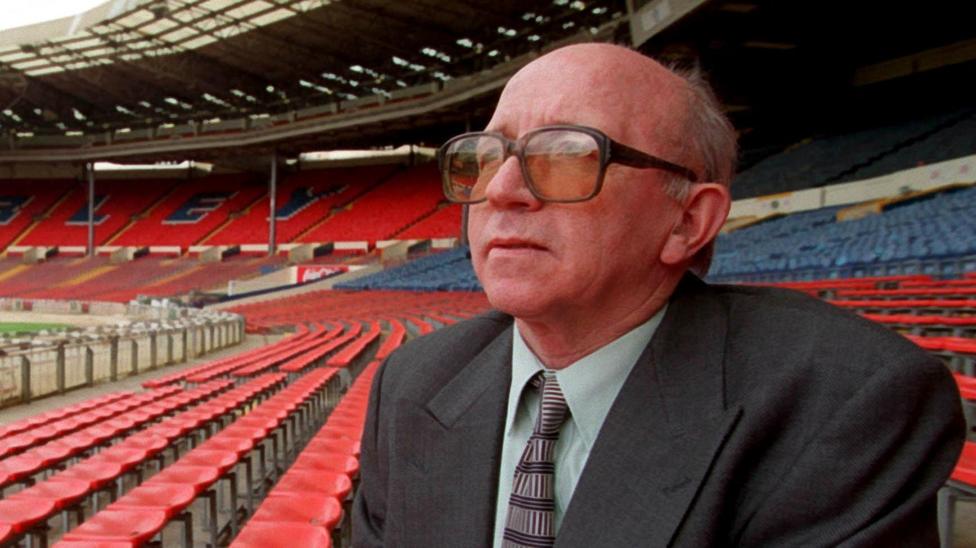
Coroner Rules Heading Footballs Caused Stiles' Brain Disease
A coroner formally concludes England World Cup hero Nobby Stiles died from a brain condition caused by repeatedly heading footballs.