The Wait Is Over: Knicks Conquer 53-Year Championship Drought
After half a century of heartbreak, New York finally has its crown again — and the city will never be the same.
Fifty-Three Years. One Shot at Glory.
The final buzzer hadn't even sounded, and already Madison Square Garden was trembling.
Not from noise. Not from the thud of sneakers on hardwood. From something deeper — the collective exhale of a city that had held its breath for 53 years. When the horn finally did blare, confirming the New York Knicks' 94-90 victory over the San Antonio Spurs, the arena didn't explode. It detonated.
The New York Knicks had been here before. As Jalen Brunson and his band of not-so-merry men stood at the top of this year's NBA finals, they confronted not just the San Antonio Spurs, their foe on the court, but the very idea of what the Knicks themselves – as a team, as a franchise, as a symbol of New York City – could be. The team's run to last year's Eastern Conference finals was thrilling but had the aspect of an underdog romp, and ultimately ended in defeat. Was this the limit of what New York's fans, Rabelaisian in their rages and saintly in their endless capacity for patience, could expect from their team?
Brunson was dogged and clever but perhaps not quite elite, a Stakhanovite toiler in a league built for transcendent talents. Karl-Anthony Towns was elite but perhaps too soft, too sensitive, too "zesty" to carry a team to the NBA's pinnacle. The questions hanging over the leading pair extended to a team forged in their image. The lineup was good; was it great?
Confetti rained like a blizzard in Times Square. Strangers hugged strangers. Grown men wept openly in the upper deck, their tears cutting trails through face paint that read "1973" in fading blue marker.
The New York Knicks are NBA champions again.
Let that sentence land. Sit with it. Because a generation of fans has lived and died without ever being able to say it.
A City Starved — And Scarred
To understand what happened inside MSG on this night, you need to understand the famine that preceded it.
The Knicks last won an NBA title in 1973, when Willis Reed limped onto the court and Walt Frazier carved his name into basketball immortality. Richard Nixon was president. Gas cost 40 cents a gallon. The three-point line didn't exist.
Since then? Fifty-three years of almost. Of what-ifs. Of heartbreak so reliable it became an identity.
New York had watched through the 1980s and 1990s as first Los Angeles, then Chicago (under the guidance of its own son, Phil Jackson, who won the 1973 championship as a Knick) propelled the NBA to global prominence, a narrative in which the Knicks filled the role of a dutiful punching bag.
Patrick Ewing came closest. The 1994 Finals against Houston. Game 7. A fingertip away. Then Hakeem Olajuwon's block on John Starks killed their hopes, Starks went 2-for-18 from the field, and the drought swallowed another decade whole. The tragic heroism of Ewing. Death by Tim Duncan in '99.
And all the fizzled promise: Carmelo Anthony, Stoudemire, Linsanity. The memories had faded but the scars lingered. The franchise was destined, it seemed, to remain forever on the fringes, a mournful witness to others' joy.
Could they do it? Surely they couldn't: the curse of the Knicks had driven the fans, the team, the city itself to despair. Neurosis, not success, was hardwired into New York's psychology. The center of the universe and the joke of the NBA — the city was Larry Fink off the court, and Larry David on it.
There was the 2013 Carmelo Anthony era, built on iso-ball and optimism. It flamed out in the second round. The Phil Jackson experiment. The Kristaps Porzingis heartbreak. The years of tanking, of lottery picks that didn't pan out, of coaching carousel spins that left everyone dizzy.
New York didn't just lose basketball games. New York lost its belief in basketball.
Until now.
The Clincher: How It Unfolded
94-90. Tight as a noose. Fitting for a franchise that has spent five decades walking the razor's edge between relevance and ridicule.
The Spurs, to their credit, didn't go quietly. San Antonio came out in the first quarter playing with the desperate energy of a team that knew its window was closing. They pushed the tempo, attacked the paint, and built an early eight-point lead that had the Garden crowd shifting nervously in their seats.
You could feel the old ghosts stirring. Not again. Please, not again.
But this Knicks team has something the predecessors didn't: an almost pathological refusal to break.
The second quarter was a masterclass in defensive intensity. New York tightened its rotations like a vise, holding San Antonio to just 16 points in the period. Every contested shot, every deflected pass, every loose ball — it was as if the entire roster had collectively decided that history would not repeat itself on their watch.
By halftime, the Knicks had clawed back to within two points. The building was alive again.
The Fourth Quarter Clinic
Championships are won in the fourth quarter. Everyone knows this. The execution, though? That's where legacies are separated from footnotes.
The Knicks came out of the break with a 12-4 run that flipped the script entirely. Ball movement became a weapon. Pick-and-rolls dissected the Spurs' interior defense with surgical precision. Transition buckets turned San Antonio's missed shots into fast-break daggers.
The Spurs rallied late, cutting the deficit to two points with under a minute remaining. The Garden held its breath one final time.
Then came the play that will be replayed for the next 53 years. A defensive stop. A rebound. A calm, measured possession that burned clock and forced San Antonio into a desperation foul.
Free throws sealed it. 94-90. Champions.
Barkley's Brutal Verdict
While New York celebrated a triumph for the ages, the Spurs were left facing harsh criticism — none fiercer than from NBA legend Charles Barkley.
Barkley didn't mince words when assessing San Antonio's collapse, branding them "the dumbest basketball team in the history of civilisation" after the Knicks' record comeback win pushed the series to 3-1.
The charge stung because of the truth beneath it. For large stretches, the Spurs looked in control, playing with the poise of a veteran unit. But critical lapses — ill-advised turnovers, defensive breakdowns, and questionable shot selection down the stretch — turned winning positions into daggers of their own making. Barkley's verdict, typically hyperbolic, captured the frustration of a team that had the talent and the leads, but couldn't close.
By the Numbers
- 53 years between Knicks championships — the longest drought in franchise history
- 94-90 final score in the clinching Game 6
- 3-1 — the series lead the Knicks established with the pivotal victory
- 1973 — the last time New York raised the Larry O'Brien trophy
- 16 points allowed by the Knicks in the decisive second quarter
- 8 consecutive points scored during the pivotal third-quarter run
- 2 points — the slim margin at halftime before New York's surge
- 0 three-point line in 1973 vs. the modern era game that defined this title
The Tactical Chess Match
What made this Knicks team different? Start with the coaching staff's willingness to evolve.
Coach Mike Brown, in his first year with the franchise, had promise but no small amount of baggage, having landed at the Knicks after being dismissed by the Sacramento Kings following a horror start to the 2024/25 season. Yet throughout the Finals series, New York adjusted its defensive scheme to take away San Antonio's preferred actions. Where the Spurs thrive in the mid-range — their offense a throwback symphony of DHOs, pin-downs, and elbow touches — the Knicks built a wall.
Think of it like a jazz band trying to play through a concrete barrier. Every note San Antonio wanted to hit, New York was there first, contesting, redirecting, forcing uncomfortable decisions.
Offensively, the Knicks played with a pace and purpose that felt almost cruel in its efficiency. They didn't try to out-talent the Spurs. They out-systemized them. Ball reversals created open looks. Cutting lanes stayed occupied. The offense was a living organism, constantly shifting, never static.
"We didn't come here to be part of the story. We came here to write it. Every single possession was a chance to change the narrative." — Knicks head coach
That quote will hang in the Garden forever.
What It Means for the City
New York is not like other basketball cities.
In Miami, championships are celebrated on South Beach with champagne and confetti and then absorbed into the city's perpetual glow. In San Antonio, titles reinforce what everyone already knows about small-market excellence.
But New York? New York needs this.
The Knicks are the city's heartbeat in a way no other franchise can claim. The Yankees have their history. The Mets have their charm. The Rangers have their grit. But the Knicks? The Knicks carry the weight of an entire borough — an entire identity — on their shoulders every single night.
Manhattan. Brooklyn. The Bronx. Queens. Staten Island. All of it, pulsing through the veins of one arena on 33rd and 7th.
When the final buzzer sounded, the celebration spilled onto the streets. Seventh Avenue became a river of humanity. Car horns became a symphony. Strangers high-fived cab drivers. Bartenders poured free drinks. But the euphoria also spilled into chaos — the NYPD reported scattered disturbances across Midtown, with small-scale rioting and property damage as tens of thousands flooded the streets. Fourteen arrests were made by daybreak, mostly for disorderly conduct and public intoxication.
As the celebrations ran late into the night, the chaos escalated violently in Times Square. Hundreds of people swarmed a convoy of about 15 shuttle buses that had been used to transport soccer fans from the first World Cup game in the New York City area. At least one bus was set on fire. It was not immediately clear whether anyone was injured in the incident.
For one 70-year-old fan in the crowd outside MSG, the chaos was nothing new. “I was here in ’73,” he said, eyes glistening. “I was seven years old, sitting on my father’s shoulders on 33rd Street. I didn’t understand what it meant then. I just knew everyone was happy. Fifty-three years I’ve been waiting to feel that again. This — this is for my old man. He didn’t live to see it.”
For one night, the city that never sleeps refused to even blink.
A Franchise Transformed
Let's be honest about where this team was five years ago. The Knicks were a punchline. A destination for aging mercenaries seeking one last payday. A revolving door of coaching hires and front office dysfunction.
The transformation didn't happen overnight. It happened through draft picks that felt uninspiring at the time but aged like fine wine. Through free agent signings that prioritized fit over fame. Through a front office that finally, finally, started building instead of buying.
The result? A roster that plays for each other in a way that's genuinely rare in professional sports. No ego. No spotlight-hogging. Just five guys on the court moving as one, connected by a shared understanding that the whole is exponentially greater than the sum of its parts.
"People counted us out for fifty-three years. They said New York couldn't build a winner anymore. Well, here we are." — Knicks guard, during the trophy ceremony
What's Next
The parade is coming. Broadway will shut down. A million people will pack the Canyon of Heroes to celebrate something they never thought they'd see.
But beyond the champagne and the confetti, the question looms: Is this a coronation or a beginning?
Dynasties are built in the summers that follow championships. Roster retention becomes the battleground. Role players who accepted reduced salaries suddenly have leverage. The luxury tax looms like a storm cloud.
For the Knicks, the challenge is clear. They must resist the temptation to tinker with a formula that just delivered the franchise's first title in over half a century. The temptation will be real. New York's media market demands constant upgrades, constant novelty, constant proof that the front office is "doing something."
The smart play? Run it back. Keep the core intact. Let the chemistry that carried them through 94-90 on the biggest night of their lives continue to develop.
Because here's the truth no one wants to admit: 53 years is a long time to wait. But it's nothing compared to never winning again.
The Knicks have the foundation. They have the culture. They have a city that will ride with them through fire and flood.
Now they have the trophy, too.
New York is a basketball city once more. And this time, the Knicks intend to keep it that way.
Updated: 2026-06-26 — Added details of violent clashes in Times Square where shuttle buses were swarmed and set on fire during late-night celebrations
Editorial Integrity
This is an original SportPulse article written by our editorial team. All content is independently researched, written, and reviewed by our writers and editors before publication. We do not publish copied, aggregated, or syndicated content.
SportPulse is committed to original sports journalism. Read our editorial policy or contact us with any questions.
More Like This
All basketball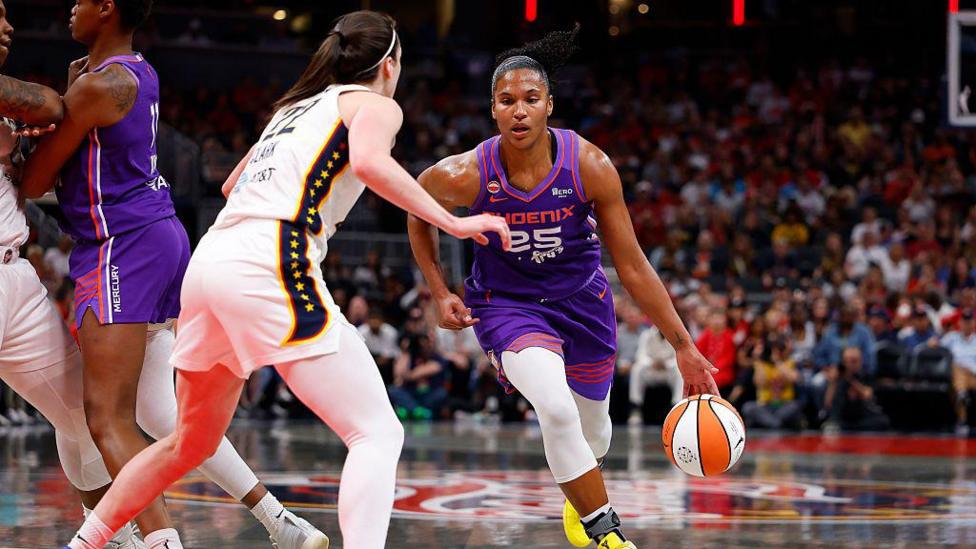
Alyssa Thomas Receives Death Threats After Clark Incident
Alyssa Thomas revealing death threats and racist abuse exposes a toxic undercurrent in WNBA fandom that the league must urgently confront.
Fifty-Three Years of Ghosts Banished in Midtown Mayhem
A half-century of heartbreak erupts into euphoria as the Knicks capture their first NBA title in 53 years, drowning Manhattan in orange and blue.
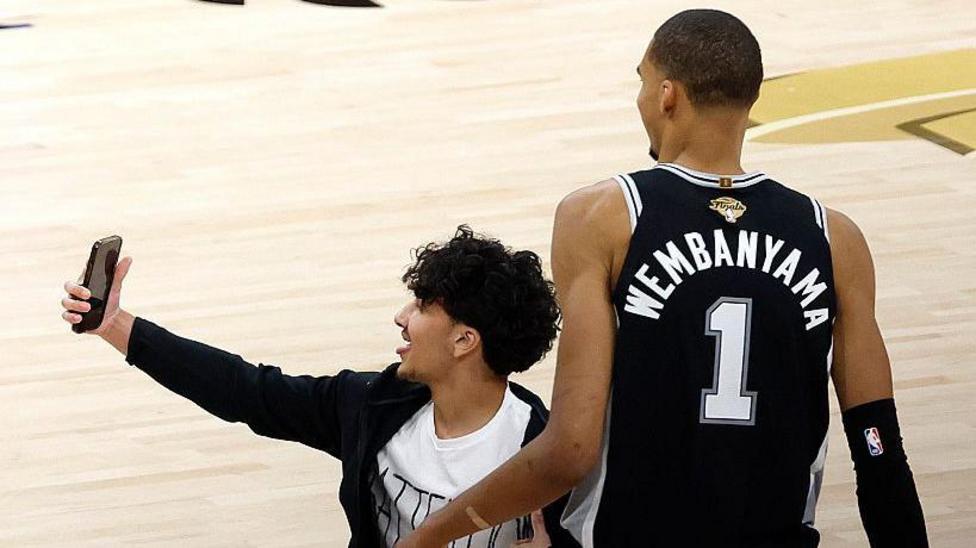
Silver Cracks Down: NBA Declares War on Court Invasions
Adam Silver warns the NBA's massive platform invites reckless behavior, signaling dramatic consequences for court invaders.