Forest Dig In as City's £122m Pursuit of Anderson Hits a Wall
Nottingham Forest reject City's £122m bid for Anderson, demanding a British record £125m guaranteed fee.
The Opening Gambit That Wasn't Enough
Nottingham Forest have thrown down the gauntlet. Manchester City returned to the negotiating table with a second bid worth £122m for Elliot Anderson, a dramatic escalation from their initial £80m approach, and still walked away empty-handed. The message from the City Ground could not be clearer: either meet our valuation or move on.
The structure of City's latest offer tells its own story about the club's urgency. A guaranteed £106m topped up by £16m in potential add-ons would have eclipsed the £100m paid to Aston Villa for Jack Grealish back in August 2021, making Anderson the most expensive acquisition in City's history. But Forest are not interested in what would be a club record for their suitors. They want something far more significant.
Forest's stance is anchored to a singular benchmark: the £125m British transfer record established by Alexander Isak's move. The club demands that figure as a guaranteed baseline, not a theoretical ceiling dressed up in performance clauses and appearance bonuses. It is a position that reflects both Anderson's importance to the squad and Forest's understanding of their leverage in a market where elite English midfielders are vanishingly rare.
Why City Are Pushing This Hard
The intensity of City's pursuit, leapfrogging from £80m to £122m in a single move, speaks volumes about how Pep Guardiola's recruitment team views Anderson's profile. At 23, the England international sits in a sweet spot: young enough to anchor a midfield for the better part of a decade, yet already seasoned enough to contribute immediately at the highest level.
City's midfield has undergone a gradual transition in recent seasons. The departures and aging of key figures in the engine room have created a structural need, not merely for bodies, but for a specific archetype. Anderson fits that mould. His ability to operate as a progressive ball carrier, to receive under pressure in the first phase and break lines with either foot, offers Guardiola a player who can function as the connective tissue between defence and attack in the 4-3-3 or the fluid 3-2-4-1 shapes that have defined City's recent tactical evolution.
What makes Anderson particularly attractive in a Guardiola system is his spatial intelligence. He does not simply occupy the left half-space or drift wide to find pockets. He manipulates his positioning relative to the opposition's pressing triggers, drawing markers out of their structure before exploiting the channels that open up. This is not a player who simply passes and moves. He passes, reads, and accelerates into the next phase of play before the opposition has reset.
The Tactical Profile City Crave
Guardiola's ideal midfield signing has always carried a specific set of qualities: press resistance, progressive carrying, and the capacity to dictate tempo from multiple positions on the pitch. Kevin De Bruyne's evolution and eventual decline in influence has left a creative void that cannot be filled by simply promoting from within. Anderson, with his comfort receiving between the lines and his willingness to drive forward with the ball, represents a tactical solution rather than a stopgap.
The numbers behind Anderson's rise at Forest have not gone unnoticed in the analytics departments of Europe's elite clubs. His ability to break opposition pressing structures, his volume of progressive passes, and his defensive contribution in transition have marked him out as one of the Premier League's most complete young midfielders. City's data models clearly rank him as a generational investment rather than a speculative punt, which explains the willingness to nearly double their opening offer.
Forest's Negotiating Position
Nottingham Forest deserve enormous credit for how they have handled this saga. Too often, clubs outside the traditional elite buckle under the financial gravity of a Manchester City or a Real Madrid. Forest have done the opposite. They have identified a price point, communicated it with clarity, and refused to blink.
The demand for £125m guaranteed is not arbitrary. By tying their ask to the British record set by Isak, Forest have created a public benchmark that puts the onus squarely back on City. Every pound below that figure now looks like a discount for a player who, by most objective measures, is among the top midfielders in English football. If City believe Anderson is worth £106m guaranteed, then the gap between their offer and Forest's ask is a mere £19m. In a deal of this magnitude, that is the cost of conviction.
There is also a broader strategic dimension to Forest's approach. The club are signaling to the market, to their own squad, and to future transfer targets that they will not be bullied. Establishing a reputation as a club that negotiates from strength, rather than desperation, has compounding benefits that extend well beyond this single transaction.
"We know what Elliot is worth to this football club. We have been clear from the very beginning about our expectations."
Sources close to the negotiations indicate Forest's resolve remains firm.
The Add-Ons Problem
The structural gap between the two parties is worth examining in detail. City's offer of £106m guaranteed plus £16m in add-ons is a classic elite-club negotiating tactic: present a headline number that looks close to the asking price while ensuring the guaranteed sum remains significantly lower. Add-ons in deals of this nature are typically tied to Champions League appearances, individual awards, or team achievements. They are aspirational rather than assured.
Forest, understandably, are not interested in selling their best player on the basis of what might happen. The £125m guaranteed figure protects them against the risk of Anderson's career trajectory changing, whether through injury, tactical shifts at City, or any of the hundred variables that can affect a player's output. The difference between £106m guaranteed and £125m guaranteed is not just £19m. It is the difference between a calculated gamble and financial certainty.
What This Means for the Market
If this deal eventually crosses the line at or near £125m, it would represent a seismic moment in Premier League transfer history. Only Isak's move has reached that figure in British football, and Anderson's transfer would confirm that the market for elite English midfielders has reached a tier previously reserved for prolific strikers and Ballon d'Or candidates.
The ripple effects would be immediate. Every club with a promising young English midfielder would adjust their valuations upward. Brighton, for instance, would be justified in demanding £80m-£100m for any of their emerging talents. The financial ecosystem of the Premier League, already distorted by broadcast revenues and sovereign wealth ownership, would tilt further toward inflation.
What Happens Next
City have a decision to make. They can return with a third bid that meets Forest's £125m demand, potentially structured with more favourable payment terms that protect their cash flow. They can walk away entirely, pivoting to alternative targets in a market where comparable options are thin on the ground. Or they can attempt a final compromise, perhaps offering £120m guaranteed with achievable add-ons that push the total package beyond £130m.
The most likely outcome, based on the trajectory of negotiations so far, is that City will return. The gap has narrowed from £45m (their first bid versus Forest's ask) to £23m (the guaranteed portion of the second bid versus Forest's ask). That convergence suggests both parties are moving toward each other, even if the final distance requires one more concession.
The timing is also significant. With the transfer window's key dates approaching, neither club benefits from a protracted standoff. City need Anderson integrated into pre-season training to begin absorbing Guardiola's tactical framework. Forest need time and funds to reinvest in their squad should the sale go through.
The Tactical Fit Remains Compelling
From a purely footballing perspective, Anderson at the Etihad is a fascinating proposition. Guardiola has built his dynasty on players who understand space, who see the pitch as a series of geometric problems to solve. Anderson's spatial awareness, his ability to drift into channels and then burst forward at precisely the right moment, fits that philosophy seamlessly.
The question is not whether Anderson is good enough for City. The evidence on that front is overwhelming. The question is whether City are willing to pay what Forest believe he is worth. At £122m, they are tantalizingly close. At £125m guaranteed, they would have their man.
Forest, for their part, have made the arithmetic simple. The ball is in Manchester City's court.
Editorial Integrity
This is an original SportPulse article written by our editorial team. All content is independently researched, written, and reviewed by our writers and editors before publication. We do not publish copied, aggregated, or syndicated content.
SportPulse is committed to original sports journalism. Read our editorial policy or contact us with any questions.
More Like This
All football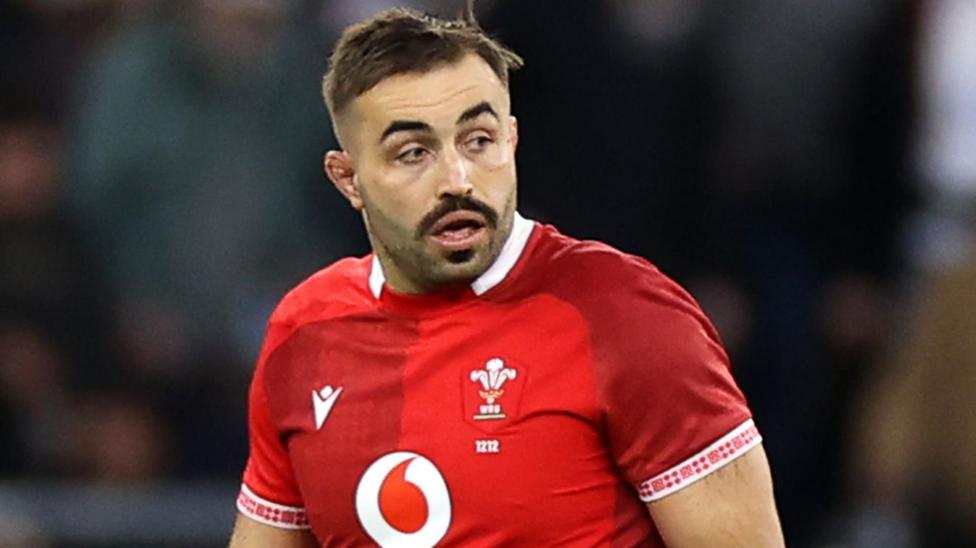
Belcher Neck Injury Deals Wales Massive Summer Blow
Cardiff and Wales captain Liam Belcher is ruled out of summer internationals with a neck injury, derailing the squad's rebuild.

Where Britain Watched the World Cup: A Regional Breakdown
BBC iPlayer data reveals which UK areas watched the World Cup most. The geographical split tells a deeper story about football fandom.

Paraguay's Seismic World Cup Shock Shakes the Continent
Paraguay ignited euphoric celebrations after a historic World Cup shock that redefines their footballing trajectory.