From Hayes Estate to World Cup: Olise's Unlikely Rise
How a west London housing estate produced France's most exciting playmaker bound for the World Cup.
A Corner of West London Forever France
Michael Olise could become a World Cup winner this summer. If he does, a small patch of grass on a Hayes housing estate will deserve a footnote in French footballing history.
It was there, among the west London suburban homes, that a seven-year-old Olise first honed the craft now dazzling defenders across Europe. No academies. No structured coaching sessions. Just a ball, his brother Richard, and an obsession that bordered on the compulsive.
"Football in these conditions, it's just freedom. It's not really learning in the strict sense. It was simply the pleasure of playing football. I just loved it." — Michael Olise
That freedom became the foundation. Sean Conlon, one of Olise's early coaches at Old Isleworthians, remembers it vividly. He would arrive at the family home to find the young player outside, ball at his feet, completely absorbed.
The estate itself, Conlon recalls, provided an unlikely incubator. Few cars meant safe concrete. A small green offered grass. For a boy who lived and breathed football, it was everything.
"He'd just be practising out here all the time, obsessed with football."
The Reading Move That Changed Everything
The path from Sunday league to professional football is rarely straightforward. For Olise, it required a willingness to leave London at an age when most children barely venture beyond their postcode.
Reading FC became the decisive chapter. The Berkshire club, never a glamour destination, saw what others missed. They offered structure to the raw talent forged on concrete.
This is where the narrative hardens. Olise did not merely join an academy. He committed to a process. The cage football instinct, the tight-space creativity, the instinctive close control — all developed in Hayes — needed tactical refinement.
Reading provided that without suffocating the flair. The club's academy earned a reputation for nurturing technically gifted players. Olise fit the profile perfectly but exceeded expectations almost immediately.
Crystal Palace came calling next. At Selhurst Park, the Premier League platform transformed potential into proven output. By the time Bayern Munich invested heavily in his signature, the trajectory was undeniable.
What the Numbers Reveal
Olise's production at Palace demanded attention from continental giants. The statistics tell a story of escalating influence.
- 10 assists in his breakthrough Premier League campaign, ranking among the league's elite creators
- 13 goals and 7 assists in just 19 Premier League starts during his final season at Crystal Palace
- Shot-creating actions consistently above 4.5 per 90 minutes, placing him in the 95th percentile among attacking midfielders
- 2.3 completed take-ons per 90, a metric reflecting that childhood cage instinct translated to elite competition
The jump to Bayern was immediate validation. The £50 million-plus transfer fee reflected market value but undersold the footballing intelligence beneath the surface.
The International Choice That Divided a Nation
Olise represents France. That decision still stings English footballing authorities who watched a genuine talent slip through the system.
His mother is French-Algerian. His father is Nigerian-born. The boy from west London qualified for England through residency. Yet the Three Lions never truly engaged until too late.
France moved first and decisively. Didier Deschamps understood the profile immediately. A left-footed playmaker comfortable drifting wide or central, capable of operating between lines, possessing the tactical flexibility modern international football demands.
The international debut confirmed the wisdom. Olise looked at home in the blue shirt within minutes. There was no adaptation period, no trial by fire. Just the same composed creative output he delivers at club level.
Inside the Dwelling of Confidence
This season at Bayern has stripped away any remaining doubt about Olise's ceiling. The initial adjustment to German football lasted weeks, not months.
The dressing room at the Allianz Arena tells its own story. Senior professionals who have won everything gravitate toward him during training. There is no arrogance in Olise's manner, but there is certainty. He knows what he can do and executes without hesitation.
When Bayern coaches debrief set-piece routines, Olise sits near the front. When tactical adjustments are required mid-match, teammates look his direction. At 23 years old, he commands respect typically reserved for veterans.
The coaching staff appreciate his willingness to receive the ball under pressure. It reflects that childhood schooling. Against compact defensive blocks, Olise receives possession in spaces others avoid. He trusts his first touch because he has been trusting it since he was seven.
"The best players don't need time to think. They already know what they're doing before the ball arrives. Michael has always had that." — Sean Conlon
The Cage Mentalist
English football produces physical specimens. France produces flair players. Olise represents something of a hybrid.
The west London cage culture instilled bravery. Small-sided games on concrete demand quick decisions, tight control, and physical resilience. Fall badly on tarmac and skin peels. Defeat means waiting your turn in the next game. There is no hiding.
Olise emerged from that environment with technical ability forged against older, stronger boys. His brother Richard pushed him constantly. The estate itself became an informal academy.
This contrasts sharply with the sanitised environment of modern elite academies. Many English prospects arrive technically proficient but lack the creative chaos cage football develops. Olise lived in that chaos before any structured coaching touched him.
The Premier League benefits from multiple players shaped by similar environments. But few combine that background with the tactical education Olise received at Reading and then Palace. The result is a player comfortable in chaos but disciplined in structure.
The World Cup Stage
France arrive at this summer's World Cup among the favorites. Olise's integration into the squad adds a dimension they previously lacked.
Kylian Mbappé demands attention from defenses. His movement stretches backlines and creates space. Olise is the player who exploits that space intelligently. He can thread passes through channels others don't see. He can shoot from distance. He can beat a man one-on-one when the game compresses.
French media have already labelled him the most exciting talent integrated into the national setup since Paul Pogba. The comparison reflects physical and technical attributes rather than playing style. Both share an audacity that defies conventional coaching.
Deschamps faces the enviable problem of fitting Olise, Mbappé, Antoine Griezmann, and Ousmane Dembélé into a coherent attacking structure. Tactical flexibility is the modern requirement and Olise provides it more completely than any of the others.
What It Means
The story of Michael Olise challenges English football's development model fundamentally. The Football Association invested heavily in St George's Park and elite academy infrastructure. Yet the most creative English-qualified player of his generation developed on a housing estate and committed to France.
The system developed him physically and tactically through Reading and Palace. But the instinctive, uncoachable creativity was forged in freedom. That paradox deserves serious examination.
For France, Olise represents another triumph of their scouting network. They identified him before England acted and moved decisively. The track record speaks for itself. When Deschamps calls, talented players with dual nationality listen.
For Olise himself, the World Cup represents validation. From concrete pitches in Hayes to the biggest stage in global football. The obsession his coaches noted at age seven has carried him further than anyone predicted.
If France lift the trophy, that corner of Hayes will belong to France forever. A boy who just loved playing football, coached by destiny to become exactly what the world expected least.
Editorial Integrity
This is an original SportPulse article written by our editorial team. All content is independently researched, written, and reviewed by our writers and editors before publication. We do not publish copied, aggregated, or syndicated content.
SportPulse is committed to original sports journalism. Read our editorial policy or contact us with any questions.
More Like This
All long-reads
Joshua Banks on Albanian Crowd Noise for Comecome Fight
Anthony Joshua leans into hostile territory, inviting Albanian fans to bring their energy for his comeback fight on Saturday.

Four Battles That Will Decide the All-Ireland Hurling Final
Liam MacCarthy glory hinges on four duels where grammar meets physics and legends are forged in eighty minutes.
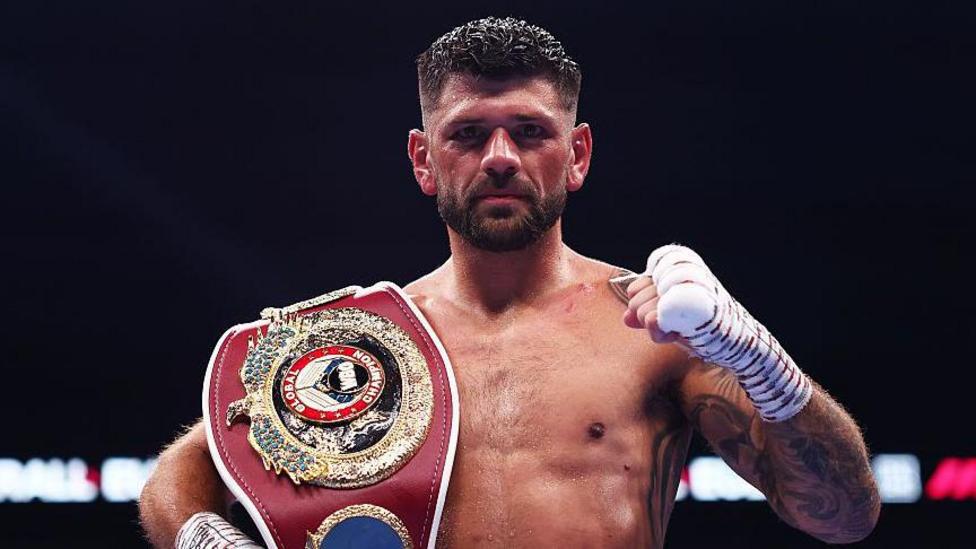
Cordina Charged With Assault: From Ring Glory to Legal Peril
Former super-featherweight world champion Joe Cordina faces assault and weapon threat charges, threatening to derail a career built on razor-thin margins.