Midsummer Madness: When Tennis Meets the World Cup, the Sporting World Holds Its Breath
Late June 2026 delivers an unprecedented collision of global sport — and tennis sits at the heart of it all.
Late June on the sporting calendar has always carried a particular electricity. The days stretch long, the grass courts gleam under pale English skies, and somewhere across the Atlantic, 90,000 voices roar inside a stadium built for the world's most-watched game. In 2026, that electricity has become a full-blown storm.
The FIFA World Cup is underway in the United States, Mexico, and Canada, commanding a global television audience measured in the billions. Simultaneously, the All England Lawn Tennis and Croquet Club is preparing for — or has already launched — its annual Championships at Wimbledon, the oldest and most prestigious Grand Slam in the sport. These two colossal events, each a cathedral of competitive drama in its own right, now share a calendar window that forces fans, broadcasters, and athletes themselves into an extraordinary balancing act.
For tennis, this overlap is neither new nor entirely comfortable. But it has never quite felt like this.
The Grass Court Gauntlet
Wimbledon's place in the sporting year is sacrosanct. Since 1877, the Championships have defined what it means to compete on grass, a surface that rewards precision, improvisation, and a willingness to charge the net when the rest of the sport has retreated to the baseline. The tournament's traditions — the all-white dress code, strawberries and cream, the absence of play on Middle Sunday (a rule changed only recently) — give it a timeless quality that defies the modern sports industry's obsession with spectacle.
Yet Wimbledon exists in the real world, and the real world of summer 2026 is crowded. The World Cup's group stages and early knockout rounds are generating wall-to-wall coverage across every continent. Digital attention is finite. Broadcast advertising dollars are being split. In markets where tennis traditionally commands prime eyeballs — the UK, Western Europe, parts of South America — football's gravitational pull is immense.
The question hanging over the All England Club this week is not whether Wimbledon matters. It always matters. The question is whether it can hold the sporting world's full attention when the beautiful game is simultaneously delivering its own quadrennial drama.
A Week That Demands Attention
The answer, if the opening days are any indication, is a resounding yes — but only if the tennis delivers. And the tennis, by all accounts, is delivering.
Grass court season has always been a compressed, high-stakes sprint. The surface itself is unforgiving and fleeting. Unlike clay, which offers a long European spring of warm-up tournaments, or hard courts that dominate the calendar for months, grass appears for barely four to five weeks each year. Players must adapt quickly or perish. The serve-and-volley specialists who once ruled these courts have given way to a generation of power baseliners who treat grass as a surface where their groundstokes skid faster and their first serves become even more lethal.
This transitional quality is what makes Wimbledon unique among the four Slams. The French Open rewards endurance and topspin mastery over two weeks on slow red clay. The US and Australian Opens favor hard-court warriors who thrive on pace and predictability. Wimbledon rewards adaptability. It rewards nerve. It rewards players who can adjust their footwork, lower their ball-striking trajectory, and trust their instincts on a surface that changes character match by match as the grass wears down.
The Form Book Going In
Heading into the Championships, the storylines are rich with intrigue. The men's draw is shaped by the eternal tension between experience and youth. Veterans who have accumulated deep runs at Wimbledon across a decade or more face a rising generation that has grown up watching those very players on Centre Court and now believes it is their turn to write history. The transition is not complete. It rarely is in tennis, where a single player's reign can stretch across eras if the talent and will are sufficient.
On the women's side, the depth of competition has arguably never been greater. The days of a single dominant champion running through draws without resistance are, for now, behind us. Instead, a cluster of players — each with legitimate Slam credentials and grass court pedigree — makes the draw genuinely unpredictable. Upsets at Wimbledon feel more possible than at any other major, partly because the surface narrows margins and partly because a single hot serving day can carry a lower-ranked player through a round they would never survive on clay.
The Attention Economy
Here is where the World Cup intersection becomes most interesting from a tennis perspective. The sport has spent years fighting for relevance in an increasingly fragmented media landscape. Tennis lacks the weekly league structure of football, the tribal loyalty of club fandom, and the social media virality of highlight-reel sports like basketball. Its strength has always been its events — the four Slams, the drama of individual matchups, the narrative arcs that span seasons.
Wimbledon is the crown jewel of that event-driven model. But jewels need light to shine, and right now the light is being shared.
Broadcasters face difficult scheduling decisions. In the UK, where the BBC holds Wimbledon rights and simultaneously carries World Cup matches, programming choices become a zero-sum game. A five-set thriller on Centre Court competing with a knockout-round World Cup match on a different channel creates a viewing dilemma that tennis, historically, has not had to confront during its flagship fortnight.
The numbers tell part of the story. Wimbledon typically draws peak UK television audiences of 10 to 13 million for its marquee finals. A major England World Cup match can command 20 million or more. Those overlapping audiences are not identical, but the Venn diagram has significant overlap, particularly in the casual viewer demographic that drives peak ratings.
What Tennis Needs This Week
The sport needs a narrative. It needs a match, a moment, or a player who forces the wider sporting conversation to pause and take notice. Wimbledon has always had this power. Think of the matches that transcended tennis and became cultural moments: Borg and McEnroe in 1980, Navratilova's ninth singles title, Federer's eight championships on grass, the marathon final between Federer and Nadal in 2008 that many still consider the greatest match ever played.
Those moments did not happen because the calendar was clear. They happened because the tennis was so extraordinary that the rest of the sporting world had no choice but to pay attention.
Looking Ahead
The coming days will reveal whether 2026 Wimbledon can produce its own transcendent moment. The draw is deep, the stakes are high, and the grass is fresh. Players understand that winning here carries a weight that few other achievements in the sport can match. The Wimbledon champion does not just lift a trophy. They join a lineage that stretches back nearly 150 years, a lineage that includes the greatest names in tennis history.
As the World Cup builds toward its own crescendo in early July, tennis has a narrow window to remind the global audience that two world-class sporting events can coexist — and that missing Wimbledon's drama would be a mistake no serious sports fan should make.
The grass is calling. The question is whether the world is listening.
Editorial Integrity
This is an original SportPulse article written by our editorial team. All content is independently researched, written, and reviewed by our writers and editors before publication. We do not publish copied, aggregated, or syndicated content.
SportPulse is committed to original sports journalism. Read our editorial policy or contact us with any questions.
More Like This
All tennis
The Talent That Keeps Breaking: Draper's Arm Betrays Him Again
Britain's former No. 1 withdraws once more as a chronic arm injury threatens to define a career built on promise.
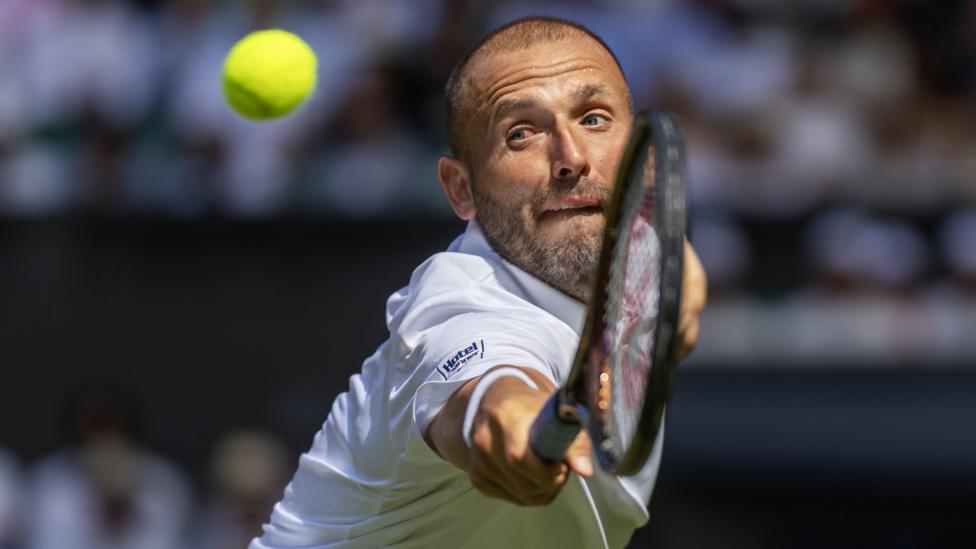
Dan Evans Isn't Bitter. He's Just Winning.
Dan Evans insists a Wimbledon wildcard snub isn't driving him as he navigates qualifying the hard way.
Serena's SW19 Revival: Legends and Contenders Collide at Wimbledon 2026
Serena Williams graces the Wimbledon lawns once more as Swiatek, Zverev, and Sabalenka navigate a chaotic Day Two.