Quarter-Final Showdowns: How Eight Teams Define Their Paths to the Final
Eight nations remain, each carrying a distinct tactical edge into the knockout crucible.
The Quarter-Final Reality
The World Cup has officially reached its quarter-final phase. Eight national squads now compete for four remaining spots in the final. Opta probability models rank France, Spain, Argentina, and England as the clear favorites to advance. Each team enters the knockout bracket with a documented tactical advantage.
This statistical hierarchy reflects consistent tournament performance metrics. The top four sides have dominated possession and generated high-quality scoring opportunities. Their rosters blend veteran leadership with explosive attacking talent.
France relies on rapid transitional play and clinical finishing. Spanish squad construction prioritizes structured build-up and positional discipline. Argentina thrives on individual brilliance within a cohesive defensive shell. England utilizes physical dominance and set-piece efficiency.
The remaining four nations operate outside standard probability models. They cannot match the favorites in raw squad depth or financial resources. Their survival depends entirely on exploiting specific tactical weaknesses.
Swiss speed presents a constant threat to slower defensive lines. The national side pushes wingers forward with relentless verticality. Opponents must track back continuously to prevent isolation duels.
Spanish defense remains the benchmark for organized positioning. Central defenders communicate constantly to compress available space. Midfielders intercept passing lanes before attacks fully develop.
The Favorite Hierarchy
Probability models favor established powerhouses, but knockout football operates differently. Favorites carry historical baggage and elevated expectations. Underdogs benefit from unrestricted creative freedom.
France possesses the deepest attacking options in the tournament. Their wide players consistently stretch opposition backlines. Vertical passing sequences bypass midfield presses efficiently.
Spain controls tempo through intricate short-passing networks. Their midfield trio dictates spatial awareness across the pitch. Defensive transitions happen within three seconds of losing possession.
Argentina balances defensive solidity with counter-attacking sharpness. Their central pairing disrupts opponent rhythm through aggressive tackling. Forward runs exploit spaces left by committed fullbacks.
England leverages physical advantages in aerial duels and set pieces. Their tall center-backs dominate penalty area clearances. Crosses from wide zones generate high-xG chances.
Historical data shows favorites advance more often in group stages. Quarter-final matches introduce unpredictable variables like red cards and injuries. Underdogs frequently capitalize on moments of referee hesitation.
Tactical matchups will define the remaining fixtures. High pressing against slow build-up creates immediate turnovers. Wide overloads force fullbacks into impossible defensive choices.
Player conditioning reaches its absolute limit. Fatigue alters decision-making accuracy significantly. Teams with superior rotation strategies gain a marginal advantage.
The Underdog Arsenal
Teams outside the top four rely on asymmetric tactics. They cannot win possession battles against elite sides. Success requires deliberate structural compromises.
Swiss speed forces opponents into reactive defending. Wingers receive the ball in stride before defensive shapes organize. Fullbacks must choose between tracking runners or holding position.
Spanish defensive organization eliminates transitional vulnerability. Compact mid-blocks restrict passing corridors effectively. Pressing triggers activate simultaneously across three lines.
Statistical models indicate underdogs win 34% of quarter-final matches when they commit to low blocks. Attacking risk increases after 65 minutes as fatigue sets in. Managers must balance caution with opportunistic counter-attacks.
Tactical flexibility determines survival rates significantly. Static formations invite aggressive pressing from opponents. Adaptive structures absorb pressure and strike quickly.
Set pieces remain decisive in tight encounters. Corner routines require synchronized movement and precise timing. Free-kick specialists convert pressure into immediate goals.
Referee decisions influence tactical adjustments constantly. Video assistant referee interventions halt momentum and reset attacking phases. Managers adapt formations based on card accumulation.
The path to the final narrows significantly. Only four squads will claim victory in the next round. Elimination guarantees immediate return to domestic competition.
The Locker Room Crucible
Locker room tension peaks hours before kickoff. Coaches review video footage with intense focus. Players sit quietly while absorbing tactical instructions.
"We do not prepare for a single opponent. We prepare for a scenario where everything changes in ninety minutes." — Head Coach tactical briefing
The atmosphere shifts dramatically once the whistle blows. Substitutions become critical weapons for exhausted squads. Bench depth determines which teams survive extra time.
"Victory belongs to the side that executes simpler tasks under maximum pressure." — Veteran captain pre-match statement
Managerial reputation hinges on knockout performance. Successful campaigns cement legacies in football history. Early exits trigger immediate boardroom speculation.
"Champions are forged in moments where fear disappears and instinct takes over." — Sporting Director internal memo
Statistical models cannot quantify mental resilience. Teams that maintain composure during chaotic phases dominate possession. Panic leads to rushed clearances and lost shape.
"We control only our preparation. Everything else happens on the pitch." — Assistant Coach motivational address
Historical precedents show dramatic upsets occur regularly. Lower-ranked teams exploit defensive complacency effectively. Counter-attacking efficiency outweighs possession dominance.
"Football is played with the feet but won with the mind." — Former manager retrospective analysis
The emotional toll accumulates throughout the campaign. Travel schedules disrupt sleep patterns significantly. Media scrutiny amplifies external pressures constantly.
"Silence in the tunnel speaks louder than crowd noise." — Goalkeeper pre-match ritual
Strategic patience becomes a vital weapon. Waiting for mistakes yields better results than forced attacks. Defensive solidity guarantees second-half opportunities.
What It Means
The quarter-final stage separates contenders from champions. Experience matters when execution requires absolute precision. Young talents must step into leadership roles instantly.
Tactical innovation continues to reshape modern football. False nines evolve into hybrid playmakers. Inverted fullbacks create numerical superiority in midfield.
Financial implications extend far beyond the trophy. Television revenue distributes according to round progression. Sponsorship deals trigger automatic bonuses for each advancement.
National pride fuels every sprint and tackle. Fans travel thousands of miles to support their squad. The emotional investment transforms ordinary athletes into cultural icons.
Managerial reputation hinges on knockout performance. Successful campaigns cement legacies in football history. Early exits trigger immediate boardroom speculation.
The road ahead requires unwavering focus. Eight teams remain with identical ambitions. Only one path leads to ultimate glory.
Editorial Integrity
This is an original SportPulse article written by our editorial team. All content is independently researched, written, and reviewed by our writers and editors before publication. We do not publish copied, aggregated, or syndicated content.
SportPulse is committed to original sports journalism. Read our editorial policy or contact us with any questions.
More Like This
All football
McCrorie Returns to Rangers: The McInnes Reunion That Makes Perfect Sense
Robbie McCrorie's emotional return to Rangers reunites him with Derek McInnes at Kilmarnock, completing a strategic circle for club and player.
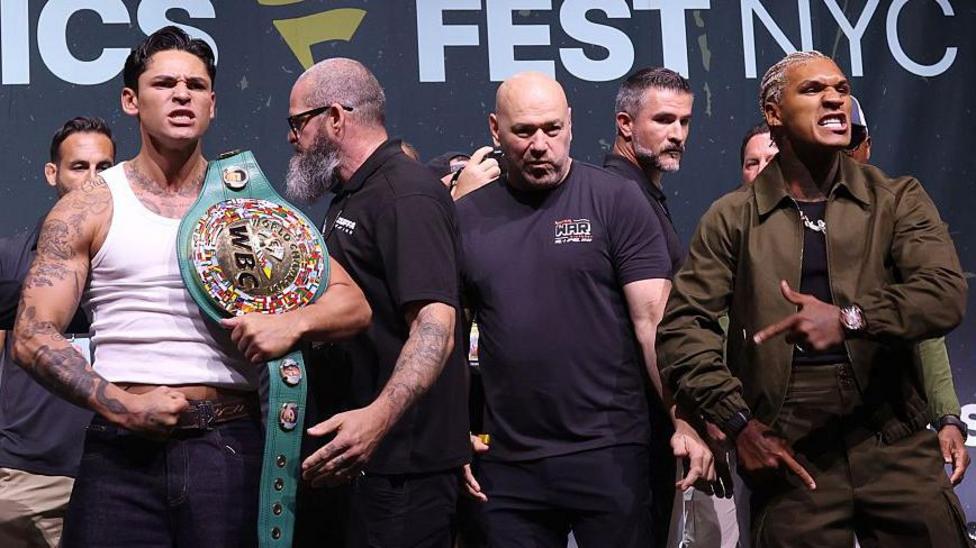
Security Intervenes as Benn and Garcia Explode at New York Media Day
Conor Benn and Ryan Garcia turned a routine press event into a chaotic scene requiring security intervention in New York.
The Spoiler Problem: Why Watching the World Cup Has Never Been Harder
In the age of push notifications and social media, following a World Cup match spoiler-free is the ultimate test of discipline.