Why Saudi and Iraqi Flags Defy World Cup Protocol
Saudi Arabia and Iraq's flags bypass FIFA's pre-match pitch protocol due to religious inscriptions, exposing the friction between standardized ceremony and sacred text.
Every World Cup match begins with a meticulous choreography of national symbols. Passes, tactical shapes, and stadium aesthetics shift by the minute, but the pre-match ceremony remains a frozen ritual of equivalence. Flags are unfurled, laid flat upon the grass, and the competing anthems echo through the bowl. Yet sharp-eyed viewers will notice a glaring asymmetry: the flags of Saudi Arabia and Iraq are never placed on the ground. This departure from standard operating procedure is not a diplomatic flexibility or a visual quirk. It is a hard line drawn by theology, enforced by protocol, and necessitated by the presence of the Islamic declaration of faith, the Shahada, woven directly into the fabric of these nations.
The Script on the Cloth
The Saudi flag features the Islamic creed in bold Thuluth calligraphy: "There is no god but God; Muhammad is the Messenger of God." Beneath the sacred text sits a drawn sword symbolizing justice and strength. The Iraqi flag bears the Takbir, the phrase "Allahu Akbar" (God is the greatest), rendered in green Arabic script. For over 1.8 billion Muslims worldwide, these are not mere national brandings or decorative motifs. They are declarations of ultimate truth. Dropping them onto the pitch, where players in studded boots will soon trample the turf, slide across the surface, and spit on the grass, constitutes an act of profound desecration.
This is a direct collision between FIFA's rigid standardization of ceremony and the absolute boundaries of religious orthodoxy. The global governing body operates on a principle of visual symmetry. Every nation steps onto the turf as an equal, represented by identical protocol. But the temporal geometry of a football pitch cannot accommodate the eternal weight of sacred language.
Decoding the Protocol
To understand the friction, one must grasp the severity of the theological constraint. In Islamic jurisprudence, the written name of God and the Prophet demand elevated status, physically and metaphorically.
- The Shahada on the Saudi flag is the foundational pillar of Islam, recited in daily prayers and whispered into the ears of newborns.
- The Takbir on the Iraqi flag is a phrase of supreme exaltation, used in calls to prayer and moments of deep spiritual significance.
- Letting these inscriptions touch the ground violates core tenets regarding the handling of sacred text, akin to placing a holy book face-down in the mud.
FIFA's operational guidelines mandate that all participating nations' flags be laid flat in a designated area, usually the center circle, during the playing of the anthems. It creates a television-friendly tableau of peaceful, horizontal symmetry. For Saudi Arabia and Iraq, compliance with this specific visual directive is impossible without committing an act of blasphemy.
Logistics of the Exception
The practical accommodation is a masterclass in behind-the-scenes logistical choreography. When Saudi Arabia or Iraq compete, stadium operations staff are handed a separate, stringent set of instructions that actively override the default competition regulations. Instead of being carried out horizontally on a扁平 frame and lowered to the turf, these flags are held vertically by bearers. They remain aloft throughout the anthem, towering above the grass and the players. At no point does the sacred text approach the ground plane.
This poses unique spatial challenges. Stadia are built for athletic function, not theological nuance. Broadcast directors plan sweeping crane shots that capture the geometrical precision of the flag layout. The vertical outliers disrupt the wide-shot symmetry. Camera operators must adjust framing on the fly. Broadcasters must ensure the vertical display is not cropped out of the image or lost in a wide-angle blur. What appears to the casual observer as a slight variation in carrying posture is actually the tip of an operational iceberg involving dozens of protocol staff, specialized flag-bearing units, and continuous liaison with national football federations.
Verdict: Accommodating religious imperatives within a secular, visually standardized sporting ritual requires a permanent, invisible infrastructure of exception that most viewers never notice until the visual rhythm breaks.
FIFA's Fraught History with the Pitch
This flag protocol is not the first time the physical surface of the pitch has become a battleground for non-sporting imperatives. FIFA famously maintains a notoriously strict, commercially driven exclusion zone around the playing surface. Only sanctioned partners, authorized personnel, and approved objects may occupy the grass during broadcast windows.
The juxtaposition is telling. A corporate logo or an unsanctioned political banner on the pitch is met with immediate security action and stadium bans, treated as an existential threat to the commercial purity of the broadcast. Meanwhile, a religious exception for two national flags is managed through careful, pre-arranged choreographic adjustments. The boundaries of what is deemed intolerable on the turf reveal an organization highly protective of financial assets but willing to concede operational ground to religious conviction, primarily because refusing would trigger diplomatic crises far exceeding the scope of a football match.
"Protocol is the silent language of diplomacy, and on a football pitch, every fold of a flag communicates intent. Elevating the text is an elevation of meaning above the game itself."
The historical context deepens this dynamic. In 1994, Saudi Arabia qualified for the World Cup in the United States, marking a significant geopolitical and cultural crossing. Tensions surrounding the presence of an overtly Islamic state in a Western sporting arena were high. The strict preservation of the flag's integrity became a non-negotiable condition of participation. Fast forward to 2022 in Qatar, where the entire tournament infrastructure was built upon accommodations for Islamic practice, from stadium prayer rooms to the prohibition of alcohol in general seating areas. The flag protocol was no longer an outlier; it was seamlessly integrated into a broader ecosystem of religious observance.
The Bottom Line: FIFA's willingness to enforce commercial rigidity while bending operational rules for religion highlights a pragmatic hierarchy. Faith and its associated geopolitical leverage command a level of deference that corporate sponsorship can only dream of achieving.
The Geopolitics of the Vertical Fold
When a flag is denied the ground, it asserts a different kind of sovereignty. It claims an elevated space, literally hovering above the standardized flatness of the competition. For Saudi Arabia, a nation undergoing rapid, globally scrutinized modernization through its Vision 2030 project, every international broadcast becomes a platform for projecting identity. The vertical flag ensures the Shahada is never visually subjugated, never placed beneath the boots of substitute stretches or the eroding tread of a winger's sprint. It is a silent assertion that the state's ultimate allegiance is not to the tournament, the host nation, or the television audience, but to the divine.
For Iraq, the flag protocol carries a different weight. The nation's flag has undergone several redesigns over the past half-century. The current version, formally adopted in 2008, dropped the three stars that represented the now-defunct Ba'athist motto of "Unity, Freedom, Socialism." The addition of the Takbir in Saddam Hussein's handwriting was replaced by a more standardized, less politically charged font following the regime's fall. For the current Iraqi state, preserving the elevated status of the Takbir on the international stage is a declaration of national and cultural continuity, a way of anchoring a fragmented national identity in enduring religious orthodoxy. The flag does not merely represent Iraq on the global stage; it inscribes Iraq into a transnational Islamic framework.
What the Exception Reveals About Global Sport
The exemption for Saudi and Iraqi flags scratches the varnish off the modern World Cup's stated philosophy of pure, unencumbered sporting equality. The tournament presents itself as a blank slate where historical grievances, wealth disparities, and cultural chasms are dissolved by ninety minutes of football. The equal flatness of the flags is the physical manifestation of this ideology. Across 32 participating nations, differences are supposedly leveled.
Yet theology refuses to be leveled. By insisting on a vertical orientation, Saudi Arabia and Iraq force a permanent structural exception to the narrative of standardization. They insert a vertical axis of divine authority into what is intended to be a horizontal plane of human competition. This is not a rejection of the World Cup, but a forceful reminder that the boundaries of the beautiful game stop exactly where faith begins.
Key Protections Governing the Exception
- Physical Prohibition: The written name of God and the Prophet must never touch the ground or be placed in a subservient position to human activity.
- Orientation Rules: The Saudi flag is never flown at half-mast or inverted, as such positioning implies a subjugation of the sacred text.
- Persona Non Grata: Items bearing the script are strictly prohibited from being placed on the floor of any building, let alone a muddy football pitch.
As Saudi Arabia's influence in global football expands at an unprecedented velocity, driven by staggering financial investments in players, infrastructure, and international federations, this protocol exception is likely to become more visible. The nation's Public Investment Fund has already reshaped the landscape of club football. Its national team is receiving greater broadcast exposure and deeper tournament runs. Every match amplifies the image of the vertical flag. Western audiences, largely unaccustomed to the nuances of Islamic jurisprudence, will increasingly notice the break in the visual routine. The question will shift from "Why is that flag held up?" to "What does it mean that one symbol refuses to touch the ground?"
The Bottom Line: The game insists on its own flat, equitable reality. The flags of Saudi Arabia and Iraq insist that some realities transcend the pitch. In the space between the grass and the held-aloft cloth lies the true tension of international sport: an arena where humanity tries, and repeatedly fails, to neatly box the world's complexities into a ninety-minute broadcast window.
Editorial Integrity
This is an original SportPulse article written by our editorial team. All content is independently researched, written, and reviewed by our writers and editors before publication. We do not publish copied, aggregated, or syndicated content.
SportPulse is committed to original sports journalism. Read our editorial policy or contact us with any questions.
More Like This
All long-reads
Crocker's Road Home: Belfast Crucial to Former Champion's Rebuild
After losing his IBF welterweight crown, Lewis Crocker's manager eyes Belfast as the launchpad for a second act.
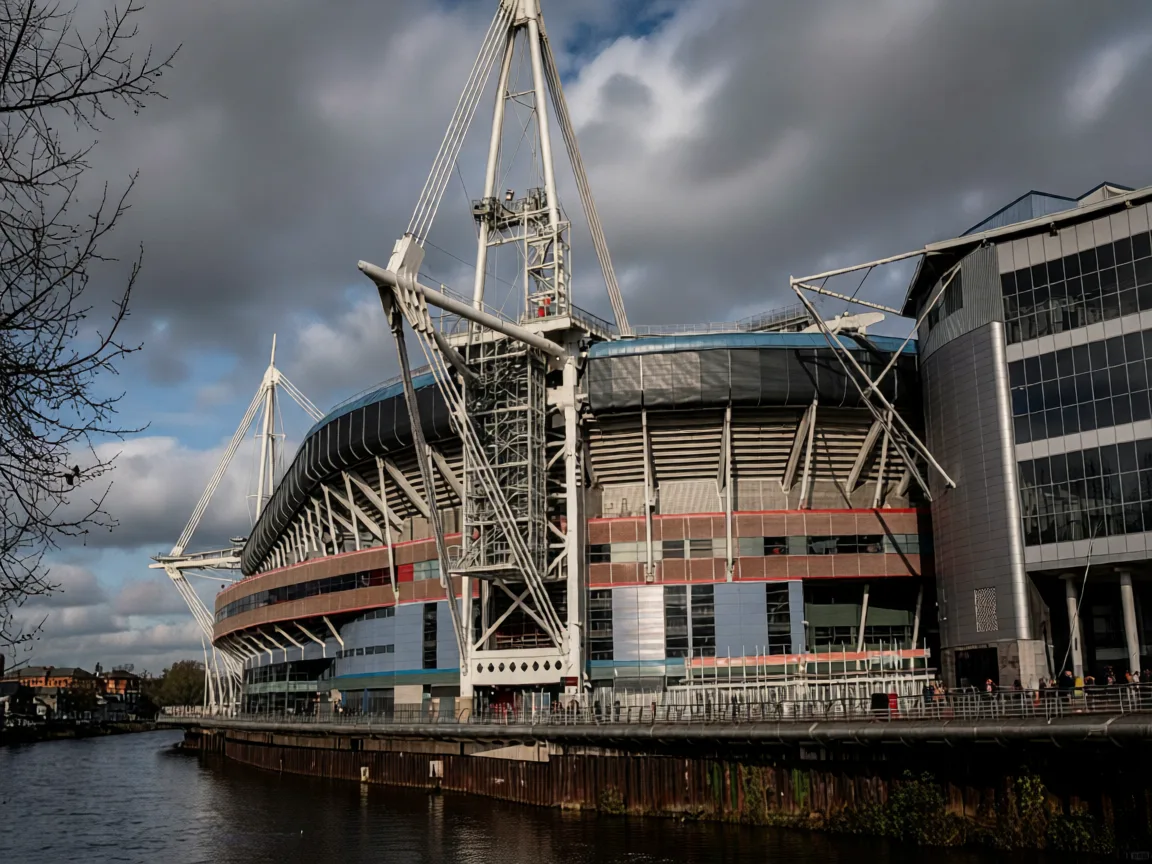
Cardiff Throws Its Hat Into the Fury-Joshua Sweepstakes
Principality Stadium bosses Position Cardiff as prime venue for the heavyweight collision, blending logistics, legacy and atmosphere.
How Afcon's biennial switch cost Caf a billion-dollar lifeline
Caf walked away from $1bn in guaranteed income by moving Afcon to a four-year cycle, leaving the body without a long-term deal since 2019.