Scarlets Pull Off Kiwi Coup: Hurricanes Lock Allen Headed to Llanelli
Scarlets land 6ft 6in New Zealand U20 lock Tom Allen from Super Rugby champion Hurricanes, a statement URC recruit with serious upside.
A Signing That Speaks Volumes
The United Rugby Championship's status as a genuine southern hemisphere alternative just got another validation. Scarlets have secured the signature of Tom Allen, a 6ft 6in, 21-year-old lock from Super Rugby Pacific champions the Hurricanes, and the move tells you everything about where Welsh regional rugby is trying to position itself.
This is not a marquee signing in the traditional sense. There is no All Blacks cap to flash, no decade of Super Rugby YouTube highlights to binge. Allen is a development bet, but one with a remarkably high ceiling. You do not leave a squad that just won Super Rugby Pacific to sit on a bench in Llanelli unless the Scarlet hierarchy have sold you a very specific vision.
Why This Move Matters Now
Welsh rugby's staffing battle is a war for identity, not just results. The four professional regions are operating under reduced budgets, heavy scrutiny, and the constant shadow of player drain to England and France. Signing a promising young New Zealand lock does not necessarily reverse the spreadsheet pain, but it does serve a crucial psychological purpose.
"You can build around a 21-year-old who has trained in a title-winning environment. You cannot say the same about a 31-year-old on a three-year deal serving as a bridge to nowhere."
The bottom line is that a Super Rugby winner, even a squad member, brings thetechnical DNA of a champion team to a squad in transition.
Dissecting the Athletic Profile
The numbers inside the numbers are what make Allen a fascinating addition. Understanding him requires looking past the obvious two metres plus of height and examining the specific athletic and technical demands of a modern Super Rugby lock.
The Modern Lock Archetype
The Hurricanes do not carry passengers. Their championship season underlined the philosophy that every forward must be a ball-player, a defensive asset, and a breakdown participant, not just a lineout target.
- Engine output: Super Rugby Pacific's high-tempo format generally demands a lock to run between 7 to 9 kilometres per match. The sheer intensity of those sprints and recovery jogs makes this far more demanding than the raw distance suggests. Allen's youth is oxygen here.
- Set-piece platform: Allen's 6ft 6in frame is the modern baseline for elite lineout maul defense and restart contesting. At 21, his frame has two to three years of senior professional development left before he hits physical peak density.
- Defensive volume: A Super Rugby lock usually averages around 16 to 20 tackles per match in the modern era, depending on phase dominance and the closing-out minutes of a game.
- Breakdown work: The ability to hit a ruck and recycle or steal decides minutes. Developing this skill determines whether a young lock is merely big or genuinely valuable.
The Bottom Line: Allen will not arrive in Wales as a finished article. But the physical and technical foundation is the type that, in modern elite rugby terms, rarely fails to translate if the player stays injury-free and absorbs the coaching.
The Lineout Dilemma Scarlets Must Solve
Every rugby transfer is a tactical jigsaw piece. Investing a roster spot in a 6ft 6in New Zealand U20 international tells you exactly what the Scarlets coaching staff think their primary attacking platform should look like.
Decoding the Signing's Tactical Space
Welsh rugby has, historically, struggled to consistently produce and retain genuine physical specimens in the engine room. Tellingly, the URC's evolving nature is testing what used to be traditionally competitive Welsh regions.
- Set-piece dominance: In modern elite rugby, a high-percentage lineout does more than just secure your own ball. It determines whether you can play an attritional, territory-based game or are forced to expand early in phases.
- Maul defense: A core defensive asset, weighing the importance of a reliable lineout maul defender.
- Ball carrying: The modern lock is increasingly a primary phase attacker, not just a cleaner or link man.
- Athletic mobility: The requirement to function as a genuine loose forward in defensive transition.
Allen's profile suggests a player who can eventually handle all four pillars within a season or two, provided he adapts to the specific collision intensity and weather-driven game management that the URC demands.
Verdict: Expect Allen to initially feature as a lineout specialist and maul weapon, tasked with addressing Scarlets' statistical vulnerability in concede penalties from collapsed mauls.
The Hurricanes' Reluctant Export
There is a specific ruthlessness in New Zealand rugby that works to the advantage of European clubs. The Hurricanes, as Super Rugby Pacific champions, possess a luxury of depth that few European clubs can comprehend, let alone match. A promising young tight five forward can find his path blocked by an established All Black.
What the Hurricanes Lose
New Zealand rugby's player export economy thrives on this exact dynamic. The system generates more elite-ready talent than it can possibly retain. The Hurricanes, losing Allen, lose not a franchise cornerstone but a developmental asset.
- Developmental ambient value: Allen has spent his formative Milan-Primavera equivalent years immersed in a title-winning environment.
- Immediate impact concern: Would he have been a starter for the Hurricanes in 2026 or 2027? Maybe, but that is the risk you take when you are a feeder system for the world.
The Bottom Line: For New Zealand rugby, this is the cost of doing business and, frankly, a necessary release valve for surplus talent.
The Price of Adaptation and the URC Reality
Every southern hemisphere player arriving in the northern hemisphere must navigate a brutal transition period. The tight five forward faces the most pronounced adaptation challenge. The weather, the referee interpretations at the breakdown, the relentless physicality of a league that has produced the last two Rugby World Cup finalists.
The Key Variables
The change in playing surface and conditions alone is a non-trivial factor.
- Ball in play time difference: The URC often sees significantly longer ball-in-play sequences compared to Super Rugby, which generally favors more broken play and high-tempo phases. Allen will need to build his aerobic engine considerably.
- Ruck speed differential: The northern hemisphere game has historically allowed tacklers more contest time before the referee calls ruckformed. This forces locks to work harder to secure quick ball.
- Maul frequency: Expect Allen's maul defense responsibilities to be tested immediately. This is his core franchise value.
Verdict: The player's intelligence and positional coaching acumen will be as crucial as his physical abilities in surviving the transition.
What This Means for the Scarlets' Roster
The arrival of Allen represents a low-risk, high-reward investment for a club that needs to thread the needle. He is not being brought in to carry a starting XV on his back from day one. He is being brought in to compete for a place, to learn, and to provide a specific set of skills that augment the existing roster.
Immediate and Future Implications
This is the type of signing that defines the modern franchise era.
- Immediate depth chart competition: Allen's arrival forces every other lock in the squad to elevate their game.
- Tactical flexibility: His New Zealand education in multi-phase attack should unlock more lineout options, both defensive and attacking.
- Succession planning: Allen is a 21-year-old with a decade of prime rugby ahead of him. He is not a short-term fix, but a foundational piece.
"A strong succession plan in the second row is the kind of unglamorous roster building that wins you titles in March, not September."
The Bottom Line: Scarlets have not just signed a player. They have invested in the principle that proactive, globally-minded recruitment is the only sustainable competitive advantage in modern elite rugby.
The Final Whistle
This is a signing that should be judged not in September, but in March, when the URC enters its grind phase and depth becomes destiny. Allen's transition will be closely watched by scouts and fans across the league. But for now, the Scarlets have made a statement of intent. It is a statement of vision, of adaptability, and of a refusal to stand still in a sport that punishes complacency with ruthless efficiency. The Kiwi pipeline works both ways. The Welsh regions are no longer just a destination for former All Blacks on their farewell tours. They are becoming active participants in a global rugby talent market, trading on ambition and a willingness to develop. Tom Allen is the first proof of that shift. He will not be the last.
Editorial Integrity
This is an original SportPulse article written by our editorial team. All content is independently researched, written, and reviewed by our writers and editors before publication. We do not publish copied, aggregated, or syndicated content.
SportPulse is committed to original sports journalism. Read our editorial policy or contact us with any questions.
More Like This
All long-reads
From Lord's Heartbreak to Leading England: Charlie Dean's Stunning Redemption Arc
Once defined by a crushing dismissal at Lord's, Charlie Dean now captains England into a World Cup semi-final.
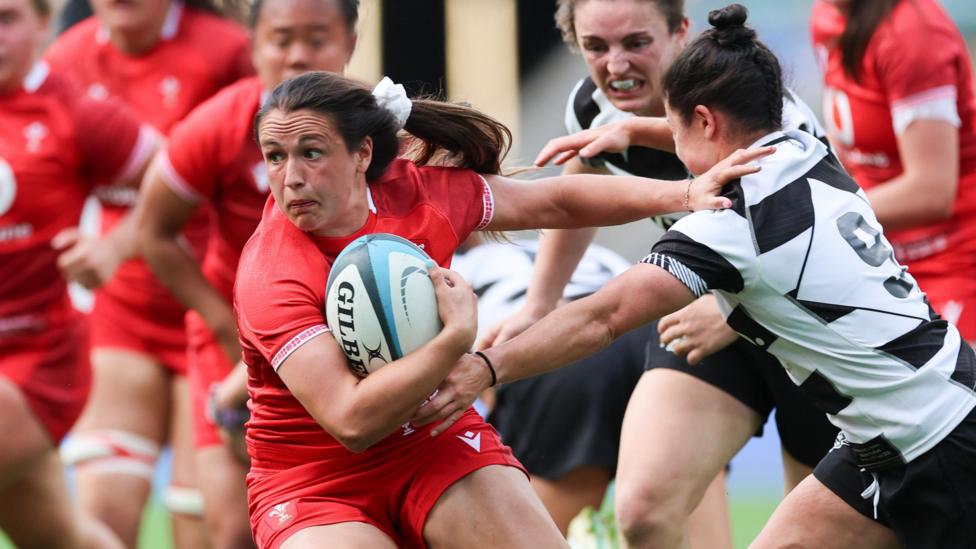
Williams' Debut Double Shatters Wales' Nine-Match Losing Nightmare
Amy Williams scored twice on her first cap as Wales finally ended a bruising nine-game losing run against the Barbarians.

Vingegaard's Tour Ends in Horror Crash as Evenepoel Strikes
Jonas Vingegaard crashes out of the Tour de France with a broken collarbone after riders plow into spectators, handing Remco Evenepoel a stunning opening triumph.