Shriever Defies Brisbane Storm to Claim Historic Fourth BMX World Crown
British BMX racer becomes the first to win four elite world titles as extreme weather forces early championship shutdown in Brisbane.
The UCI BMX Racing World Championships in Brisbane will be remembered not for the racing that defined it, but for the racing that could not take place. Extreme weather swept through the Australian city and forced an premature conclusion to the three-day programme, leaving Beth Shriever standing atop the podium as the first rider in the history of the sport to claim four elite world titles.
The circumstances surrounding the victory are a study in how sport collides with forces beyond its control. Shriever had already navigated the early rounds with the poise of a rider operating at a plane above her competitors. The storm that subsequently hit the Brisbane circuit, forcing organisers to curtail the event, added a surreal layer to an achievement that requires no exaggeration. She had done enough. The weather simply confirmed what the track had already revealed.
Anatomy of a Record-Breaking Run
What separates a four-time world champion from a one-time champion is the capacity to sustain peak performance across different seasons, different tracks, and different pressure environments. Shriever's progression through the Brisbane programme showcased every element of her technical arsenal. The start sequence, the phase of a BMX race that often determines the outcome before the first corner is reached, was executed with clinical precision. Her snap from the gate was consistently among the fastest in the field, granting her the track position that allows a rider to dictate terms rather than react to them.
The eight-second hill is where a BMX race is won and lost. A strong gate gives a rider the momentum to select the optimal racing line through the technical section. Shriever's ability to hold her line while carrying maximum speed through the opening rhythm section forced her rivals into decisions made from desperation rather than conviction. Riders chasing from behind are compelled to take risks. Risks on a BMX track lead to contact, to lost momentum, to crashes. Shriever's positioning ensured she was rarely the rider absorbing that contact.
The 4 in the record book represents something deeper than a number. Each title has come in a different competitive context. The first established her as a force. The second confirmed it was not an anomaly. The third placed her in rarefied air. The fourth has moved her into a category occupied by no one else.
The field Shriever defeated in Brisbane was not diminished. BMX racing is experiencing a period of remarkable depth across both the women's and men's elite categories. National federations across Europe, the Americas, and Oceania have invested heavily in development pathways. The coaching infrastructure is more sophisticated. The talent pool is wider. Achieving sustained dominance in this environment is arguably harder than it was a decade ago.
The Storm That Stopped the Show
Brisbane's subtropical climate is notoriously volatile, and the decision to curtail the championships reflected the serious safety risk posed by heavy rain and high winds to athletes travelling at speeds exceeding 40 km/h on a steeply banked track. A BMX circuit in wet conditions transforms from a high-speed test of skill and nerve into something altogether more treacherous.A The bermed corners that allow riders to maintain momentum become slick and unpredictable. The technical jump sections where races are won and lost demand a level of precision that surface water compromises completely.
In that light, the curtailment of the event was a vindication of a principle that places rider safety above the narrative demands of sport. The championship had already delivered its defining moment. The storm merely wrote the final line.
The Shriever Blueprint
Shriever's fourth title is a consequence of a preparation philosophy refined over a decade at the summit of her sport. BMX racing rewards a specific physiological profile. Riders require explosive power for the start, the ability to process visual information at high speed, and the bike-handling intuition to make split-second decisions in chaotic racing environments. Shriever possesses all of these attributes, but her competitive intelligence is the differentiating factor.
Her race craft has evolved with each season. Early in her elite career, her physical dominance could override tactical imperfections. As the field deepened and the margins narrowed, her understanding of race dynamics matured. She reads a race two corners ahead, positioning herself not just for the immediate moment but for the sequence that follows. This foresight is what allows her to avoid the chaos in the pack that eliminates lesser riders.
The result is a competitive record that now stands alone in the sport's history.
The Numbers Behind the Dominance
- 4 elite world titles, the most by any BMX racer in the history of the discipline
- The first rider, male or female, to reach the four-title mark
- An achievement spanning multiple Olympic cycles and competing generations of riders
- Sustained dominance during a period of unprecedented depth in women's BMX racing
"To be the first to do it is incredibly special. This sport takes everything from you and gives you moments like this back." — Beth Shriever on her record-breaking achievement.
What the Record Means in Context
BMX racing is a young sport within the Olympic programme, having made its debut at the 2008 Beijing Games. The discipline's world championships have historically been dominated by a small number of riders who have managed to align physical talent with technical development and mental resilience. The fact that no rider before Shriever has reached four titles underscores the difficulty of sustaining excellence in a sport where a single mistake on a single corner can erase an entire campaign.
The comparison to previous greats of the discipline is instructive. Riders like Mariana Pajón, the Colombian Olympic champion, have defined their legacies through Olympic gold. World championships, however, reward a different kind of endurance. They demand that a rider arrive at their best across different seasons, different continents, and under different conditions. Shriever's fourth title cements her not merely as a great of her era, but as the standard by which future generations will be measured.
The broader context of this achievement sits within the growth of women's BMX racing. The depth of talent in the women's elite field has expanded dramatically. National federations have channelled resources into identifying and developing female riders from younger ages. The level of competition Shriever has overcome to reach four titles is arguably the strongest the women's field has ever featured.
The Brisbane Legacy
The 2025 UCI BMX Racing World Championships will be defined by two enduring images. The first is Shriever in complete control, executing her race plan with the composure of a rider who has been in this position before and understands what is required. The second is the sight of the Brisbane track under water, the championship programme halted by forces that no amount of athletic preparation can overcome.
For Shriever, these two images are not in tension. They represent the totality of her sport. BMX racing demands mastery of the controllable, the gate, the line, the rhythm. It also demands acceptance of the uncontrollable, the weather, the conditions, the chaos of eight riders entering a corner at speed. A four-time world champion is a rider who has mastered the former and made peace with the latter.
Looking Ahead
The attention now shifts to the remainder of the international BMX calendar and the preparation cycle that will lead riders toward the next global milestone. Shriever, with her place in history secured, faces a different kind of challenge. The motivation that drives a rider to a fourth title is qualitatively different from the hunger that fuelled the pursuit of the first. How she channels that motivation will determine whether the record remains at four or continues to grow.
What is certain is that the benchmark has been set. Every rider currently emerging through the development pathways of national federations now has a target that was unimaginable when the sport first appeared on the Olympic stage. Shriever has not merely won four world titles. She has redefined the ceiling of what is possible in BMX racing.
The storm in Brisbane eventually passed. The record will endure indefinitely.
Editorial Integrity
This is an original SportPulse article written by our editorial team. All content is independently researched, written, and reviewed by our writers and editors before publication. We do not publish copied, aggregated, or syndicated content.
SportPulse is committed to original sports journalism. Read our editorial policy or contact us with any questions.
More Like This
All long-reads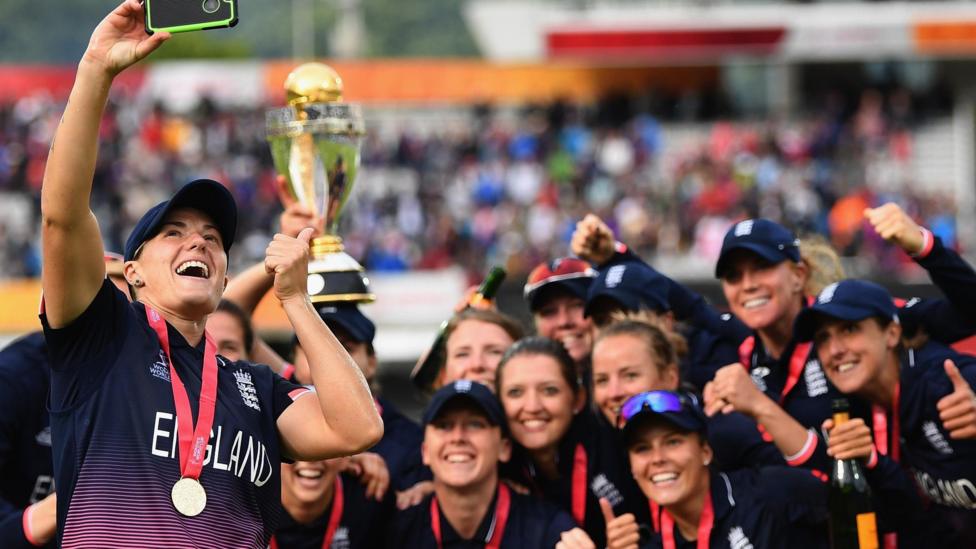
The Lord's Masterpiece: How England's 2017 World Cup Win Changed Everything
Seven years on, England's 2017 World Cup triumph at Lord's remains the watershed moment that transformed women's cricket from niche appeal to national obsession.

Evonne Goolagong: The Glory, Abuse, and Legacy of a Broken Barrier
A new drama strips back the sentimental myth of Evonne Goolagong to reveal the exploitation beneath her historic tennis career.
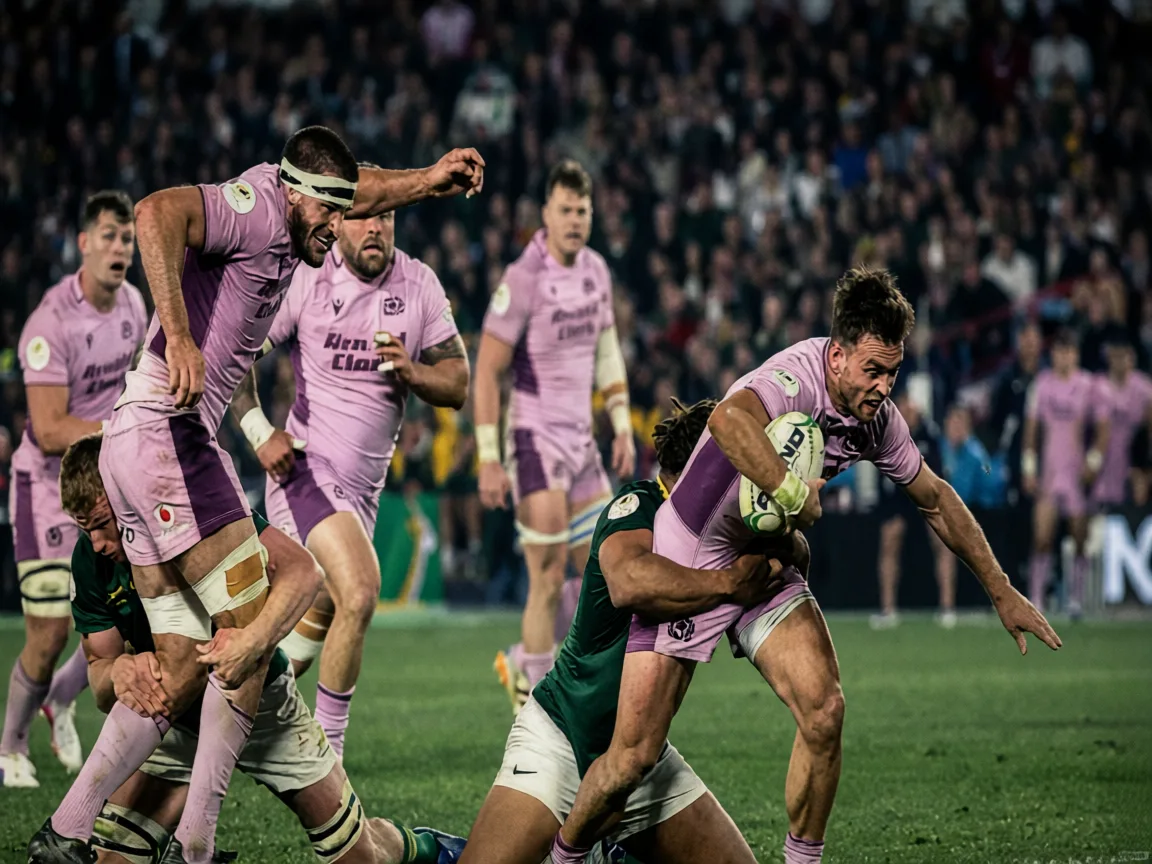
Scotland's Brilliant Failures Tell Story of Rugby's Cruelest Paradox
Scotland score epic tries and lose again. The Springbok tour reveals a team trapped between beauty and broken dreams.