Silverstone Sprint Qualifying: Where Aero Meets Aggression in 2026
Sprint Qualifying at Silverstone demands maximal downforce and perfect tire temperature management on the most demanding calendar weekend.
Setting the Scene at the Home of British Motorsport
The skies above Northamptonshire carry their usual menace as the 2026 Formula 1 paddock prepares for Friday's Sprint Qualifying at Silverstone. The legendary circuit, built on the remnants of a World War II airfield, remains the ultimate aerodynamic crucible in modern motorsport. Ambient temperatures hover around 16 degrees Celsius, with track surface readings struggling to breach 22 degrees under persistent cloud cover. These are not merely atmospheric footnotes; they are the foundational variables that will dictate how power units perform and how the grid manages the all-important temperature windows of Pirelli's rubber.
Unpredictable weather transforms Friday running at the British Grand Prix into a relentless test of strategic adaptation. The wind direction, shifting unpredictably through the high-speed complexes, alters the aerodynamic balance of the cars from corner to corner. For Sprint Qualifying at a track where 70% of the lap is spent at full throttle, the calibration of downforce levels becomes the defining engineering battle of the weekend.
The Aerodynamic Imperative at Maggotts and Becketts
The modern Formula 1 calendar features few circuits that punish aero deficiency as brutally as Silverstone. The sequence from Abbey through Farm Curve, and crucially the Maggotts-Becketts-Chapel complex, requires a level of high-speed cornering stability that leaves zero margin for suspension or aerodynamic miscalculation. Drivers must navigate this section at sustained aerodynamic loads, facing lateral forces that test both the structural integrity of the chassis setup and the neck endurance of the pilot.
In the context of the 2026 technical regulations, which emphasize active aerodynamics and refined power unit deployment, Sprint Qualifying demands an aggressive setup configuration. Engineers face a binary choice on Friday morning: pursue the maximum downforce package to secure optimal sector two performance, or trim the car out to capitalize on the long straights and deploy the DRS zones effectively. The Sprint format eliminates the luxury of incremental setup revisions across a practice-rich weekend, locking teams into whatever aero philosophy they commit to before the green light in SQ1.
Tire Temperature and the Pirelli Conundrum
The cold track conditions projected for Friday present a precise operational headache for the strategies wall. Pirelli's allocation for a Sprint weekend utilizes the hardest compounds in the range, theoretically suited to the high-energy loads of Silverstone. However, thengrx between compound stiffness and thermal degradation becomes acute when the track refuses to heat up. Getting the tires into the optimal window, typically around 100 degrees Celsius for the surface, requires a combination of aggressive warmup laps and precise brake bias management.
The Sprint Qualifying format mandates the use of mandatory compounds across the three sessions. SQ1 demands the hard compound, SQ2 the medium, and the final shootout in SQ3 requires the softest available rubber. This protocol eliminates traditional tire strategy variations, reducing Friday to a pure pace exhibition. However, it heavily rewards engineers who can master tire preparation on a green, evolution-heavy track surface.
Strategy Breakdown: The SQ1 Elimination Math
The unique danger of Sprint Qualifying at a circuit of Silverstone's length and evolution rate is the traffic congestion in the early phases. The lap time of roughly 90 seconds means the field is tightly packed on a rapidly improving track. For the bottom five teams, the risk of being caught behind a slow-moving train on out-laps is a mathematical probability, not a remote possibility. The strategy wall must calculate the perfect departure time, ensuring their drivers secure a clear track position without sacrificing the necessary tire preparation phase.
Teams outside the top ten in the championship standings face the most volatile environment. The tendency for the track to ramp up in grip by up to two seconds between the start and end of SQ1 forces a late-rush dynamic. The strategy requires a calculated balance: wait too long to post a banker lap and risk a red flag or yellow flag disruption from a competitor incident; go too early and watch the cutoff time tumble as the track rubbers in. Aggressive fuel load management and precise out-lap deployment dictate survival in the opening segment.
DRS Influence and Straight-Line Speed Trade-offs
Silverstone features three designated DRS zones, yet their efficacy is entirely dependent on the preceding corner dynamics. The activation zone on the Hangar Straight relies on the exit speed from Chapel, a high-speed right-hander where aerodynamic wake severely impacts the trailing car. Dirty air remains the persistent enemy, even with regulation changes designed to mitigate the loss of downforce when following another car.
For midfield teams, the strategic choice often centers on the trade-off between cornering stability and straight-line drag. A lower downforce configuration might surrender two to three tenths of a second in the Sector Two complex, but it provides a crucial advantage on the straights, aiding both overtaking in the Sprint race and defending position on race day. This decision is finalized before the cars leave the garage for SQ1, embedding a long-term gamble into the short-term sprint format.
The Radio Factor: Psychology Under Sprint Pressure
The condensed timeline of a Sprint weekend compresses the psychological pressure on the drivers and the pit wall. Expect tense radio transmissions, particularly during the intermediate SQ2 phase. The medium tire compound requires a different thermal management approach than the soft, often leading to frantic communication regarding preparation laps. A sudden drop in track temperature between sessions, a common occurrence during British summer afternoons, can invalidate carefully calibrated differential settings and engine mapping.
Points Implications and the Championship Mathematic
The Sprint Qualifying result directly seeds the grid for Saturday's Sprint race, an event that awards championship points to the top eight finishers. Securing pole position for the Sprint carries an immediate mathematical advantage, granting 8 points to the winner, scaling down to 1 point for eighth place. In a closely contested 2026 title fight, these intermediate points compound rapidly across the season.
Every position gained or lost during Friday's Sprint Qualifying session has a quantifiable championship value. The difference between starting on the front row and starting fourth in the Sprint race can equate to a 5-point swing before the Grand Prix weekend has even properly begun. For teams embroiled in the constructors' battle, where budget cap penalties and prize fund distributions are decided by marginal championship placements, the stakes of this Friday afternoon session cannot be overstated. The grid order will be set not just by horsepower, but by the engineers who best interpreted the gloomy, unforgiving data of a Silverstone Friday.
Editorial Integrity
This is an original SportPulse article written by our editorial team. All content is independently researched, written, and reviewed by our writers and editors before publication. We do not publish copied, aggregated, or syndicated content.
SportPulse is committed to original sports journalism. Read our editorial policy or contact us with any questions.
More Like This
All f1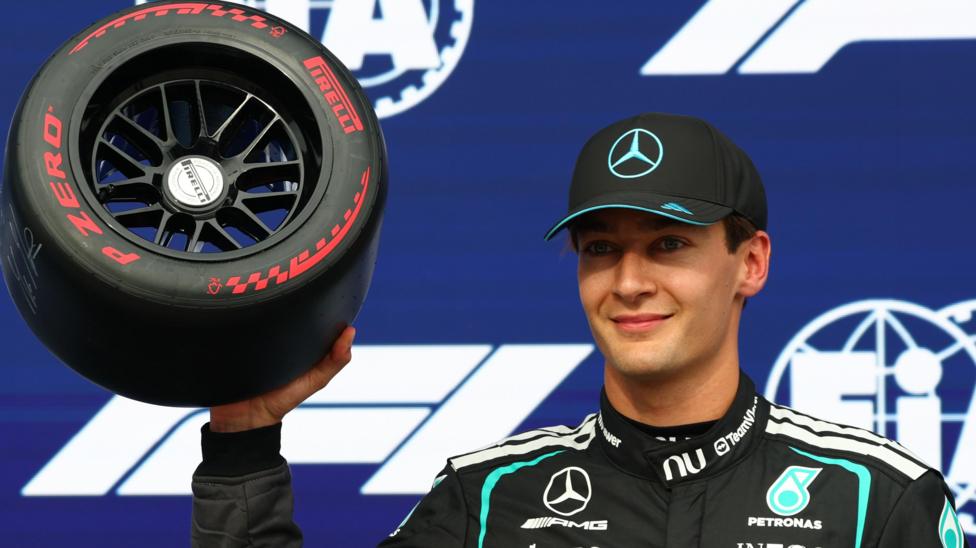
Pirelli Locked In Through 2028: Why F1's Tyre Future Is More Complex Than It Looks
Pirelli's contract extension signals F1's commitment to sole-supplier stability, but the 2026 regulations will test their engineering limits.

Gladysz Inherits Silverstone F3 Feature Race Win In Penalty Carnage
ART Grand Prix rookie Maciej Gladysz climbed from fourth on the road to victory after multiple post-race penalties reshuffled the Silverstone F3 Feature Race results.
Hadjar Hit With Monster Grid Penalty as Red Bull Roll Engine Dice at Spa
Isack Hadjar plunges to the back of the Belgian GP grid after Red Bull park fresh power unit elements into his car.