Sinner Outclasses Zverev: The True Test of Paris Redemption
Sinner's Wimbledon dismantling of Zverev revealed the German's Paris triumph as a mirage against true dominance.
The Mirage of Roland Garros
There is a particular cruelty to tennis that no other sport quite replicates. A player can spend a fortnight carving a path through the draw, accumulating hours of brilliance and sweat, only to have the entire architecture of achievement undone in a single, consuming afternoon. For Alexander Zverev, the red clay of Paris was supposed to be the anvil upon which he finally forged his Grand Slam identity. Instead, the championship he captured there now stands as a monument to circumstance rather than supremacy.
The question that hovered over Centre Court like London fog was stark and unavoidable: was the German's breakthrough a turning point in the hierarchy of the men's game, or a blip born of geography and weather? It took only the clinical excellence of Jannik Sinner across the net at Wimbledon to provide the true measure.
The Ghost of Philippe-Chatrier
To understand the discrepancy between Zverev's celebration in Paris and his unraveling on grass, one must revisit the peculiar theatre of his triumph. The Roland Garros final did not crown a man who conquered his demons; it crowned a man who watched his rival surrender to his own body. Sinner's physical collapse in the Parisian heat was not merely a setback, but one of the most excruciating implosions the sport has witnessed at the highest level.
Consider the mathematics of that defeat. Sinner held a lead of two sets to love and sat poised at 5-1 in the third set against a player he should have dispatched with routine efficiency. By any metric, that is not merely an advantage. It is a stranglehold, a position from which closing out a match is a matter of professional formality. Yet Sinner crumbled. His legs abandoned him, his coordination dissolved, and the certainty that had defined his entire clay court season evaporated under a sun that showed no mercy.
No amount of post-tournament reflection could soften that reality. Sinner spoke of satisfaction regarding his broader clay court achievements, but the diplomatic language of press conferences is a poor analgesic for a wound that deep. The defeat to a player of Cerundolo's profile, in that manner, from that position, was a trauma that demanded a reckoning.
The True Measure on Grass
Wimbledon was always going to be the laboratory where the narrative demanded testing. Grass is a surface that punishes hesitation and rewards instinct. It is the most intellectually demanding of tennis environments, requiring not just physical readiness but a sustained clarity of mind.
What Sinner delivered against Zverev was not merely a victory but a recalibration. Jannik Sinner underlined why he is the world's best player by holding off Alexander Zverev to win back-to-back Wimbledon men's singles titles. In a bruising three-hour, 46-minute contest, the world No 1 brilliantly recovered from a punishing first set to defeat the second seed 6-7 (7), 7-6 (2), 6-3, 6-4, claiming his second consecutive Wimbledon crown. It was a performance that severed the connective tissue between Zverev's Parisian triumph and any notion of a permanent power shift in the men's game.
The match was serve-dominant and chiseled by attrition, with just one break of serve produced across more than three hours of play. The pivotal moment arrived when Sinner trailed 15-30 and 1-2 in the fourth set, the gusty wind swirling unpredictably across Centre Court. Sinner took slightly more time to prepare for his serve, the pressure mounting, but he responded with devastating composure: service winner, service winner, service winner. Hold.
That supreme level of serving carried Sinner through the entirety of the contest. Alongside his unimpeachable mental toughness, it allowed the Italian to weather every storm Zverev could conjure. The contrast was instructive. In Paris, Zverev had been the last man standing because his opponent could no longer stand at all. At Wimbledon, he was beaten by a player who moved with fluidity, struck with precision, and demonstrated exactly why the rankings reflect a hierarchy that one fortunate afternoon in France cannot overturn. Sinner's grass court intelligence was absolute, his movement impeccable, his competitive resolve completely restored.
What the Numbers Demand
- Sinner had been on an extraordinary clay court run before his Paris collapse, establishing himself as the tournament's dominant presence
- Zverev captured his first Grand Slam title in Paris without defeating a peak version of the world's best
- The Wimbledon final score — 6-7 (7), 7-6 (2), 6-3, 6-4 — confirmed Sinner's grass court mastery over three hours and 46 minutes
- Just one break of serve separated the two best players at Wimbledon across more than three hours of competition
- Sinner's successful title defense makes him a back-to-back Wimbledon champion, underlining his status as the world's best player
- Sinner's Roland Garros loss was not tactical but purely physical, casting his competitive ceiling in an entirely different light
The lesson etched into the Centre Court grass was definitive. A Grand Slam title secured while the opponent physically disintegrates is a notation in the record books, but it is not proof of dominion. Zverev's first major championship has been officially registered and cannot be erased, yet the Wimbledon contest provided an unflinching assessment. The victory confirmed that Sinner's collapse in Paris was an aberration, a failure of the body rather than a weakness of the mind or a technical flaw.
A champion crowned by his rival's frailty does not become the master until he proves he can beat the master at full strength.
This is the philosophical foundation upon which tennis hierarchy rests. The rankings offer a numerical guide, but the players themselves understand the invisible ledger. Sinner's Wimbledon performance was a public accounting, a declaration that the events in Paris were a deviation from the established order rather than a new order itself. Retaining his Wimbledon crown — a second straight triumph on the sport's most hallowed grass — Sinner reminded everyone that the true measure of a champion is not how he falls, but how completely he rises again.
The Path Ahead
For Zverev, the reckoning is deeply personal. The German has long carried the burden of unrealized potential, a player whose talent has perpetually hinted at Grand Slam greatness without delivering the sustained dominance to match it. His Paris title was meant to be the liberation of that promise. Instead, it has become a question mark that he now carries into every future confrontation with the Italian.
For Sinner, the Wimbledon campaign represents a restoration of spiritual authority. The Italian walked onto the grass with the weight of a collapse that would have broken lesser competitors. He walked off it having reclaimed ascendancy over the player who had inherited his lost crown.
The men's game is now defined by this rivalry's most fascinating fracture. Sinner carries the proven ability to dominate across surfaces, now a two-time Wimbledon champion. Zverev carries a trophy he cannot quite contextualize. When they meet again under different skies and less forgiving conditions, the match will carry far more than ranking points at stake.
It will carry the answer to whether Zverev's Paris breakthrough was the beginning of a new era or simply a brief intermission in Sinner's reign.
Updated: July 13, 2026 — Updated with confirmed Wimbledon final result: Sinner defeats Zverev 6-7, 7-6, 6-3, 6-4 to successfully defend his Wimbledon title.
Editorial Integrity
This is an original SportPulse article written by our editorial team. All content is independently researched, written, and reviewed by our writers and editors before publication. We do not publish copied, aggregated, or syndicated content.
SportPulse is committed to original sports journalism. Read our editorial policy or contact us with any questions.
More Like This
All tennis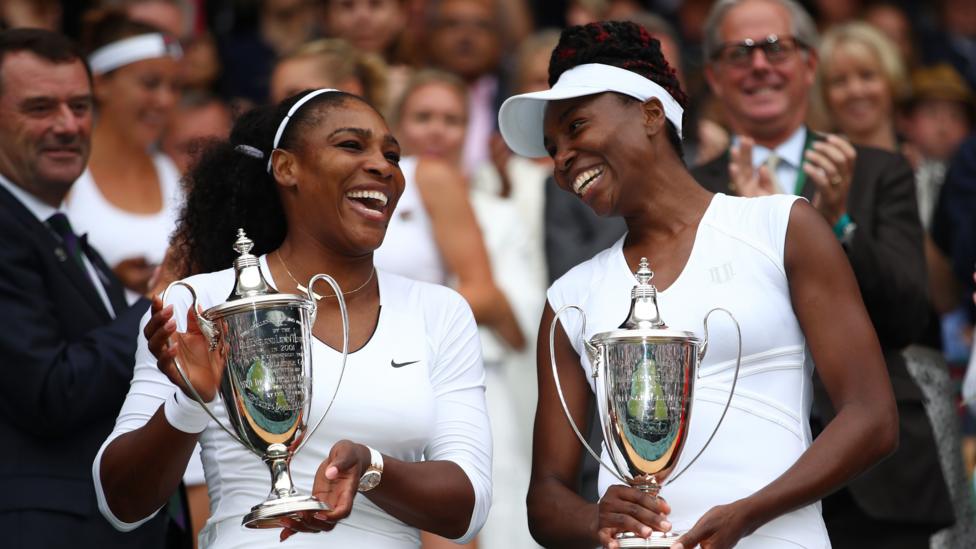
One Last Dance: The Williams Sisters Return to Wimbledon's Grass
Serena and Venus Williams receive a Wimbledon doubles wildcard, reigniting the most iconic sibling partnership in tennis history.
The Last Dance on Grass: Djokovic's Twilight Hunt for 25
At 39, Novak Djokovic arrives at Wimbledon knowing this may be his final realistic shot at Grand Slam history.
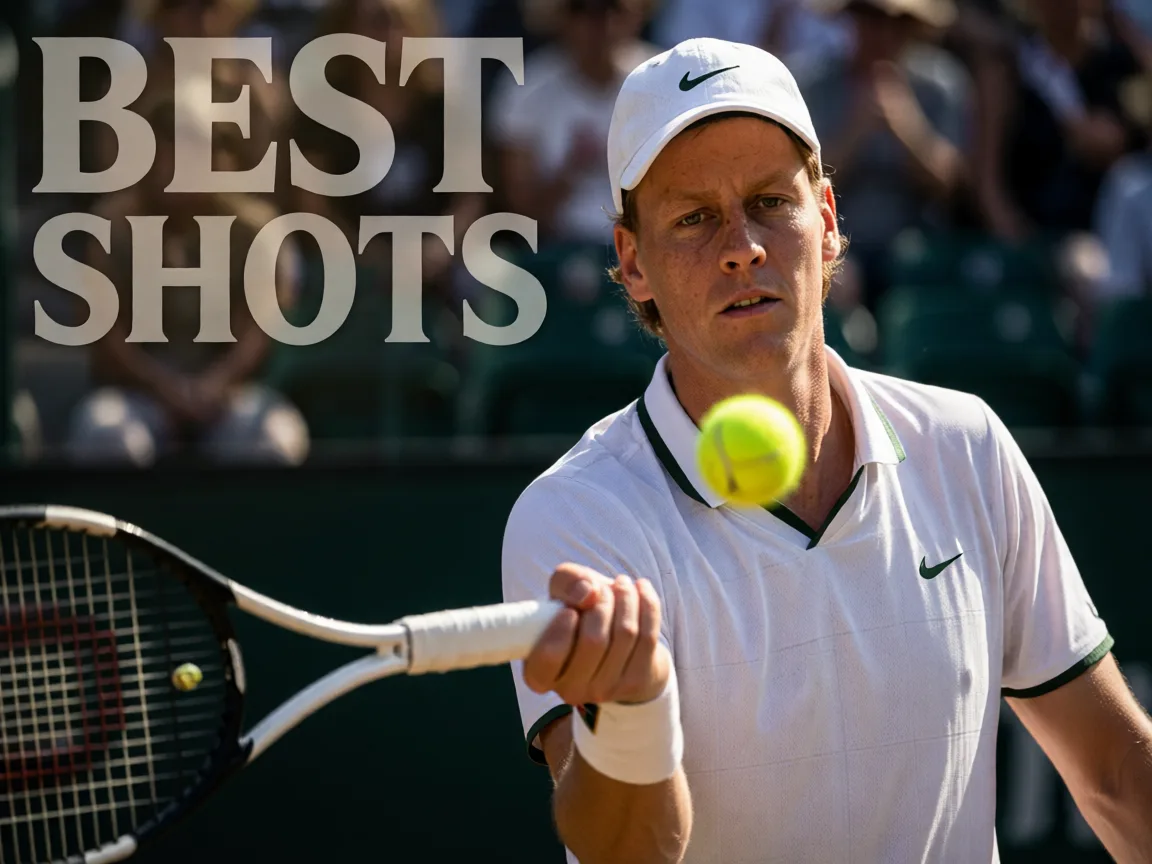
Sinner Defends the Crown: Four-Set Triumph Over Zverev
Jannik Sinner retains his Wimbledon title, outclassing Alexander Zverev in four sets to cement his reign on grass.