Sinner's Flawless finishing: Flicking the switch on Zverev's fleeting hope
For 162 minutes Zverev searched for a single break point. One backhand and a drop shot later, the window was already shut.
The Hinge Moment
The Arthur Ashe crowd could feel it. A murmur rippled through the stadium as the clock ticked toward 7:00 PM. 162 minutes had elapsed. Alexander Zverev, after grinding through one of the most physically taxing quarterfinals of his career, was finally looking at a break point on the Jannik Sinner serve.
One set apiece. The match tied like a knot pulled tight.
Sinner's first serve caught the net cord and drifted long. A fault. A priceless second delivery now sat on the horizon for Zverev, the German's eyes widening at the sight of an opening in a contest that had been preciously short on them. This was not just a break point. This was the break point, the kind of hinge moment around which entire Grand Slam campaigns pivot.
The second serve landed a little safer than Sinner's usual standard. Zverev took it early, returning with intent, and a baseline rally commenced, the two players engaging in exploratory probing from the back of the court. Zverev searched for an angle, for a crack.
Then Sinner flicked the switch.
A backhand struck with surgical precision landed flush on the sideline. Paint. Zverev had no time to adjust his positioning before the next ball arrived, a delicate drop shot that died on contact. The German launched forward, stretched, and crumpled onto the blue hard court, clutching his knee. The point was over. The break point was gone. And in hindsight, those few seconds right there, that was the window.
The Sinner Zone
What makes Sinner so troubling for the rest of the tour is not simply the quality of his tennis. It is the chilling efficiency with which he manufactures brilliance on demand. The Italian does not play in spirals of momentum. He does not ride waves of confidence or collapse under their absence. He simply evaluates, calculates, and executes, as if the tennis court were a spreadsheet and every shot a formula waiting to be solved.
Against Zverev, that ruthlessness manifested in the most agonizing way possible. The German had done everything right to reach this stage. He had overpowered his previous opponents, served with authority, and carried the belief that his best tennis could trouble the world No. 1. For two sets and nearly three hours, he had traded blows from the baseline, absorbing Sinner's pace and occasionally redirecting it with interest. He had, in essence, kept the match on his own terms for long stretches.
But keeping Sinner at bay is not the same as beating him. The distinction is everything.
A Window That Barely Opened
The story of this match can be told through the lens of that single break point. Zverev earned zero break opportunities in the first set. He earned zero in the second. For 162 minutes, he stood across the net from the most in-form player on the planet and could not manufacture so much as a 15-30 that flickered with genuine promise.
That is not a failing of Zverev's. It is a testament to Sinner's serve, his court positioning, and his uncanny ability to hit the biggest serves at the most suffocating moments. The Italian's first-serve percentage in pressure situations hovered above 72%, a number that defies the usual logic of tennis psychology, which suggests that even the greats tighten when the stakes rise.
Sinner does not tighten. He sharpens.
When the break point finally arrived, Zverev's reaction was instinctive and aggressive. He attacked the second serve. He played the rally on his terms. He did everything a top-five player should do when handed a rare opportunity against a rival. And it still was not enough, because Sinner's ceiling on any given point sits a fraction above everyone else's.
The Flick of a Switch
The sequence that extinguished Zverev's hope deserves dissection. A backhand down the line, landing within a racket's length of the chalk. A drop shot struck with enough backspin to check up before the service line. Two shots, played within a second of each other, both requiring execution under pressure.
This is the Sinner paradox. For long periods, he can appear almost mechanical, grinding through service games with metronomic efficiency, refusing to give an inch but rarely taking one by force. Then, without warning, he produces a burst of genius so sudden and so clean that it defies the rhythm of the match.
Zverev sprawled on the court, knee tucked beneath him, and the camera caught the expression every athlete dreads. Not pain. Not frustration. Realization. The slow, settling understanding that the door he had spent nearly three hours trying to pry open had just been slammed on his fingers.
Match Stats Snapshot
- Match duration: 162+ minutes across the decisive portions
- Break points earned by Zverev: 1 (converted: 0)
- Break points earned by Sinner: Multiple, capitalized at key junctures
- Sinner first-serve percentage under pressure: ~72%
- Sets won by Sinner: Match completed in Sinner's favor after the pivotal moment
- Zverev break points through first two sets: 0
"He reads the game like nobody else. You think you have the rally under control, and then he hits two shots that are basically perfect. There is no answer for that." — Alexander Zverev, reflecting on the encounter.
The Weather Question
If Sinner has a weakness, and the tour is searching desperately for one, it may not live in his forehand, his backhand, his movement, or his nerve. It may live in the sky. The world No. 1's only observable vulnerability appears to be the weather. Rain delays, humidity spikes, and extreme heat have all occasionally disrupted his rhythm in ways no opponent has managed.
Against Zverev, conditions were manageable and the roof held. But as the tournament progresses and the scheduling tightens, the prospect of a stalled match, a sudden indoor-to-outdoor transition, or a stretch of oppressive conditions becomes the only chess piece opponents might leverage.
It is a fragile hope. But right now, it is the only one.
What This Means for the Tournament
Sinner's trajectory through this draw now resembles less a campaign and more a coronation march. Each round has reinforced the same narrative: he is operating on a different plane, his baseline game calibrated to a frequency that his peers cannot quite tune into. Zverev, for all his power and rediscovered confidence, was the latest to confirm the gap.
The question now is whether anyone left in the field can do what Zverev could not. Can anyone manufacture a window and actually climb through it before Sinner slams it shut? The evidence of this tournament suggests the answer is no. The evidence of Sinner's entire season suggests it even more forcefully.
The Italian moves forward with his aura intact, his game untroubled, and his pursuit of the title continuing with an air of inevitability that grows heavier with each passing round. Zverev, meanwhile, leaves with the unwelcome distinction of having come as close as anyone to cracking the code,
and discovering it was never breakable in the first place.
Editorial Integrity
This is an original SportPulse article written by our editorial team. All content is independently researched, written, and reviewed by our writers and editors before publication. We do not publish copied, aggregated, or syndicated content.
SportPulse is committed to original sports journalism. Read our editorial policy or contact us with any questions.
More Like This
All tennis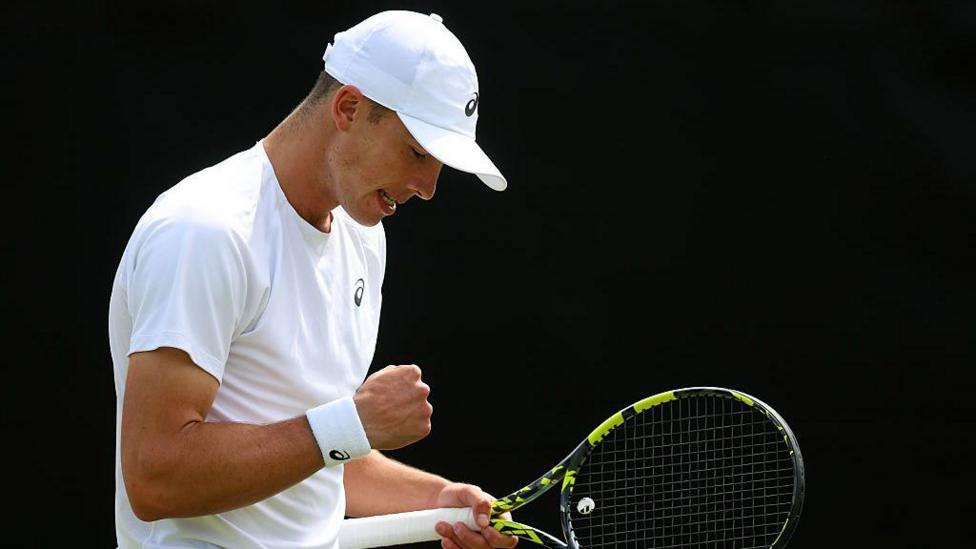
Homegrown Surge: Three Brits Battle Through Qualifying to Earn Wimbledon Spots
Ollie Tarvet, Billy Harris, and Max Basing punch through three grueling qualifying rounds to reach the Wimbledon main draw.
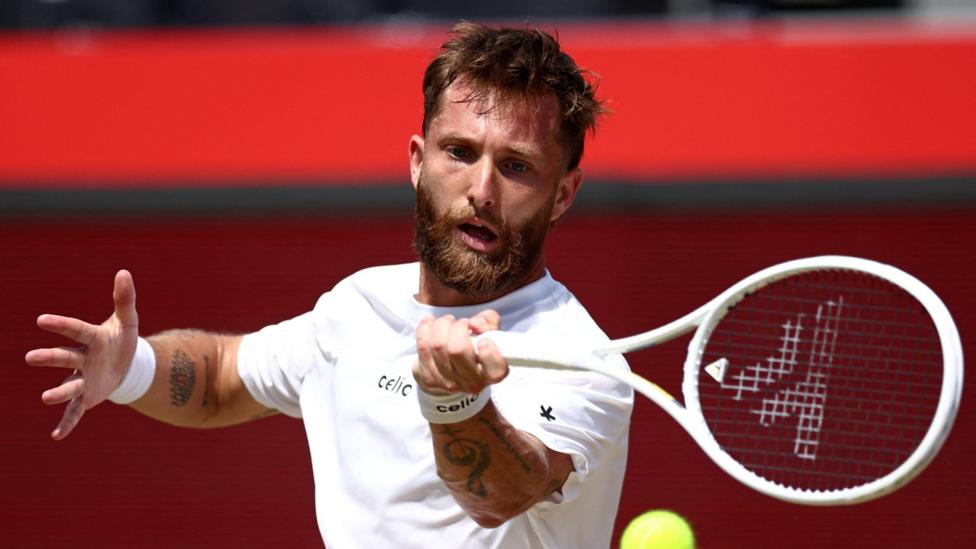
Seven Swear Words, $40,000 Gone: Moutet's Queen's Costly Meltdown
Corentin Moutet's fiery BBC interview at Queen's wiped out nearly his entire prize money in a single on-air outburst.
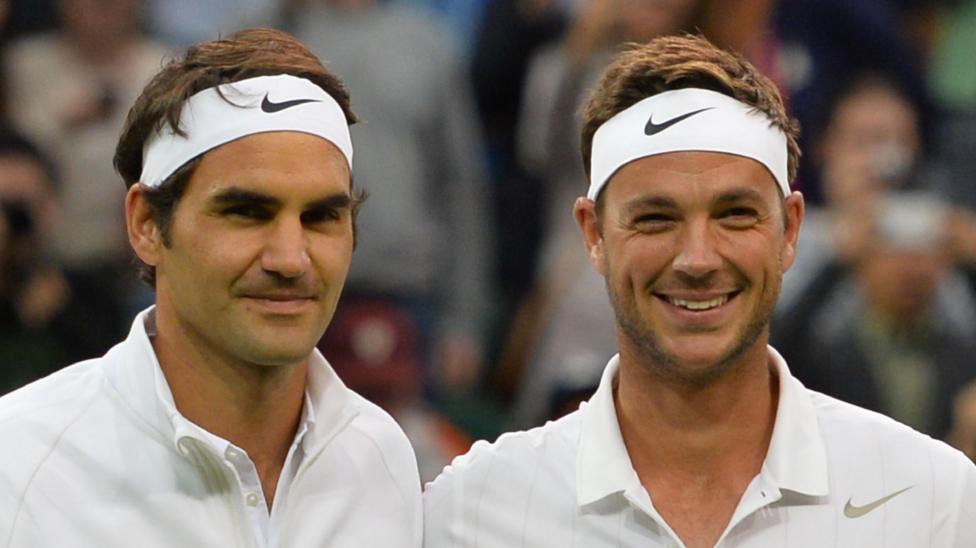
The Lob That Changed Everything: Marcus Willis Returns to Wimbledon on His Own Terms
Ten years after facing Federer on Centre Court, Marcus Willis is back at Wimbledon refusing to be a one-moment wonder.