40 Years in the Making: The Socceroos Match That Could Stop a Nation
SBS's four-decade World Cup odyssey collides with Australia's knockout dreams in a match that could shatter every record.
A Broadcast Legacy on the Brink
Mexico City, 1986. Maradona's hand of God. A tiny Australian network called SBS flickered into living rooms across a country that barely understood the offside rule. Nobody watching that tournament could have imagined the journey ahead.
Forty years later, that same broadcaster stands on the precipice of its greatest moment. Australia's World Cup clash with Paraguay isn't just another group stage fixture. It's the collision of an improbable qualification dream and a broadcasting commitment that has outlasted every government, every Prime Minister, and every cultural shift in Australian sport.
SBS has covered every single men's World Cup since 1986. Eleven tournaments. From Diego to Zidane to Messi to whoever writes the next chapter. And this match, against Paraguay, could deliver the network its largest audience ever.
What 'Stopping the Nation' Really Means
In Australian sporting culture, only one event has historically "stopped the nation" — the Melbourne Cup, a horse race that empties offices and halts traffic every November. Cricket's Boxing Day Test comes close. An Ashes series in England can dominate water cooler talk.
But football? Football has spent decades fighting for scraps in a crowded sporting landscape dominated by AFL, rugby league, and cricket.
"We've carried this torch through years when nobody was watching. Through late-night kickoffs, through early morning replays, through an audience that sometimes numbered in the tens of thousands. We never wavered." — SBS football department veteran
The phrase "stopping the nation" isn't hyperbole for this particular fixture. Australia's only two previous knockout round appearances came in 2006 and 2022. Both times, the country genuinely shifted. Offices tuned in. Schools wheeled out televisions. Streets emptied.
A third time, with SBS's four-decade legacy as the backdrop? The numbers could be staggering.
The Match That Matters
Socceroos vs. Paraguay: More Than Football
Australia's path to the knockout rounds has never been straightforward. The Socceroos have historically been cast as the plucky underdog, the team that scrapes and fights but rarely gets rewarded. Only twice have they escaped the group stage at a World Cup — in Germany 2006, where a controversial late penalty against Italy ended their run, and in Qatar 2022, where Argentina's eventual brilliance proved too much.
Paraguay, meanwhile, bring their own World Cup pedigree. They reached the quarterfinals in South Africa 2010, a side built on defensive discipline and South American grit. This is not an opponent that rolls over.
But context matters. The Socceroos enter this match knowing exactly what's at stake. No ambiguity. No complex permutations. Win, and they're through. The clarity of the situation has galvanized a squad that thrives on pressure.
Behind the Broadcast: SBS's 40-Year Gamble
Transfer Intel — The Business of Coverage
SBS's commitment to World Cup football has never been purely commercial. The network was established as a multicultural broadcaster, and football — the world's game — became its flagship identity.
The economics have shifted dramatically over four decades. In 1986, rights fees were negligible. Today, World Cup broadcasting rights represent tens of millions of dollars in investment. SBS has navigated partnerships, sublicensing deals, and competitive threats from commercial networks to maintain its position as Australia's football home.
The expected viewership for the Paraguay match could approach — or surpass — every previous Socceroos record. For context:
- The 2006 Socceroos vs. Italy match drew one of the largest Australian television audiences for any sporting event that year
- The 2022 group stage matches against France and Denmark generated massive spikes in streaming and traditional viewership
- This fixture could eclipse both
The advertising revenue implications alone are significant. World Cup matches command premium rates, and a knockout-deciding clash involving the home nation represents the highest-value inventory in Australian sports broadcasting.
The Cultural Moment
Why This Match Resonates Beyond Football
Australian football has undergone a generational transformation. The Socceroos of 2026 represent a multicultural, diverse squad that reflects the country's modern identity. Players with roots in Lebanon, Greece, Italy, Croatia, and across the Pacific Islands wear the gold and green with pride.
This resonates deeply with SBS's original mission. The broadcaster was created to serve Australia's diverse communities, and the World Cup has always been its bridge between cultures.
"When the Socceroos play, every community in Australia has someone to connect with. That's not something you can manufacture. It's earned over decades." — Australian football commentator
The Paraguay match sits at the intersection of sporting achievement and cultural identity. A nation of 26 million people, spread across a continent, connected by a single broadcast signal that has served them for four decades.
What Comes Next
The Stakes Could Not Be Higher
If Australia defeat Paraguay and advance to the knockout rounds, the ripple effects extend far beyond one match. Football participation numbers in Australia have surged in recent years. A deep World Cup run would accelerate that growth exponentially.
For SBS, the legacy is already secure. Forty consecutive World Cups is an achievement no other Australian broadcaster can claim for any sporting event. But a record-breaking audience, combined with knockout round football? That would be the crowning moment.
The network's production team has been preparing for this scenario for months. Multiple camera angles, enhanced graphics packages, expert panels featuring former Socceroos and international analysts. Every resource has been deployed.
Because SBS understands something fundamental about Australian sport: these moments are rare. The country doesn't just watch its football team at World Cups — it becomes the team. Every tackle, every save, every chance is experienced collectively, across time zones and demographics.
This Paraguay match isn't just a football game. It's the culmination of a forty-year relationship between a broadcaster and a sport, between a nation and its team, between patience and possibility.
The world's biggest sporting event. Australia's most enduring broadcast commitment. Everything converging on ninety minutes.
SBS has waited four decades for this. Australia might finally be ready to stop and watch.
The Socceroos face Paraguay in their crucial World Cup group stage finale, with knockout round qualification on the line. Coverage on SBS.
Editorial Integrity
This is an original SportPulse article written by our editorial team. All content is independently researched, written, and reviewed by our writers and editors before publication. We do not publish copied, aggregated, or syndicated content.
SportPulse is committed to original sports journalism. Read our editorial policy or contact us with any questions.
More Like This
All football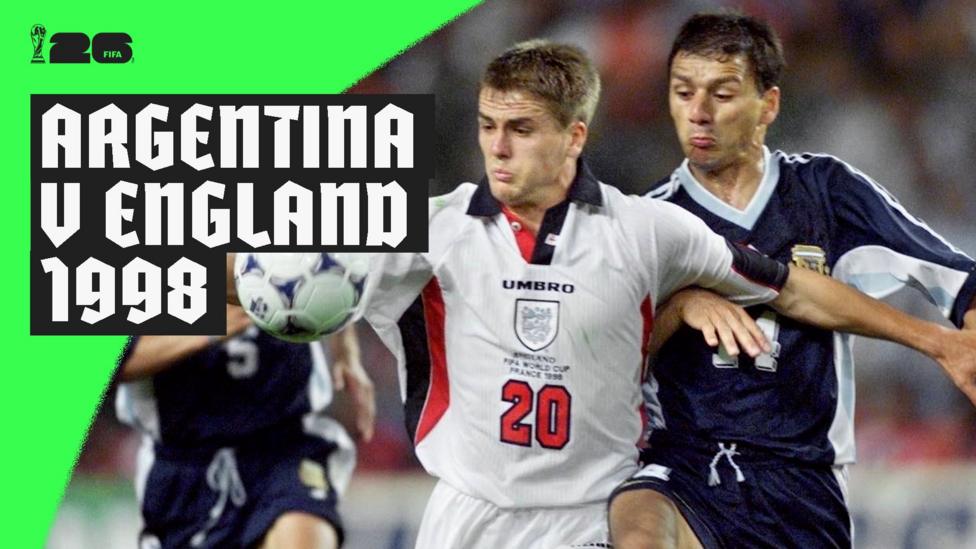
Owen's Rise, Beckham's Fall: England's 1998 World Cup Heartbreak
A night of genius and madness in Saint-Étienne that defined careers and revealed the beautiful game's cruelest theatre.

Chelsea Bet Big on Atalanta's Pipeline With Palestra Capture
Chelsea's £43m move for Atalanta's Marco Palestra signals a clear tactical identity shift under Alonso.

United Buy Land for 100,000-Seat Cathedral: Old Trafford's Successor Takes Shape
Manchester United's 25-acre land purchase near Old Trafford signals the most ambitious stadium project in English football history.