From Iniesta to Yamal: How Spain 2026 Compares to the 2010 Legends
Spain's 2026 contingent mirrors the 2010 legends in system and philosophy, but personnel reveals where they might surpass or fall short.
Iker Casillas vs Unai Simón: The Goalkeeper's Burden
Iker Casillas was not merely a shot-stopper in 2010. He was the heartbeat of a team that built its entire identity on possession, pressing high up the pitch, and trusting a defensive line that lived dangerously close to the halfway mark. When Spain's possession machine faltered, Casillas bailed them out. His one-on-one save against Arjen Robben in the final remains the most consequential moment in Spanish football history.
Unai Simón occupies the same jersey now, and the Athletic Bilbao man has grown immensely under Luis de la Fuente. But he does not yet carry the aura of invincibility that Casillas projected during his prime. Simón is a capable distributor and a reliable presence, yet in moments of absolute chaos, you wonder whether he has that match-winning reflex save in him.
The edge here goes overwhelmingly to 2010.
The Defensive Wall: Ramos and Puyol vs Le Normand and Laporte
The center of defense tells the starkest tale of transformation between the two eras.
Carles Puyol and Sergio Ramos formed a partnership that blended brute aggression with elite game intelligence. Puyol's header against Germany in the semifinal was the defining moment of that tournament from a defensive player's perspective. Ramos, meanwhile, was only 24 years old and already captaining the backline with the ferocity of a veteran.
Robin Le Normand and Aymeric Laporte represent the modern incarnation. Le Normand, naturalized from France, has been a revelation for De la Fuente with his physical presence and aerial dominance. Laporte brings the ball-playing sophistication demanded by the system. They are a functional, balanced partnership. But they lack the sheer intimidation factor that Puyol and Ramos imposed on opposing forwards.
Puyol walked onto the pitch with the energy of a man defending his family home. Le Normand and Laporte are excellent technicians. They are not that.
2010 wins this comparison comfortably.
The Fullback Debate: From Measured to Explosive
Joan Capdevila and Sergio Ramos on the flanks in 2010 offered something radically different from what we see today. Capdevila was an underrated attacking force on the left, providing width that allowed David Villa to drift inside. His 3 assists during the 2010 campaign ranked among the tournament leaders.
Marc Cucurella and Dani Carvajal represent the present equation. Cucurella's redemption arc at the European Championship was one of the stories of the tournament. His overlapping runs and six-goal-amounts-of-chaos presence transformed Spain's attack. Carvajal, at 32 years old, remains the standard by which right-backs are measured in world football.
This is closer than it appears. Cucurella and Carvajal might actually outproduce Capdevila and Ramos in expected contributions during a full tournament. The modern pair is more dynamic going forward, though perhaps slightly more vulnerable to counter-attacks.
2026 takes a narrow edge here.
The Midfield Engine: Iniesta and Xavi vs Rodri and Pedri
This is where arguments turn into shouting matches.
Xavi and Andrés Iniesta were the twin pillars of a philosophy that revolutionized football. They combined for 0 goals and 3 assists in that 2010 World Cup, a stat that wildly undersells their influence. They touched the ball over 800 times between them across the seven matches. The ball was their weapon, and they wielded it with the precision of surgeons.
Rodri and Pedri are their spiritual heirs. Rodri is arguably the best defensive midfielder on the planet right now, a player whose impact on Manchester City's success is unmatched by any single midfielder in Europe. Pedri, at just 22 years old, already moves with the rhythm of a player who has played three hundred professional matches. His vision and first touch are Iniesta-esque.
Rodri completed 93.2% of his passes during the European Championship. Pedri's progressive passing numbers exceeded those of Iniesta at the same age.
The statistical case for 2026 is compelling. Rodri provides the defensive stability that Xavi was asked to manufacture through pure possession control. Pedri may yet match Iniesta's creative output. But the intangible aura of the Xavi-Iniesta axis, the way they froze opponents into paralysis, cannot be replicated overnight.
2010 retains the throne based on legacy. But 2026 might close the gap by the time the World Cup begins.
The Flanks: Silva and Navas vs Williams and Yamal
David Silva and Jesús Navas were contrasts in style. Silva was the puppeteer, drifting between lines, finding pockets of space that should not have existed. Navas was pure electricity, stretching defenses with pace that forced opponents to retreat ten yards deeper than they wanted.
Nico Williams and Lamine Yamal are perhaps the most frightening attacking duo Spain has ever produced. Williams torched defenses at the European Championship with 5 goal involvements and performances that bordered on the unplayable. Yamal, at 17 years old, is already being discussed as a future Ballon d'Or winner. His combination of fearlessness and technical refinement defies explanation for someone his age.
This is where 2026 pulls ahead decisively.
The 2010 wingers were brilliant within a system that prioritized control. Williams and Yamal are threats who can win matches independently of the tactical framework. They force opponents into decisions no coach wants to make. Double-team one, and the other destroys you. Play a low block, and they find spaces that should not exist.
The Number Nine: Villa vs Morata
David Villa scored 5 goals in that 2010 World Cup. He was the ultimate pressure-absorbing striker, a player whose movement created space for Iniesta and Xavi to operate while also finishing chances with ruthless efficiency.
Álvaro Morata has never been fully embraced by Spanish supporters in the way Villa was. He has scored crucial goals, including his semifinal winner against France at the European Championship. But Morata's game has always been defined by what he does not do rather than what he does. His hold-up play is solid. His finishing remains inconsistent.
Villa was a finisher of the highest order. Morata is a system player who occasionally finishes.
2010 wins without controversy.
Behind the Deal: The System Question
Vicente del Bosque built his 2010 team on a system inherited from Barcelona. The core of the squad played together at club level, training together day after day. That familiarity was their secret weapon. They could play with their eyes closed.
De la Fuente has taken a different approach. His Spain is more direct, more willing to stretch the pitch vertically, less obsessed with maintaining possession for its own sake. The wingers reflect this shift. The fullbacks bombing forward reflect this shift. Even Rodri's role differs from Sergio Busquets', pushing higher and joining attacks more frequently.
The tactical flexibility of 2026 is superior. The automatic understanding of 2010 was unmatched.
The Verdict: Where 2026 Can Match or Exceed
Spain's 2026 aspirants have a genuine path to matching the class of 2010. Here is how they compare across the key pillars.
- Goalkeeper: 2010 holds the advantage. Casillas was a match-winner in his own right.
- Defense: 2010 wins on intimidation and chemistry. 2026 is more comfortable in possession.
- Midfield: 2010 holds the legacy advantage. 2026 might be more balanced defensively.
- Attack: 2026 has the edge. Williams and Yamal are generational talents.
- Striker: 2010 wins. Villa was a killer. Morata is a worker.
- Tactical flexibility: 2026 wins. De la Fuente has more weapons.
- Big-match temperament: 2010 was tested and proven across multiple major tournaments.
The current generation has already answered questions about their mentality by winning the European Championship. They dispatched France, Germany, and England along the way. That run was no fluke.
But the World Cup is a different beast entirely. The conditions in North America will test stamina, adaptability, and squad depth in ways the European Championship cannot. The 2026 tournament will span 16 cities across three countries, presenting logistical and climatic challenges that no previous World Cup has matched.
Spain 2010 won the World Cup by grinding out results. They scored only 8 goals in seven matches. They won every knockout game by a single goal. They were masters of the narrow victory, the controlled suffocation, the 1-0 result that felt inevitable after sixty minutes of territorial domination.
Spain 2026 might need to win differently. They have the weapons to blow teams open, the pace to punish high lines, and the individual brilliance to create something from nothing. Whether they can also win the ugly games, the ones where the system breaks down and pure willpower is required, remains the unanswered question.
One thing is certain. The upcoming World Cup will tell us whether this generation deserves to stand alongside their predecessors. The stage is set. The comparisons will end only when the trophy is lifted again.
Editorial Integrity
This is an original SportPulse article written by our editorial team. All content is independently researched, written, and reviewed by our writers and editors before publication. We do not publish copied, aggregated, or syndicated content.
SportPulse is committed to original sports journalism. Read our editorial policy or contact us with any questions.
More Like This
All football
Mbappé and Olise Forge a France Attack No One Can Stop
France dismantled Sweden in a World Cup masterclass powered by Mbappé's ruthless finishing and Olise's breathtaking creativity.
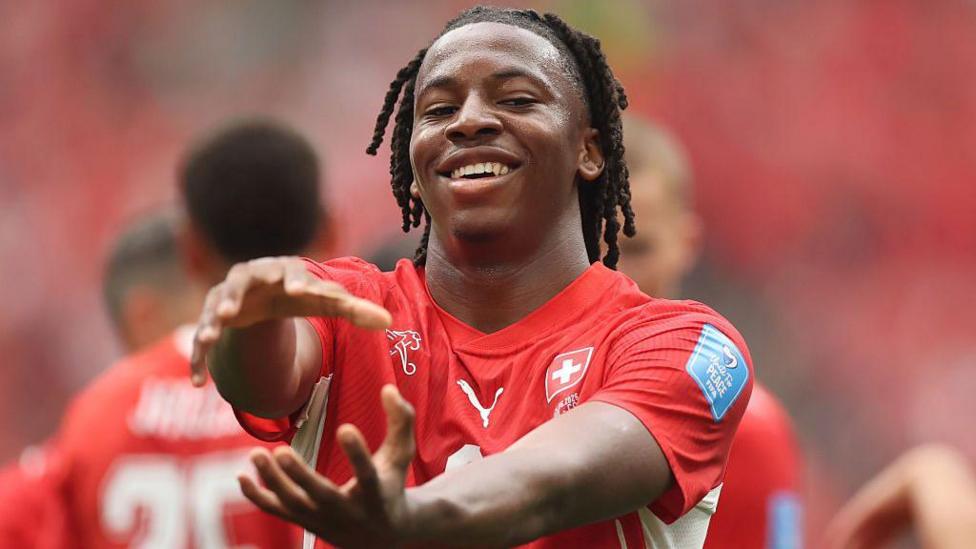
Newcastle Chase Manzambi: The Midfield Bargain That Sparked a Bidding War
Newcastle target Johan Manzambi's World Cup heroics have transformed a quiet Freiburg talent into the Premier League's most coveted bargain.

Czechia's Survival Test Against a Mexico Side Playing With House Money
Mexico have clinched the group, but for Czechia the equation is brutally simple: win or face elimination.