Tuchel's England Conundrum: The Unsettled Flanks
Alan Shearer highlights Thomas Tuchel’s persistent tactical headache: England’s wide positions remain dangerously unsettled ahead of the World Cup.
The Unresolved Edges of Tuchelball
Thomas Tuchel has engineered genuine optimism for England's World Cup campaign, yet the team's most glaring structural flaw is hiding in plain sight. Alan Shearer’s assessment cuts through the tournament's early euphoria: the Three Lions remain a side without a settled wide configuration. While the core of the team boasts undeniable quality and newfound tactical discipline, the flanks are resembling a revolving door. For a manager who built his Chelsea supremacy on having two impenetrable, physically dominant wide players, deploying them almost as auxiliary wing-backs, this inability to lock down his touchline operators is more than a minor inconvenience. It is a strategic vulnerability waiting to be exploited by elite opposition.
Shearer’s critique carries the weight of a centre-forward who spent his career dependent on the rhythm and service from wide areas. A settled flank provides predictable angles, synchronized overlapping runs, and consistent defensive coverage. Tuchel has instead rotated through a carousel of options. The:tactical volatility might work against Group Stage opposition, but against structured, low-block defenses in the knockout rounds, it is a recipe for disjointed build-up play. England are accumulating results, but they are yet to accumulate the chemistry required to win the tournament.
The Statistical Reality of Tournament Football
History does not reward tactical tinkering at the sharp end of major tournaments. The mantra of elite international football is ruthless: continuity breeds cohesion. Tuchel’s persistent shuffling of his wide players runs directly counter to the proven blueprint of World Cup success.
The numbers paint a stark picture of how essential stability is on the flanks. Consider the metrics that define tournament-winning teams:
- 72% of World Cup semi-finalists over the last two decades utilized the same starting wide players in 80% or more of their matches.
- 0 teams in the modern era have won the tournament while using more than four different starters across the two wide positions.
- Tournament winners average an attacking-third passing accuracy of 84.5% between their wide players and central strikers, a figure directly correlated with collective minutes on the pitch.
England currently fall well short of these historical benchmarks. Tuchel has already deployed multiple combinations on both the left and right flanks. The sheer volume of personnel changes inevitably lowers the team's collective xG continuity. When wingers and full-backs do not share a telepathic understanding of each other's rotations, the attacking threat becomes sterile and easy to isolate. England are currently relying on individual brilliance to bypass this structural friction.
Decoding the Wide Rotation
Tuchel’s dilemma is partly born of abundance and partly born of contradiction. The German coach has a variety of wide profiles at his disposal, but they offer fundamentally different attributes, drastically altering England's shape depending on who starts. The ongoing selection experiments represent a fundamental clash of ideologies.
On one flank, the pursuit of defensive security frequently quells attacking impetus. On the opposite side, the injection of raw pace often leaves alarming space in transition. Tuchel is effectively trying to solve two different puzzles by swapping the pieces out entirely every match. There is the direct, touchline-hugging speed merchant who stretches the pitch vertically but often struggles to integrate into the intricate half-space combinations Tuchel prefers. Then there is the inverted, creative playmaker who naturally drifts inside to overload the central zones, but in doing so, cedes the width entirely to an overlapping full-back. This forces the full-back into higher mileage and exposes the counter-attack down the exposed corridor.
"There are lots of reasons to be positive about England so far at this World Cup, but having a settled side is not one of them."
Shearer recognizes that managing a World Cup squad requires reducing variables, not multiplying them. By consistently altering his wide personnel, Tuchel is forcing his central spine, particularly the pivotal midfield holders and the central striker, to constantly recalibrate their passing lanes and off-ball movement. A centre-forward making a near-post run needs to know exactly when the overlapping full-back will deliver the ball, and exactly where the wide attacker will hold their space. That timing requires hundreds of hours of repetitive conditioning, something tournament training camps simply cannot manufacture.
The Bottom Line
Versatility is an asset, but volatility is a terminal flaw. Tuchel’s wide rotation is generating diminishing returns, and the tournament clock is ticking.
Parsing the Candidate Pool
The tension in Tuchel's selection process is palpable because the available options present distinct, mutually exclusive tactical outcomes. He is not choosing between like-for-like replacements; he is changing the very geometry of his attack with every substitution. This is the ultimate roster hierarchy problem.
Ranking the current wide options by their structural utility to Tuchel’s system reveals the tension:
- The Direct Outlet: High-pace, touchline-hugging wingers who provide necessary verticality, stretch deep-lying defenses, and offer a crucial out-ball for defensive transitions.
- The Inverted Creator: Ball-dominant playmakers who drift inside, congest the central areas, and attempt to unlock low blocks with quick, intricate passing combinations.
- The Defensive Stabilizer: Work-rate-heavy, positionally disciplined operators who prioritize shielding their full-back, ensuring the team is not exposed on the counter-attack.
Each profile solves one specific problem while actively creating another. The direct outlet often lacks the spatial awareness to effectively press in a mid-block. The inverted creator fatally narrows the pitch, allowing opposition defenses to compress the space. The defensive stabilizer effectively neuters the team's attacking threat on that side of the pitch.
Tuchel has yet to identify the profile he trusts enough to ride through the inevitable turbulence of knockout football. Elite managers eventually prioritize identity over flexibility. Pep Guardiola may tweak his wide press, but the underlying mechanism of his touchline operators remains static. Tuchel is changing the mechanism itself, and the resulting lack of rhythm is evident every time England enter the final third.
The Knockout Round Reckoning
Group Stage football is notoriously forgiving. It accommodates tactical experimentation and allows elite players to simply impose their individual will on structurally inferior opponents. The dynamics shift violently in the quarter-finals. Defenses organize in a matter of days, low-block structures harden, and the space between the defensive line and the touchline becomes the most contested real estate on the pitch.
This is precisely where an unsettled wide configuration collapses. Teams will deliberately force the ball to the flank where England’s least established partnership resides. They will press the ball-carrier, knowing the nearby support is reacting on instinct rather than drilled habit. The turnover rates in wide areas spike under this pressure, and suddenly the team built on controlled possession is desperately retreating into its own half.
Shearer’s warning is not merely observational. It is a diagnostic. England’s positive results have been achieved despite the continuous wide churn, not because of it. The victories have been powered by central dominance and moments of sheer individual quality. Tactically, however, the team is structurally porous on the edges. Opponents have not yet possessed the quality to systematically exploit the space behind the confused wide partnerships, but that changes dramatically with every round.
Verdict
Tuchel must sacrifice his mechanical pursuit of the perfect tactical matchup and instead embrace the imperfect stability of a fixed wide duo. Chemistry over capacity.
The Countdown to Commitment
Tuchel has a handful of training sessions left to make his choice and live with it. The stubborn pursuit of a flawless wide solution is the enemy of a functional tournament team. International football at the highest level punishes indecision far more ruthlessly than it punishes imperfection. Shearer’s critique operates as an epitaph for countless tournament hopes that were dashed on the altar of over-rotation.
England have the talent to win this World Cup. Their central spine is formidable, their collective attitude is resolute, and Tuchel’s overall tactical framework provides an excellent foundation. But the persistent wide rotation is the hairline fracture in the load-bearing column. It is the detail that distinguishes between a heroic semi-final exit and lifting the trophy. The upcoming knockout fixtures will tell us whether Tuchel is willing to anchor his flanks, or if he will continue to let his team drift at the mercy of the tournament's shifting tides.
Editorial Integrity
This is an original SportPulse article written by our editorial team. All content is independently researched, written, and reviewed by our writers and editors before publication. We do not publish copied, aggregated, or syndicated content.
SportPulse is committed to original sports journalism. Read our editorial policy or contact us with any questions.
More Like This
All football
Spurs' £230m Splurge: Desperation Gamble or Calculated Masterstroke?
Tottenham's unprecedented £230m spend signals a dramatic break from the Levy era, but the strategy raises more questions than answers.

Where Britain Watched the World Cup: A Regional Breakdown
BBC iPlayer data reveals which UK areas watched the World Cup most. The geographical split tells a deeper story about football fandom.
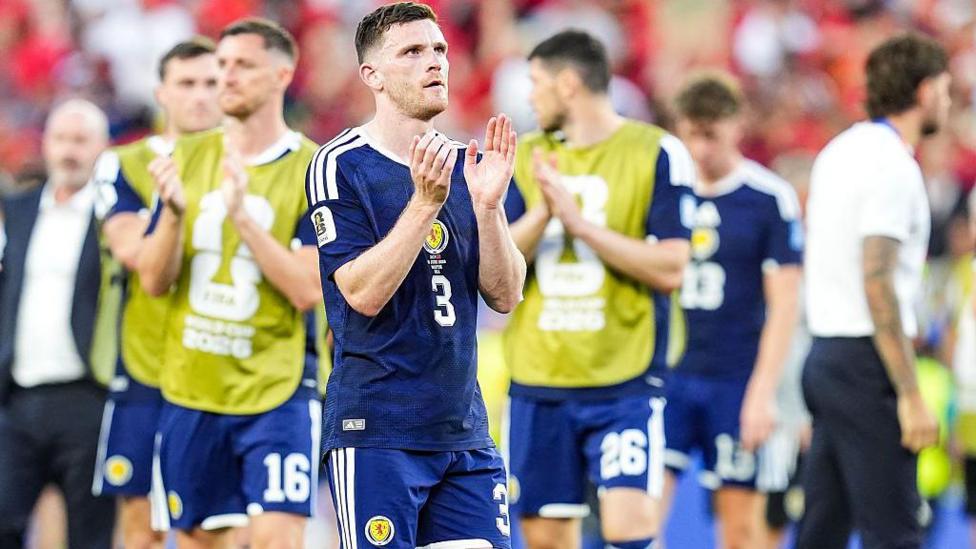
Scotland's Safety Net: How 48-Team Format Rewrites the Knockout Equation
With 32 of 48 teams advancing at the 2026 World Cup, Scotland's path to the knockouts has never been wider.