At 15, Sooryavanshi Poised to Rewrite India's Cricket History
India's batting coach believes teenage prodigy Vaibhav Sooryavanshi has the mental steel to handle international cricket at just 15.
The Weight of a Billion Dreams on a 15-Year-Old's Shoulders
There is a particular kind of silence that falls over a cricket dressing room when a teenager walks in among men. Not hostility. Not skepticism. Something closer to awe mixed with concern, the way adults instinctively tense up when a child stands too close to the edge of a cliff.
Vaibhav Sooryavanshi is that child at the edge.
At 15 years old, the Indian batting prospect stands on the cusp of an international debut in Friday's T20I against Ireland in Belfast, with a scheduled start of 13:30 BST. If selected, he would become one of the youngest players ever to represent India at the senior international level, a milestone that carries both extraordinary promise and extraordinary pressure.
"He has the mental capabilities to make his mark in international cricket." — Sitanshu Kotak, India batting coach
That single endorsement from Kotak is not casual praise. It is a calculated signal, a green light wrapped inside careful phrasing. In Indian cricket, coaches do not invoke a teenager's mental readiness unless they genuinely believe the moment has arrived.
Who Is Vaibhav Sooryavanshi?
The name may be unfamiliar to casual followers of the game outside India, but inside the country's relentless cricketing pipeline, Sooryavanshi has been a whispered inevitability for years. India's age-group cricket system is a ruthless filter. Thousands enter. A handful survive. And among those survivors, only the truly extraordinary earn the kind of internal reputation that fast-tracks them past the usual developmental stages.
Sooryavanshi is one of those rare accelerants.
He has torn through junior cricket with a combination of technical maturity and temperament that belies his age. While most 15-year-olds are still learning to manage the gap between school cricket and state-level competition, Sooryavanshi has been operating at a level that forced selectors to skip steps entirely.
The Belfast Stage: Why This Match Matters
Friday's fixture against Ireland is not, on its surface, the most high-profile stage in world cricket. Belfast's Civil Service Cricket Club ground will not produce the wall-to-wall coverage that an India-Pakistan clash commands. The stands will not be heaving with 50,000 screaming fans.
But for Sooryavanshi, this might be the perfect debut environment.
The Case for Throwing Him In
There is a strategic logic to blooding a teenager in a lower-pressure bilateral T20I series rather than a World Cup or a marquee home series against Australia or England. Ireland's bowling attack, while competitive and improving, does not carry the same psychological weight as facing Mitchell Starc under lights at the MCG.
The risk calculus is different here. India can afford to experiment. They can afford to give a 15-year-old a taste of the international arena without the crushing expectation that accompanies every home match in India.
But make no mistake: the moment he walks out to bat wearing India's blue jersey, the pressure transforms. Because in modern cricket, there are no hidden debuts. Every ball will be broadcast. Every frame will be clipped, shared, dissected, and memed across social media within seconds.
Kotak's emphasis on "mental capabilities" is telling. He is not talking about technique. He is talking about the ability to exist inside that firestorm without flinching.
Behind the Call: The Selection Calculus
Transfer Intel: What This Signals About India's White-Ball Strategy
India's approach to bilateral T20I series has undergone a quiet revolution in recent years. Where once these tours were seen as glorified exercises in rotation management, the post-World Cup landscape has shifted the priority.
With the next ICC T20 World Cup cycle already shaping selection conversations, India's think tank is actively scouting for the next generation of impact players who can grow into tournament-ready assets over the next 18 to 24 months.
Sooryavanshi fits that profile precisely.
The selectors are not asking whether he is the finished product today. They are asking whether, by the time the next major tournament arrives, he could be a genuine difference-maker. And the only way to answer that question is to expose him to international cricket now.
This is the same philosophy that produced players like Sachin Tendulkar, who debuted at 16, and more recently mirrors the trajectory of other nations' prodigies. England's willingness to fast-track teenagers into the senior setup has reshaped their white-ball program. India, clearly, is watching that blueprint closely.
The Psychological Dimension
Here is the part that most analysis misses: the mental readiness of a 15-year-old cannot be fully assessed in training nets or junior tournaments. It can only be tested in the arena itself.
Kotak's public endorsement is based on observed behavior, not proven results. He has watched Sooryavanshi handle pressure in controlled environments. He has seen the kid's composure under scrutiny. But international cricket is an uncontrolled environment, and the gap between internal confidence and external performance can swallow even the most talented players whole.
What History Tells Us
The graveyard of teenage cricket prodigies is vast. For every Tendulkar who thrived, there are dozens who burned brightly for a season and vanished. The reasons vary: injury, loss of form, the psychological toll of premature expectation, or simply the physical reality that a teenage body is still developing.
India's cricket establishment is aware of this history. The careful phrasing from Kotak, the deliberate leak of confidence without guarantees, the measured pace of the selection conversation, all suggest a support structure that is trying to protect Sooryavanshi even as it accelerates him.
The question is whether protection and acceleration can coexist.
What Friday Could Look Like
If Sooryavanshi is named in the playing XI, expect the cricket world to hold its breath for those first few deliveries. Every movement will be analyzed. Every shot, whether a boundary or a mistimed poke, will generate a narrative.
If he scores runs, the hype machine will activate at full volume. India will have its next teenage sensation, and the comparisons to legends past will begin immediately and mercilessly.
If he fails, the conversation will pivot to whether the call was premature, whether India's selectors rushed a child into an adult's game.
There is very little middle ground for a 15-year-old debuting in international cricket. The story writes itself in extremes.
The Bigger Picture
Regardless of Friday's outcome, the mere fact that Sooryavanshi is in this conversation at 15 years old speaks volumes about where Indian cricket is heading. The pipeline is producing talent faster than ever. The willingness to trust youth is growing. And the culture around teenage development in elite sport, not just in cricket but across every discipline, is shifting toward earlier identification and more aggressive nurturing.
Belfast may not be the most glamorous stage. But for Vaibhav Sooryavanshi, it could be the stage where everything changes.
The mental capabilities are there, according to Kotak. Now the game itself gets to answer back.
India's T20I against Ireland kicks off Friday at 13:30 BST. The cricket world will be watching one number more closely than any scoreboard: the age column next to a debutant's name.
Editorial Integrity
This is an original SportPulse article written by our editorial team. All content is independently researched, written, and reviewed by our writers and editors before publication. We do not publish copied, aggregated, or syndicated content.
SportPulse is committed to original sports journalism. Read our editorial policy or contact us with any questions.
More Like This
All long-reads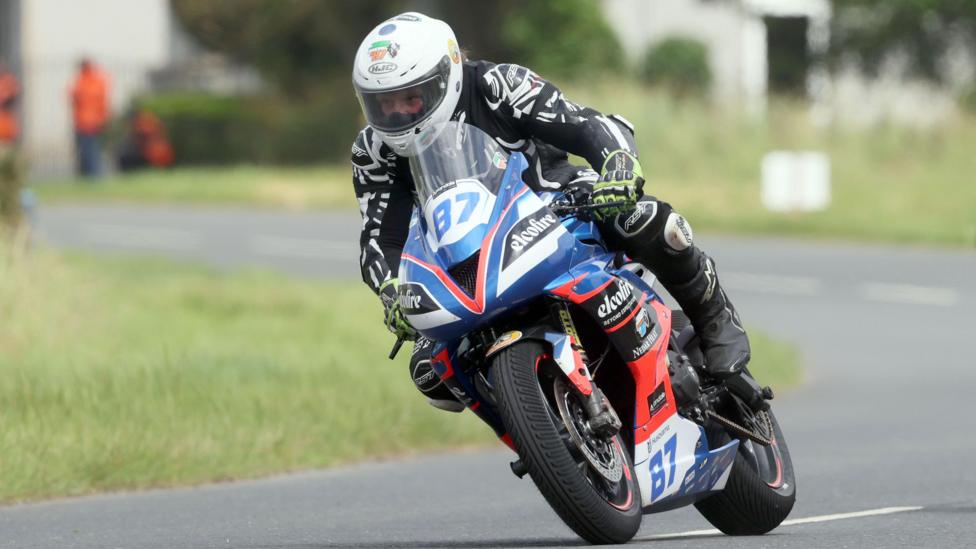
Tandragee 100 Claims James Walsh: Road Racing Reckons With Itself Again
Another Saturday of petrol andion courage ends in grief as Irish rider James Walsh loses his life at the Tandragee 100.
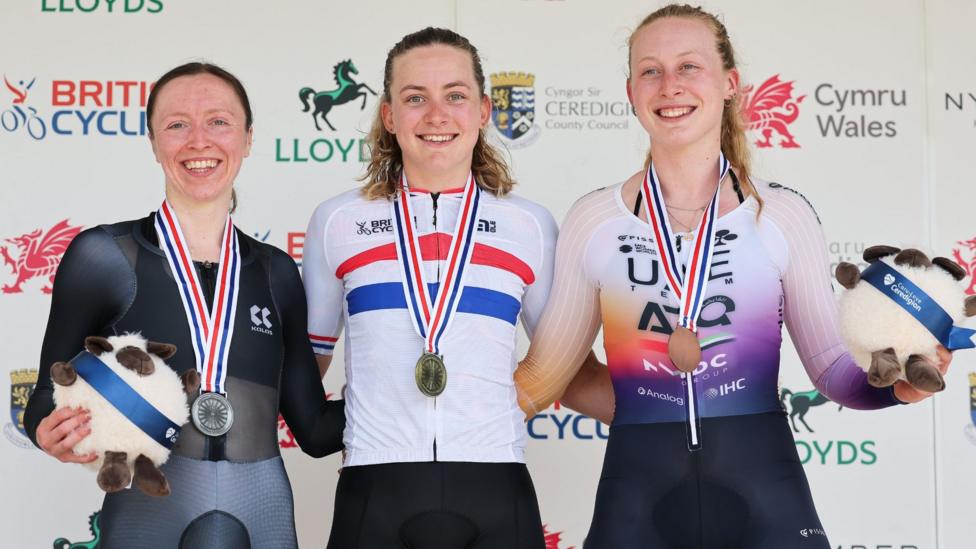
Backstedt Commands Welsh Sweep at British Time Trial
Zoe Backstedt defends her British time trial crown, leading an unprecedented all-Welsh podium in Lampeter.
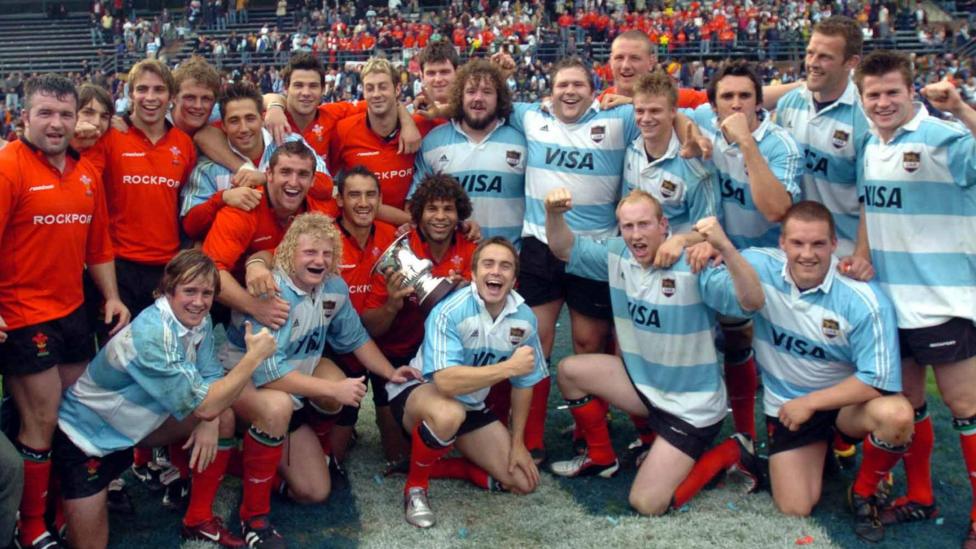
Blood, Sweat, and Rugs: The 58-Year War Between Wales and Argentina
From the 1960s to today, Wales and Argentina’s rugby rivalry is defined by visceral chaos, tactical brilliance, and unforgettable drama.