Vaughan Sounds the Alarm: England's Bazball Overs Crisis Reaches Breaking Point
Michael Vaughan's blunt verdict exposes a structural flaw in England's aggressive batting philosophy under Brendon McCullum.
The Philosophy Under Fire
Michael Vaughan does not mince words. He never has. And after watching England's batting card unravel across a dramatic and fluctuating third day at Trent Bridge, the former England captain delivered what might be his sharpest critique yet of the Brendon McCullum era. England's inability to bat meaningful overs, Vaughan argued, is "not good enough".
It is a statement that cuts to the heart of the most polarising tactical experiment in modern Test cricket. Since McCullum assumed the role of head coach and Ben Stokes took the captaincy, England have committed to an aggressive, front-foot batting philosophy dubbed "Bazball." The approach has produced breathtaking highs, record run chases, and a style of cricket that has genuinely shifted the global conversation around red-ball batting. But at Trent Bridge, the conversation shifted back to something far more uncomfortable: what happens when aggression becomes recklessness, and when entertainment erodes the foundation of winning Test matches?
The Anatomy of a Collapse
The third day at Trent Bridge was not a one-dimensional catastrophe. It was something arguably more troubling: a "fluctuating" day where England showed they could compete before repeatedly undermining their own position through the very philosophy designed to liberate them.
England's batting innings lacked the one commodity that Test cricket has demanded for over 150 years: occupation of the crease. Overs at the batting crease are the currency of red-ball cricket. They tire bowlers, wear down pitches, and build scoreboard pressure that compounds over the five-day arc. When a team fails to accumulate overs, it doesn't just lose wickets. It cedes control of the match's tempo entirely.
Under McCullum, England have frequently produced innings that are thrilling in isolation but structurally deficient when measured against the demands of a five-day contest. The issue is not that England score quickly. Speed of scoring, in itself, is not the sin. The sin is that speed has become an end rather than a means. When batters are dismissed playing shots that the situation does not demand, the innings collapses not just in runs but in overs. And overs, as any tactician will tell you, are what win Test matches over the course of a full game.
The Tactical Fault Line
There is a subtle but critical distinction between aggressive intent and aggressive execution that the McCullum regime has sometimes blurred. The best aggressive batting in Test history, think Virender Sehwag, think Adam Gilchrist at his peak, was built on calculated risk-taking within a framework of match awareness. Sehwag did not swing at everything. He punished bad balls with devastating efficiency and left the good ones alone. His strike rate was extraordinary, but his shot selection was rooted in an understanding of the situation.
What Vaughan appears to be identifying is a drift away from that calibration. When England's batters fall in clusters, playing shots that ignore the match context, the aggressive philosophy stops being a tactical advantage and becomes a tactical liability. The batting order, constructed around strokemakers and intent-first players, produces a lineup that lacks the structural diversity to adapt when conditions or match situations demand patience.
The numbers across the McCullum era tell a story that splits the cricketing world. England have produced some of the most extraordinary run chases in Test history. They have also produced a concerning volume of innings where the team is dismissed for sub-200 totals in conditions that do not necessitate such implosion. The average overs batted per innings in the McCullum era has been a persistent talking point among analysts. When the approach works, the overs deficit is masked by the speed of scoring. When it fails, the absence of occupation becomes glaring.
Vaughan's Credibility on This Issue
It is worth noting who is making this argument. Michael Vaughan captained England to the 2005 Ashes victory, one of the most tactically sophisticated series wins in English cricket history. His teams were built around the balance of aggression and attrition, with Kevin Pietersen's flair supported by Andrew Strauss's occupation and Andrew Flintoff's controlled hostility. Vaughan understands, from lived experience, what it takes to build Test match pressure over time.
His critique is not that of a Luddite longing for the days of blockers and dot-ball accumulation. It is the critique of a man who understands that the best attacking teams in Test history also knew when not to attack. The capacity to absorb pressure, to bat through a difficult spell without losing wickets, to make the opposition bowl 20 overs for 40 runs, is not the antithesis of aggressive cricket. It is the foundation on which aggressive cricket becomes sustainable.
The McCullum Counter-Argument
McCullum and Stokes would rightly point to the transformative effect their approach has had on English Test cricket. Before their arrival, England had lost four of their last five Test series and were sliding toward irrelevance in the longest format. The dressing room was fractured, confidence was shattered, and the team's identity had dissolved into cautious mediocrity.
Bazball changed the emotional register of the team overnight. It gave players permission to fail in pursuit of something greater. It attracted new audiences to Test cricket. It produced results that, for a sustained period, looked genuinely revolutionary. McCullum's argument has always been that the intent is the method, that the willingness to take risks creates its own momentum and that the odd collapse is the price paid for a philosophy that, over time, yields more wins than losses.
The question Vaughan is asking is whether that math still holds up. If the collapses are becoming more frequent, if the highs are less high and the lows more damaging, then the philosophy needs recalibration rather than abandonment.
The Structural Problem
What makes this critique particularly relevant at Trent Bridge is the way the fluctuations on day three exposed England's lack of batting depth in terms of stylistic variety. When every batter in the lineup is primed to attack, there is no handbrake option. There is no designated anchor who can weather a storm and shepherd the tail through a difficult period.
This is not about selecting defensive players. It is about building a batting order with the tactical range to play multiple modes of cricket within a single innings. Australia have understood this for decades. Their best teams have always featured a mix of accumulators and aggressors, players who can shift gears depending on the match situation. India, similarly, have built batting lineups around the principle that different phases of an innings demand different approaches.
England's current setup, under McCullum's influence, sometimes reads as a single-speed team in a format that rewards variable pace. When the approach is firing, the speed is overwhelming. When it misfires, there is no Plan B, and the overs count plummets accordingly.
What This Means Going Forward
The Trent Bridge Test is not existentially threatening to McCullum's tenure. His body of work, the Ashes retention, the series wins, the cultural transformation, insulates him from anything short of a prolonged collapse. But Vaughan's intervention is significant because it comes from a position of support for the concept of aggressive cricket, not opposition to it.
The most constructive version of this critique is that England need to evolve Bazball rather than abandon it. The next phase of McCullum's project should focus on adding tactical layers to the aggressive framework: batters who can absorb, partnerships that can consolidate, and an understanding that the willingness to defend is as much an act of aggression as the willingness to attack. Control of the crease is control of the match.
England's upcoming fixtures will test whether this recalibration is underway. The ability to bat long, to wear down quality bowling attacks through occupation as well as intent, will determine whether Bazball matures into a sustainable model or remains a thrilling but ultimately inconsistent spectacle.
Vaughan's words at Trent Bridge were not a funeral oration for aggressive cricket. They were a challenge to make it smarter.
Editorial Integrity
This is an original SportPulse article written by our editorial team. All content is independently researched, written, and reviewed by our writers and editors before publication. We do not publish copied, aggregated, or syndicated content.
SportPulse is committed to original sports journalism. Read our editorial policy or contact us with any questions.
More Like This
All long-reads
IOC's $10K Olympian Grant Is PR, Not Progress
The IOC's new $10,000 grant per Games Masks the brutal math of Olympic preparation, where athletes spend triple that just to compete.

Dettori Suffers Broken Ribs in Car Crash, Hospitalized for Recovery
Legendary jockey Frankie Dettori is in hospital after a car crash left him with broken ribs.
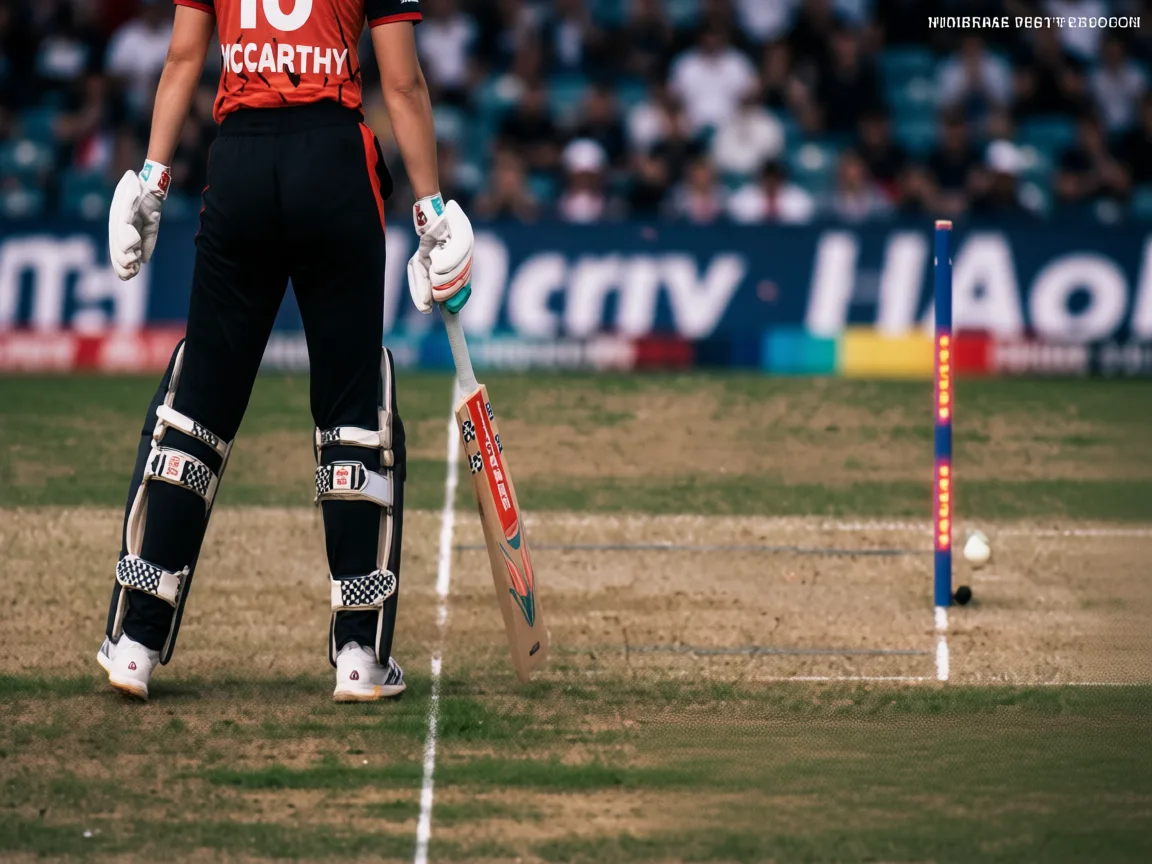
McCarthy's Bat-Down Blunder Costs Sunrisers Leeds in the Hundred
Cassidy McCarthy's lazy bat-down gave Lizelle Lee the easiest run-out of the Hundred season so far.