From the Wall to the Podium: Verstappen's Defiant Recovery at Red Bull's Home
Max Verstappen crashed in qualifying, then carved through the field for a season-best P2 at the Austrian Grand Prix.
The Crash That Almost Wasn't
There's a particular kind of silence that descends over the Red Bull Ring when one of their own cars spears into the barriers. The Styrian hills don't echo with shock anymore. In 2026, Max Verstappen finding the wall during qualifying has become almost expected — a byproduct of a driver who refuses to leave anything on the table, even when the car beneath him isn't giving him what he needs.
The Saturday shunt looked terminal for any meaningful Sunday result. Starting from the back of the grid or from a compromised position, the mathematical odds of a podium at a track that punishes overtaking mistakes with gravel traps and sausage kerbs were slim. Verstappen, characteristically, didn't get the memo.
What followed was a drive that reminded the paddock — and perhaps Red Bull's increasingly anxious boardroom — why the Dutchman remains the benchmark for raw pace and racecraft, regardless of what the constructors' standings suggest.
The Anatomy of a Recovery Drive
The Austrian Grand Prix has always rewarded aggression. The Red Bull Ring's 4.318 km layout features just 10 corners but packs three genuine overtaking zones into that compact package. The long DRS-assisted run down to Turn 1, the braking zone into Turn 3, and the tricky exit of Turn 4 all create opportunities for a driver with the confidence to commit.
Verstappen exploited every single one.
From his compromised grid position, the opening laps were surgical. The 2026 regulations, with their revised aerodynamic philosophy and active aerodynamic elements, have made following cars more feasible than the ground-effect era's early seasons. But the new power unit configurations have also introduced a steeper energy recovery learning curve, meaning drivers managing deployment across the lap can either gain or lose two to three tenths depending on execution.
Verstappen's execution was immaculate. His energy harvesting through the middle sector — the uphill sweeps that define the Red Bull Ring's character — was visibly more efficient than the cars he was dispatching. By the time the first round of pit stops cycled through, he was already inside the top six.
Hamilton vs. Verstappen: The Rivalry That Won't Die
The race's defining chapter came when Verstappen caught Lewis Hamilton's gearbox. Their battle, stretched across multiple laps of the middle stint, was everything the 2021 title fight promised and everything the intervening years had diluted.
Hamilton, driving with the measured precision that has defined his later career, used every defensive trick in the book. He covered the inside into Turn 1. He varied his braking points to disrupt Verstappen's tow. He deployed his battery strategically on the straights to neutralize the DRS advantage.
Verstappen simply refused to be denied. His pass attempt into Turn 3 was breathtaking — a late lunge from two car lengths back, commitment to the apex with his right-front millimetres from Hamilton's rear diffuser. The move stuck. The crowd — overwhelmingly orange despite the proximity to Hamilton's own fanbase — erupted.
"That's the Verstappen of old. That's the guy who doesn't care about the consequences, only about the position." — A sentiment echoed across the team radio as Verstappen cleared Hamilton and set about hunting the leader.
Strategy Breakdown: Red Bull's Wall Makes the Right Call
Red Bull's strategy team faced an unenviable dilemma on Sunday morning. With their lead driver starting from a compromised position and the midfield traffic threatening to create a DRS train that could waste precious laps, the question was simple: undercut early and hope the out-lap pace creates clean air, or go long and rely on a late-race tyre advantage?
They chose a hybrid approach, and it was masterful.
The first stop came on lap 18, earlier than the optimal window but timed to exploit a gap in traffic. The medium compound tyres were fitted, giving Verstappen a set of fresh rubber against cars on used hards. The delta was immediate. His out-lap was 0.8 seconds faster than the next quickest car on that lap, and the undercut gained him three positions in a single pit phase.
The second stop was later — lap 42 — banking on a late safety car or the simple arithmetic of fresher tyres in the closing stint. The safety car never came, but it didn't matter. Verstappen's pace on the final set of mediums was consistently 0.3 to 0.5 seconds per lap faster than the cars ahead, and the positions fell one by one.
The strategy wall's gamble on splitting the stint lengths was the quiet hero of Verstappen's podium. It transformed a recovery drive into a genuine threat for the win.
The Final Push
Second place was secured with four laps remaining, Verstappen dispatching the final car between him and the leader with a move around the outside of Turn 4 that required millimetre-perfect car placement. The gap to the eventual race winner at the flag was just 3.7 seconds — close enough to taste, far enough to sting.
But context matters here. This was a driver who spent Saturday afternoon watching mechanics strip his car to the survival cell. This was a car that, based on the qualifying pace deficit, had no business being within 10 seconds of the winner. Verstappen made it irrelevant.
What This Means for the 2026 Championship
The season-best result moves Verstappen to fifth in the drivers' standings, but the real story is the trajectory. Red Bull have been steadily closing the performance gap to the front-runners since the opening rounds, and the Austrian Grand Prix suggested the car's race pace is significantly stronger than its single-lap qualifying speed.
That distinction matters enormously for the second half of the season. Tracks like Monza, with its long straights and heavy braking zones, play to Red Bull's strengths. The high-speed sweeps of Suzuka could unlock further potential. If the team can solve the qualifying deficit that has plagued them since the new regulations kicked in, Verstappen's recovery drives might not need to happen at all.
The constructors' championship remains a concern. Red Bull's second car has been conspicuously absent from the sharp end, and the points deficit to the leading teams is substantial. Verstappen can drag a car to the podium through sheer force of will — as he proved on Sunday — but championships require two cars scoring consistently.
For now, though, the image of Verstappen standing on the second step of the podium at Red Bull's home race — battered car rebuilt overnight, aggressive strategy executed perfectly, Hamilton dispatched wheel-to-wheel — is a statement of intent.
The 2026 season isn't over. Verstappen just made sure everyone knows it.
Editorial Integrity
This is an original SportPulse article written by our editorial team. All content is independently researched, written, and reviewed by our writers and editors before publication. We do not publish copied, aggregated, or syndicated content.
SportPulse is committed to original sports journalism. Read our editorial policy or contact us with any questions.
More Like This
All f1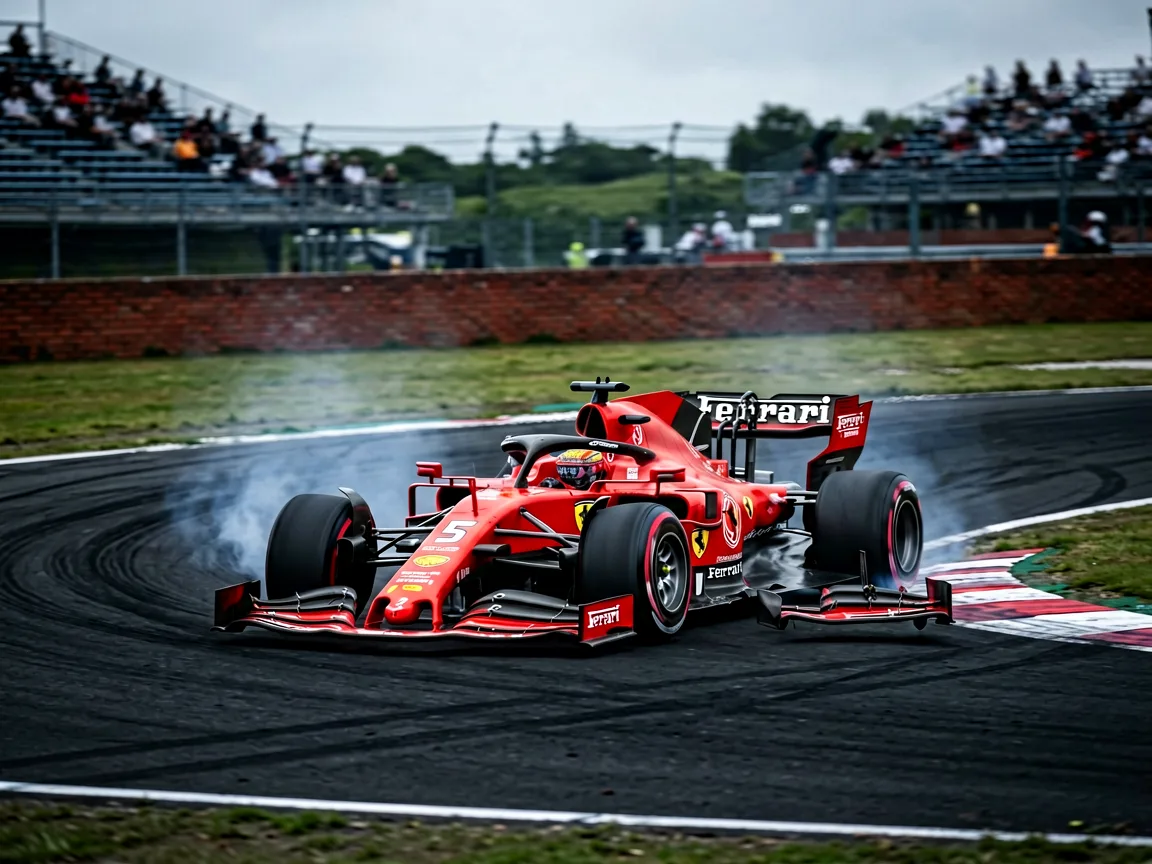
Spa's Ardennes Challenge: Final Belgian GP Strategy and Predictions
Spa-Francorchamps returns before summer break with tire degradation, Eau Rouge courage, and championship momentum all on the line.

The Professor's Pain: How Prost Turned Personal Tragedy Into a Second Crown
Alain Prost clinched the 1986 title amid devastating personal loss, proving speed and resilience are inseparable in Formula 1.

Hamilton Survives Stewards: British GP Podium Intact
Lewis Hamilton kept his record-breaking British GP podium after stewards cleared him in a post-race yellow flag investigation.