Inside SW19: How Wimbledon Opened Its Curtains to a New Audience
Chris Hughes and Laura Robson pull back the curtain on Wimbledon's hidden world, blending tradition with modern storytelling.
When Tradition Meets the Content Era
There's a room deep inside the All England Lawn Tennis Club that most fans will never see. No cameras. No microphones. Just walls lined with portraits of champions who shaped the sport across more than a century. Laura Robson calls it something like an immortal chamber. Chris Hughes, standing beside her, looked like a man who had wandered into a cathedral unprepared for the silence.
That's the power of Wimbledon. It doesn't just host a tennis tournament. It curates an experience so layered, so steeped in narrative, that even the people who walk its corridors every summer feel the weight of it differently each time.
The behind-the-scenes tour featuring Hughes and Robson offers a window into something Wimbledon has been quietly evolving for years: the art of making a 147-year-old institution feel alive to a generation that consumes sport through Instagram stories and TikTok clips.
Two Unlikely Tour Guides
Laura Robson's relationship with SW19 runs deeper than most broadcasters dare to explore on camera. She was 15 years old when she burst into the third round of Wimbledon in 2009, her left-handed game electrifying Centre Court and announcing British tennis had a genuine prodigy. By 2013, she had climbed to world No. 27, reached the fourth round at the All England Club, and seemed destined for a career that would keep her name on the honour roll for decades.
"I grew up on these courts. Every blade of grass has a memory attached to it. Some good, some I've spent years trying to make peace with."
Injuries had other plans. A persistent wrist problem derailed what should have been a long, fruitful career, and Robson officially stepped away from professional tennis. Her transition into broadcasting and punditry has been one of the more seamless post-playing careers in British tennis, precisely because she brings that insider authority that audiences crave.
Chris Hughes occupies a different space entirely. Known initially for his appearance on Love Island in 2017, Hughes has carved out a genuine second act in sports media. His passion for horse racing first drew attention, but his involvement in tennis content and Wimbledon coverage has introduced him to a new demographic: casual sports fans who might never sit through a five-set thriller but will absolutely watch a personality-driven behind-the-scenes feature.
The pairing works. Robson brings technical credibility and emotional depth. Hughes brings curiosity and a disarming willingness to look impressed. Together, they're the bridge between Wimbledon's past and its future audience.
The Hidden Architecture of SW19
Wimbledon is famously protective of its image. The all-white dress code. The absence of corporate branding on court. Strawberries and cream sold at prices that somehow haven't become a scandal. The Championships project an air of timeless elegance that borders on deliberate stubbornness.
But behind the velvet rope, the All England Club has invested heavily in modernization. The retractable roofs on Centre Court and Court One. The expanded grounds. The media facilities that rival any Grand Slam. And increasingly, the content partnerships that bring personalities like Hughes and Robson into spaces that were once reserved for players and officials only.
The "immortal chamber" Robson references is part of that evolution. It's the kind of setting that television producers dream about: intimate, visually rich, dripping with history. A place where you can stand inches from a photograph of Billie Jean King and talk about what Wimbledon means in a way that a standard courtside interview could never capture.
- The All England Club has hosted the Championships since 1877
- Centre Court's retractable roof was installed in 2009
- Wimbledon attracts over 500,000 spectators across the fortnight annually
- The prize money for the 2024 singles champions exceeded £2.7 million each
These are the facts that define the tournament's scale. But the behind-the-scenes moments are what define its soul.
Player Spotting and the Art of Access
One of the more revealing aspects of this kind of content is the phenomenon Hughes and Robson explore: player spotting. Not in the scouting sense, but in the literal, almost voyeuristic thrill of catching a Grand Slam champion in an unguarded moment.
Wimbledon's layout makes this uniquely possible. The practice courts sit close enough to public walkways that fans can watch warm-ups from a few metres away. The players' restaurant and communal areas create moments of overlap that would never happen at the more compartmentalized US Open or Australian Open.
For Hughes, discovering this ecosystem clearly lit something up. His reaction isn't manufactured. It's the genuine response of someone encountering a sporting event that refuses to fully separate the spectacle from the human beings performing it.
Robson, meanwhile, navigates the same spaces with a different lens. She knows what it feels like to walk through those corridors as a competitor, the anxiety and adrenaline coiling together before a match on grass that plays faster than any surface in tennis. Her perspective transforms the tour from light entertainment into something more layered: a former player revisiting a place that gave her everything and took something away at the same time.
What This Means for Wimbledon's Brand Strategy
The Championships have always been reluctant self-promoters. While Roland Garros leans into Parisian glamour and the US Open embraces New York chaos, Wimbledon trades on restraint. That restraint has been its competitive advantage for generations.
But the landscape is shifting. Tennis viewership demographics are skewing younger, driven by stars like Carlos Alcaraz and Coco Gauff who command social media followings that dwarf traditional broadcast audiences. The All England Club faces a genuine strategic question: how do you honour a heritage that is your greatest asset while opening enough doors to remain culturally relevant?
Content like the Hughes-Robson behind-the-scenes feature is the answer in microcosm. It doesn't compromise Wimbledon's dignity. It doesn't dumb down the product. It simply lets two engaging people walk through the space and react to what they find. The setting does the heavy lifting.
The Bigger Picture
There's a lesson here for every major sporting institution watching the content landscape evolve. Access is currency. But not manufactured access, not the kind where a camera crew storms a locker room for shock value. The kind where you trust the environment to be interesting on its own terms and pair it with people who can articulate why it matters.
Laura Robson can do that because she lived it. Chris Hughes can do that because he's genuinely fascinated by it. The combination isn't accidental. It's the product of a media strategy that understands Wimbledon's audience isn't monolithic.
"You think you know this place because you've watched it on television for years. You have no idea. It's different when you're inside it, when you can smell the grass and hear the silence between points."
Robson's words capture something essential about the Championships and about why this kind of content resonates. Wimbledon isn't just a tennis tournament broadcast to millions. It's a physical place with texture, sound, and atmosphere that cameras can only approximate.
The behind-the-scenes format closes that gap just enough to make people care. And in an era where attention is the scarcest commodity in sports, making people care is the whole game.
What Comes Next
Expect more of this. Wimbledon's media partnerships will continue to expand beyond traditional broadcasting into personality-driven, access-based content that targets audiences who engage with sport as entertainment rather than pure competition.
The risk, of course, is overexposure. Part of Wimbledon's magic is what remains unseen, the sense that there are rooms and rituals behind the green curtains that belong only to those who earn entry. Pull back too much of the curtain, and the mystique evaporates.
For now, the balance holds. Hughes and Robson offer just enough to intrigue without saturating. The immortal chamber stays immortal precisely because we only glimpse it. And SW19 continues to do what it has always done better than any venue in world sport: make you feel like you're somewhere that matters, even through a screen.
Editorial Integrity
This is an original SportPulse article written by our editorial team. All content is independently researched, written, and reviewed by our writers and editors before publication. We do not publish copied, aggregated, or syndicated content.
SportPulse is committed to original sports journalism. Read our editorial policy or contact us with any questions.
More Like This
All tennis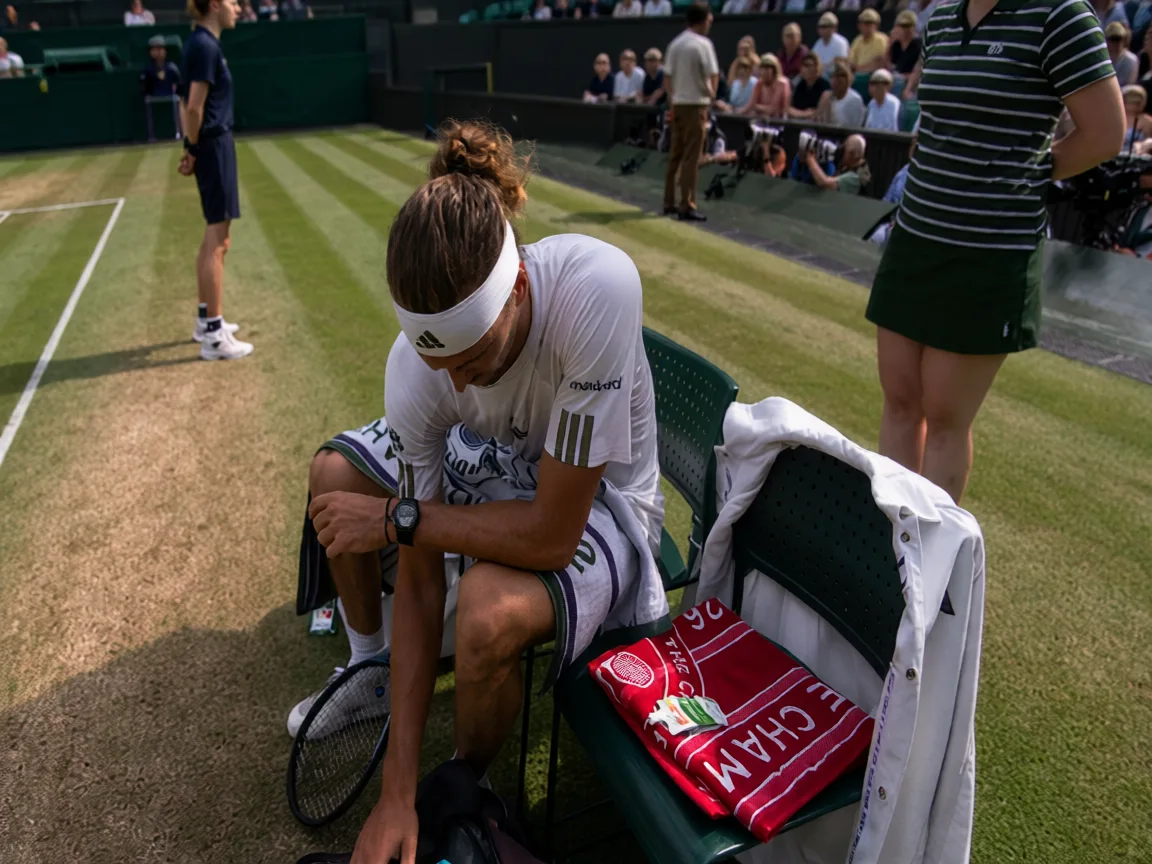
Why Zverev Gets Away With Using His Phone at Wimbledon
Wimbledon bans in-match phone use, but Zverev is exempt. Here is the real story behind the rule, the loophole, and what it means for tennis governance.
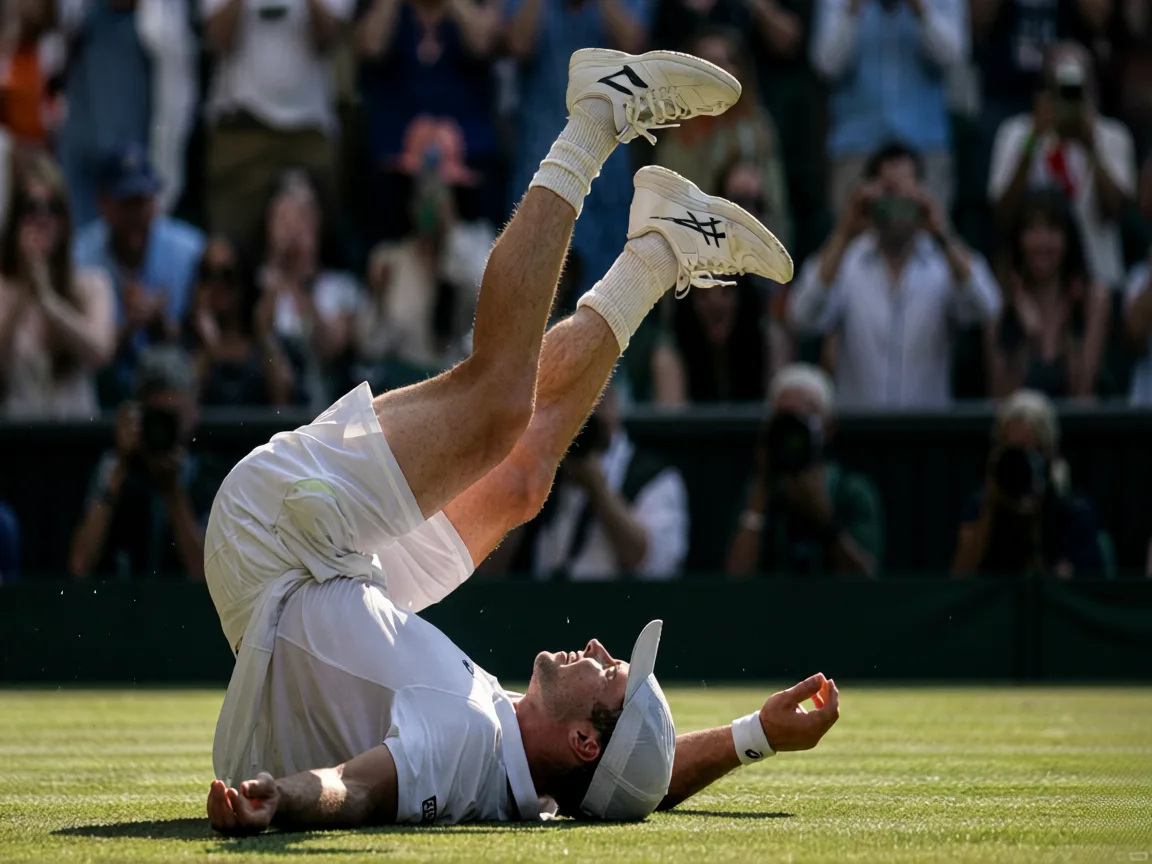
Wimbledon 2024: The Drama, Fashion and British Breakthroughs That Defined The Fortnight
From Centre Court drama to British successes, a fortnight of unforgettable moments deserves its own awards ceremony.

Eala Shatters Filipino Grand Slam Barrier at Wimbledon
Alexandra Eala becomes the first Filipino to reach a Grand Slam third round, electrifying a tennis-starved nation.