World Cup Final Halftime Show: When Spectacle Met Football's Biggest Stage
Madonna, BTS, Bieber and Shakira lit up the World Cup final halftime. But what does a 15-minute spectacle cost the players tactically?
A World Cup final is, in theory, the purest distillation of continental football philosophy: two systems, two coaches, sixty minutes of in-game adjustments, and the weight of national narratives compressed into a single evening. Yet the modern final has increasingly become something else entirely: a spectacle so vast, so commercially orchestrated, that the football itself must accommodate the entertainment. That was never more apparent than during the halftime show at the New York New Jersey Stadium, where Madonna, BTS, Justin Bieber, and Shakira performed before a global audience of billions, with a special appearance from Brazilian legends Ronaldo and Ronaldinho.
The performance was, by all accounts, a production of staggering scale. Multiple stages, pyrotechnics, choreographed routines, and a setlist that bridged four decades of global pop dominance. Shakira opened, her hips and her catalogue reminder that she has been the unofficial soundtrack of World Cups since 2010. Madonna followed, bringing the theatricality that has defined her four-decade career. BTS delivered the synchronized precision that has made them the most successful non-English-language act in history. Bieber, the millennial pop prince, rounded out the bill with a set that leaned into his recent Return to the global stage.
And then there were the footballers. Ronaldo, the original R9, and Ronaldinho, the eternal magician, walked out to roars that rivaled anything heard during the first 45 minutes. Two men who defined what it meant to be a superstar footballer, sharing a stage with the pop equivalents. It was, in many ways, the ultimate expression of football's modern identity: sport as entertainment, entertainment as sport.
The Tactical Cost of the Spectacle
But from a coaching perspective, the halftime show presents a fascinating and under-discussed problem. The standard 15-minute halftime interval is already a compressed window for tactical intervention. Coaches use those minutes with surgical precision: the first two to three minutes allow players to catch their breath and receive brief medical attention, the next five to six are dedicated to tactical adjustments, and the final portion is for mental reset and return to the pitch.
A halftime show fundamentally disrupts this rhythm. While performers command the pitch, players retreat to locker rooms that suddenly feel further from the action than ever, both physically and psychologically. The noise, the spectacle, the sheer sensory overwhelm of a concert happening meters away creates an environment where concentration is not merely difficult but actively hostile.
For coaches who pride themselves on tactical detail, this is a nightmare. The ability to communicate nuanced adjustments, to show players where the pressing triggers failed, to identify the half-spaces that need exploiting, all of this is compromised when your players are vibrating to the bass of a Madonna track shaking the stadium walls.
"The halftime show is beautiful for the fans and for the game's global reach. But tactically, it is a disruption you must prepare for like any other variable." — A consideration shared by elite coaching staffs familiar with major-event logistics.
Contextual Considerations
- The first half of a World Cup final is typically cagey, with teams prioritizing structural solidity over creative expression. Low-block formations and zonal pressing schemes dominate, as neither side wants to concede first.
- A longer halftime, extended to accommodate the show, risks cooling players down physically. Muscle injuries spike in matches with extended breaks, a concern well-documented in sports science literature.
- The psychological reset is equally critical. Players who perform poorly in the first half need those fifteen minutes to process, recalibrate, and return. A show shifts their psychological frame from competition to consumption.
The Longer Break Problem
Sport science research has long established that the optimum halftime duration for athletic performance is between 12 and 15 minutes. Beyond that, muscles begin to cool, heart rates drop below the threshold needed for explosive action, and the risk of soft-tissue injury upon resumption climbs sharply. FIFA's own protocols acknowledge this, which is why the standard interval has remained fixed for decades.
A halftime show, however, typically extends the break to 20 to 25 minutes minimum, accounting for stage assembly, performance, and disassembly. That is not a marginal increase. It is a 60 to 70 percent extension of the rest period, enough to fundamentally alter the physiological state of every player on the pitch.
For a World Cup final, where the physical toll of a tournament played across weeks in potentially extreme conditions is already accumulatively depleting, this extension matters. Players are not entering the second half refreshed. They are entering it having cooled down from peak competitive intensity, needing to ramp back up to full speed over the opening minutes. The risk: a sluggish start, a mistimed tackle, a muscle pulled.
Tactical Shift: When the Show Ends and the Game Resumes
The coaches who navigate this challenge best are those who anticipate it. Preparing for an extended halftime is not merely about filling time. It is about structuring the break to account for the disruption.
The Phased Approach to Restart
Phase 1: Clinical Assessment. The first minutes after the whistle are used for the usual medical checks and hydration. Nothing changes here, except that staff must be more efficient, knowing the extended timeline.
Phase 2: Tactical Delivery. The core tactical message must be delivered early, within the first eight minutes, before the sensory fatigue of the show competes for attention. This is where coaches must be concise. Not fewer ideas, but sharper ones. A single pressing adjustment, a positional tweak in midfield, a targeting of a specific half-space. One change, clearly articulated, beats three ideas half-communicated.
Phase 3: Physical Reactivation. With the extended break, the final portion must include structured physical reactivation. Light dynamic stretching, movement pattern reminders, even stationary cycling if facilities allow. The goal is to elevate heart rates back toward 120 to 140 bpm before players return to the pitch.
Phase 4: Psychological Recentering. The show is noise. The game is signal. Coaches must explicitly draw players back into the competitive frame, using video boards, tactical reminders, or simply eye contact and voice.
The Broader Game: Entertainment and Football's Future
The halftime show at this World Cup final was not an aberration. It was a statement of intent from FIFA and its commercial partners, a signal that football's showpiece event will continue to evolve into a hybrid of sport and entertainment. The presence of Ronaldo and Ronaldinho, two players who themselves transcended the sport, underscored this. They were not merely former footballers making an appearance. They were symbols of the idea that footballers are now global icons, as recognizable and as marketable as any pop star.
For the coaches and tactical staffs of the future, this is the reality. The question is not whether halftime shows will continue. They will. The question is whether coaching methodologies evolve to account for them, or whether the sport's tacticians continue to treat them as an inconvenience to be endured rather than a variable to be optimized.
The sport that gave us Catenaccio, Total Football, Tiki-Taka, and Gegenpressing has always evolved through tactical innovation. Perhaps the next great tactical revolution will not be a formation or a pressing scheme, but a methodology for managing the fifteen minutes when the football stops and the show begins.
What Comes Next
Brazil's storied history, represented by Ronaldo and Ronaldinho at the halftime show, serves as a reminder that the Seleção remain the benchmark for football's fusion of results and artistry. Their tactical identity, historically rooted in the 4-2-3-1 framework that allows for both defensive solidity and creative freedom, continues to influence how teams approach the modern game.
For the coaches and teams preparing for the next World Cup cycle, the lessons of this final extend beyond the result. The team that wins the next edition may well be the one that best masters the full ecosystem of the modern final: the tactical battle, the physical preparation, and yes, the halftime show.
As we look ahead, the intersection of entertainment and sport will only deepen. The World Cup final halftime show, with its unprecedented assembly of global talent, was not merely a spectacle. It was a glimpse into the future of football's biggest stage, where the game itself is one act in a larger production.
The tactical minds who prevail will be those who embrace that reality. Football has always been about adaptation. Now, it must adapt to the show.
Editorial Integrity
This is an original SportPulse article written by our editorial team. All content is independently researched, written, and reviewed by our writers and editors before publication. We do not publish copied, aggregated, or syndicated content.
SportPulse is committed to original sports journalism. Read our editorial policy or contact us with any questions.
More Like This
All football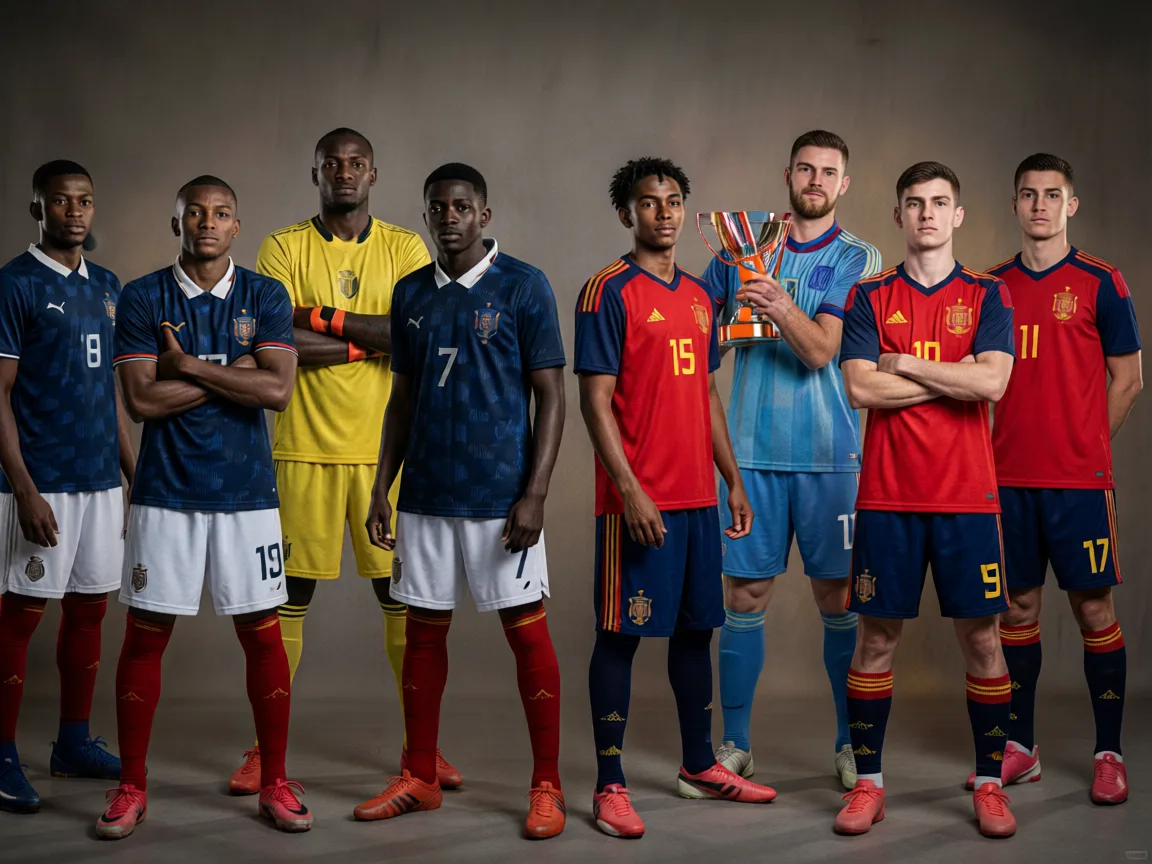
France vs Spain: The Real World Cup Final in Spirit
While England-Argentina grabs headlines, France-Spain promises the true tactical spectacle of the tournament's final four.
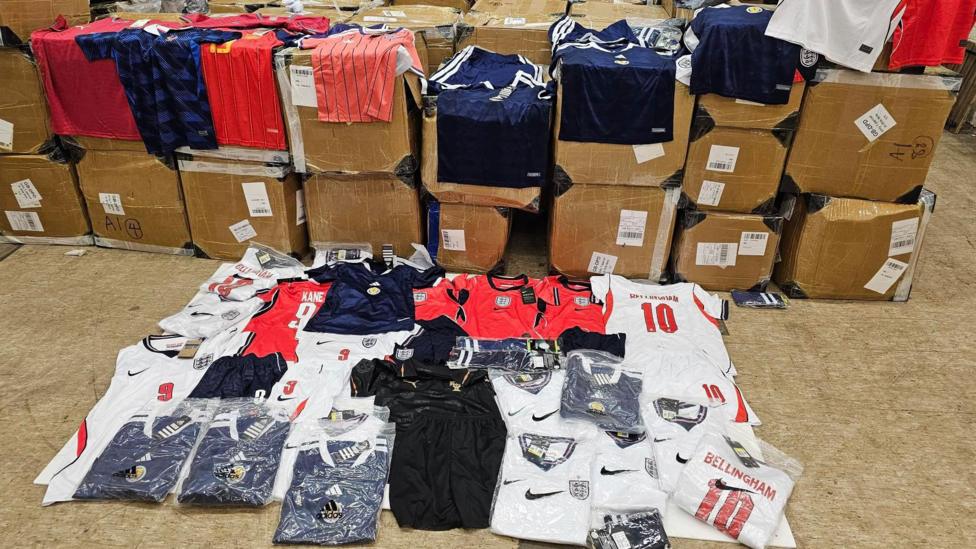
58,000 Counterfeit Scotland and England Kits Seized in Edinburgh Raid
Trading standards uncover one of the UK's largest counterfeit football kit hauls, exposing a sophisticated black market operation.
The Silence at Old Trafford: United's Window Is Becoming a Crisis
Manchester United have missed two midfield targets and made zero signings. Patience is wearing dangerously thin.