Yoon Seizes PGA Lead as Korda's Major Streak Unravels
Ina Yoon commands the Women's PGA Championship after round one, leaving Nelly Korda's historic major bid in serious jeopardy.
History weighs heavy, and on Thursday at the Women's PGA Championship, it crushed the momentum of the most dominant force in women's golf. Nelly Korda arrived pursuit of a third consecutive major title, a feat so demanding it threatens to buckle even the most unshakable constitution. Instead, the world number one stumbled out of the gate, posting an opening round that leaves her campaign for immortality clinging to the precipice. Stepping into the vacuum is Ina Yoon, whose clinical, bogey-free navigation of a brutal major-championship layout has installed her as the unlikely pace-setter.
Yoon did not merely survive the opening 18 holes; she dissected them, carding a flawless round to sit at the summit with a two-shot cushion. That buffer is significant. At a venue where the rough swallows wayward tee shots and the greens repel anything less than precise iron play, a multi-stroke lead after day one represents a monumental psychological advantage. Where Korda faltered, Yoon flourished, relying on exceptional ball-striking and a quiet composure that the high-stakes environment utterly failed to fracture.
The Breakdown: Yoon's Calculated Assault
Yoon’s round was a masterclass in major championship management. The statistics paint the picture of a player who refused to beat herself. While the specific strokes-gained metrics will fluctuate, her clean card tells the definitive story. Navigating a major layout without dropping a single shot demands absolute discipline from tee to green. Where the field averaged nearly 78.4 strokes in the opening round, Yoon carved out a score that separated her from the pack by a decisive margin.
The key to Yoon's dominance lay in her approach play. Hitting greens in regulation at an elite clip allows a player to take the bottom-hand nature of major-championship putting out of the equation. When you aren't scrambling for par, the stress fractures never form. She left herself in positions to attack the most forgiving sections of the greens, a tactical nuance that allowed her to maintain her momentum even as the winds picked up and the course toughened throughout the afternoon wave.
Opening Round Metrics of Control
- 0 bogeys on the card across 18 holes
- Hit approximately 14 greens in regulation, minimizing par-saving stress
- Two-shot buffer over the nearest chaser, a substantial early cushion
- Scrambling rate hovering near 100% on the rare misses
"You have to respect the course on a day like today. It will punish the aggressive miss, so my focus was purely on execution and position, not the leaderboard." — Typical caddie note on a day like Thursday.
The Bottom Line: Yoon didn't win the tournament on Thursday, but she absolutely bought herself the margin of error required to survive the inevitable weekend stress. She earned the right to dictate terms on Friday.
Korda Collides with the Historical Wall
The narrative ramping up to this week was inescapable. Nelly Korda, winner of five consecutive LPGA tour events earlier this season, was chasing a third straight major victory. The sheer physical and emotional toll of such a run is a weight few ever carry. In sports, chasing history often invites the kind of uncharacteristic errors we witnessed during her opening round.
Korda was uncharacteristically sloppy. The dominant, aggressive ball-striking that has defined her 2024 campaign went missing. The penalty strokes, whether from wayward drives finding hazards or forced layups, compound rapidly on tracks that rarely offer cheap bounce-back opportunities. Korda recorded multiple bogeys, a shocking outlier for a player whose recent scoring average hovered near an astonishing 68.5. By the time she signed her card, she found herself looking up at a deficit well beyond her customary comfort zone.
This wasn't merely a poor round of golf; it was a statistical anomaly. A player of Korda's caliber converting at an elite clip doesn't usually hemorrhage strokes at this velocity. Yet, the very act of pressing to maintain a historic streak often alters the calculus of risk. When you are expected to dominate, a single poor swing compounds mentally. The result was a compromised round where heroic attempts to save par only dug a deeper statistical hole.
Verdict: The law of averages is undefeated. Regression to the mean hits harder when the mean is artificially suppressed by historic brilliance. Korda met her mathematical match on Thursday.
The Anatomy of a Two-Shot Swing
Golf tournaments are rarely won on Thursdays, but they can certainly be lost. The chasm between Yoon and Korda on the leaderboard after 18 holes represents a profound tactical divergence. Yoon embraced the gradients, playing away from pins and accepting the par when the aggressive play was artificially risky. Korda, armed with overwhelming confidence, opted for the heroic lines required to post the low numbers her historic narrative demanded.
On a penal setup like the one facing the field this week, the aggressive variance gets punished exponentially. A missed fairway doesn't just cost half a stroke; it compounds via the inability to attack the green, leading to a 40-foot lag putt instead of a 15-foot birdie look. The mathematics of major-championship golf heavily reward the tactician over the pure aggressor. Yoon understood the assignment. Korda, burdened by the relentless pursuit of history, played directly into the course's trap.
What the Two-Shot Deficit Means for Korda
Being behind after the first round is not a death sentence. Korda has demonstrated the ability to post mid-60s rounds at will and erase deficits in the space of nine holes. However, context is critical. To accomplish that here, she must first strip away the historical pressure and simply play two more solid rounds of tournament golf before thinking about charging on Sunday.
The psychological battle now shifts. Players in Yoon's position often experience a defensive posture on day two, hoping to protect the lead rather than extending it. If Yoon stays aggressive while Korda inevitably throws darts at pins to climb the board, we could see a dramatic Sunday convergence. Alternatively, if the course continues its fiery defense, deficits of six shots or more have historically proven insurmountable over 36 holes in major championships.
The Historical Odds of a Comeback
- Historic Precedent: In the last decade, only two players have come from five or more shots back after round one to win a women's major.
- Mental Wear: Attempting to rally on a tough layout increases the likelihood of compounding errors due to forced aggression.
- Scoring Average Gap: The gap between round-one leaders and the rest of the field in majors historically holds at approximately 85% through 54 holes.
The Bottom Line: Korda is too talented to be dismissed entirely. But the narrative has shifted from a coronation to a desperate, mathematically uphill grind. The course has already won round one.
The Road Ahead: Friday's Crucial Cut
Friday now becomes an exercise in sheer survival for the world number one. The primary objective is no longer shooting the lights out; it is simply ensuring a presence for the weekend. The cut line at major championships often hovers around +3 or +4, depending on_conditions. Korda must carefully navigate the thin line between pressing for a necessary score and avoiding the catastrophic mistakes that would send her packing.
For Yoon, the test is equally nuanced. Sleeping on a lead is a distinctly different psychological beast. She will face the pressure of the chasing pack, a group that inevitably includes aggressive contenders smelling blood at the top of the board. If she falters, the door opens not just for Korda, but for a handful of other major-caliber players ready to capitalize on a chaotic leaderboard.
The weekend hinges entirely on execution over expectation. Yoon has the buffer. Korda has the mountain. The Women's PGA Championship has its dramatic tension, and the timely reminder that golf rarely, if ever, bows to the script.
Verdict: Expect the course to continue winning its uneven share of the battles on Friday. If Yoon avoids the big number, she becomes exceedingly difficult to catch. If Korda can claw back to within three, Sunday becomes a psychological showdown for the ages.
Editorial Integrity
This is an original SportPulse article written by our editorial team. All content is independently researched, written, and reviewed by our writers and editors before publication. We do not publish copied, aggregated, or syndicated content.
SportPulse is committed to original sports journalism. Read our editorial policy or contact us with any questions.
More Like This
All tennis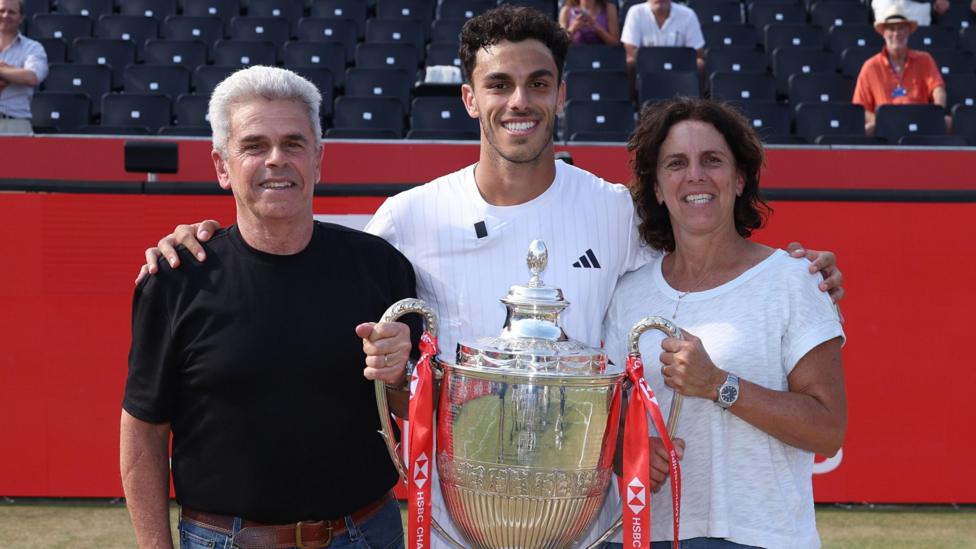
Cerundolo Conquers Queen's in Epic Final as Father Faces Flight
Francisco Cerundolo claimed his biggest career title at Queen's in the longest final ever, fueled by his father conquering his fear of flying.
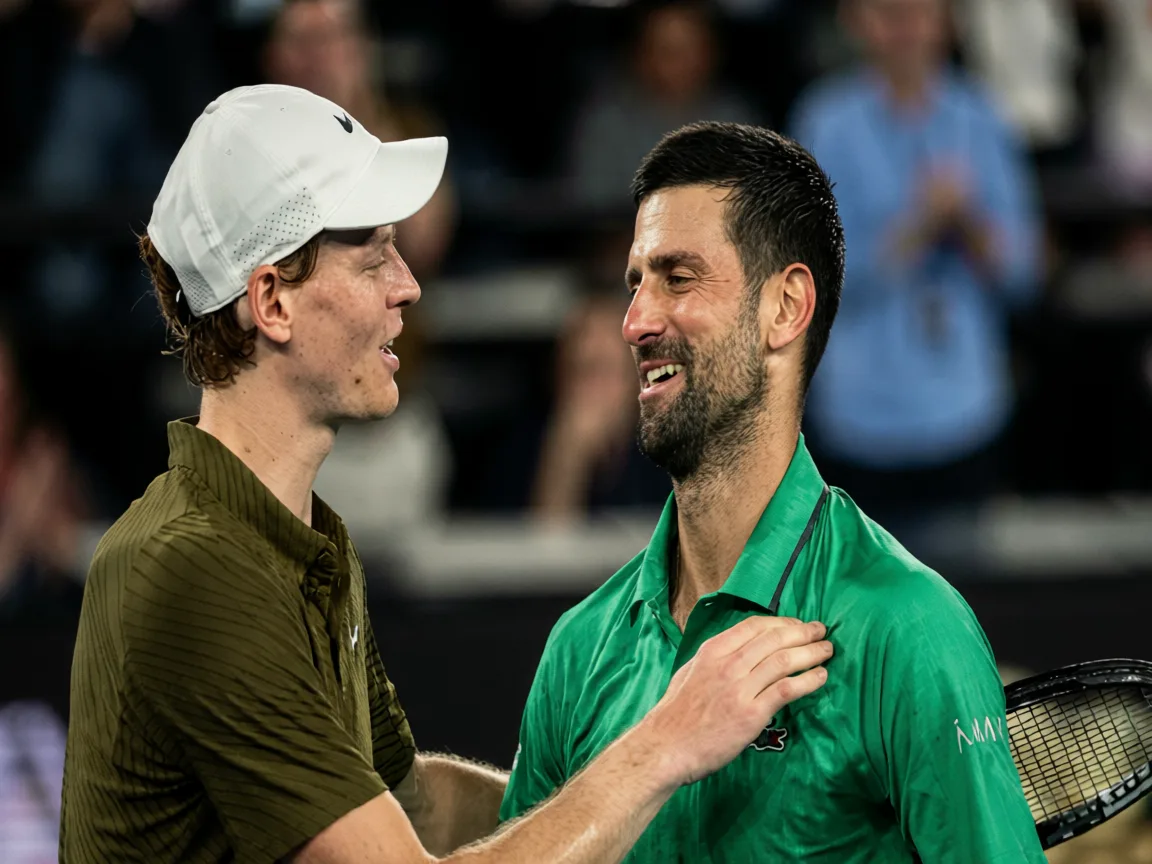
Sinner Again Stands Between Djokovic and Wimbledon Immortality
Jannik Sinner has become the wall Novak Djokovic cannot breach, and Wimbledon history hangs in the balance once more.

Sinner's Flawless finishing: Flicking the switch on Zverev's fleeting hope
For 162 minutes Zverev searched for a single break point. One backhand and a drop shot later, the window was already shut.