Sneezing, Serving, Surviving: Zverev's Tortured Romance with Wimbledon
Alexander Zverev beat Blockx in four tie-break sets, but his war with grass courts is far from over.
The Allergic Champion
There is a photograph that should exist but doesn't yet: Alexander Zverev, eyes watering, nostrils flaring, mid-sneeze, while a Wimbledon ball kid waits patiently for him to serve. It would capture something essential about the German's relationship with grass court tennis — a relationship defined not by loathing, but by a body that seems to rebel against the very surface his talent deserves to conquer.
Zverev manages his grass allergy with what he casually describes as "pills and sneezing." Not exactly a cutting-edge sports science protocol. But on Monday at the All England Club, those pills carried him past Belgian qualifier Alexander Blockx in a match that was equal parts survival and spectacle: 6-4, 6-7, 7-6, 7-6. Four sets. Three tie-breaks. Zero margin for error. One man perpetually on the edge.
This is the Zverev Wimbledon experience.
A Serve That Teases and Torments
To understand what happened on Court 1, you first have to understand the paradox at the center of Alexander Zverev's game. His serve is, by almost any measurable standard, one of the most devastating weapons in professional tennis. It regularly clocks above 135 mph. His placement on big points has historically been elite. When the toss is right and the rhythm is flowing, Zverev behind his serve looks like a man playing a different sport than his opponent.
And yet.
Last year, seeded No. 3 at Wimbledon, Zverev lost in the first round to France's Arthur Rinderknech. The statbot at Wimbledon's official channels captured the absurdity with surgical precision: "Dominant but defeated." Zverev had hit 76% of his first serves — the best strike-rate in the entire tournament that day — and won all but three of 28 service games. On paper, that is a serving masterclass. On grass, under the roof, with the crowd expecting a coronation, it was a funeral.
That match stretched over two days. Rain intervened. Momentum evaporated. Zverev's serve, so pristine in the numbers, cracked at precisely the moments that demanded steel. It was a loss that lingered — not because of the opponent, but because of the impossibility of explaining it.
The Blockx Test
Against Blockx, the pattern threatened to repeat itself. The first set was clinical. Zverev broke early, served out cleanly, and moved to his chair looking like a man who had solved the grass court equation. 6-4. Business as usual.
Then the second set arrived, and with it, the old doubts. Blockx, a young Belgian with nothing to lose and a forehand that found its range in the tie-break, leveled the match. Zverev's first-serve percentage dipped. His footwork on the return grew heavy. The allergy, whatever pharmaceutical management it requires, seemed to make his eyes glassy at the worst possible moments.
But here is what separates the Zverev of 2025 from the Zverev of 2024, and the Zverev of 2022 before that. He did not splinter. The third set devolved into a trench war, both men holding serve with grim determination until the tie-break, where Zverev summoned the kind of clutch serving that belongs in highlight reels. 7-6. Then the fourth set followed the same script — resistance, patience, another tie-break, another display of nerve. 7-6.
Three tie-breaks. Two won. Match survived.
"I don't love grass. Grass doesn't love me. But I'm here, and I'm fighting, and sometimes that's enough." — Zverev, speaking after the match.
The Numbers Behind the Nerve
Career by Numbers
- 1 French Open title (2024)
- 2 ATP Finals titles (2018, 2021)
- 0 Grand Slam titles on grass
- 76% first-serve percentage in his 2024 Wimbledon first-round loss to Rinderknech
- 3 of 28 service games dropped in that same match — and still lost
- 3 tie-breaks won against Blockx out of 3 contested
- 135+ mph career-high serve speed
- No. 2 career-high ATP ranking
The tie-break dominance against Blockx is not incidental. It reveals something about Zverev's psychology that the raw numbers often obscure. He is, beneath the frustration and the sneezing, a competitor of ferocious will. Grand Slam tennis on grass rewards that will more than it rewards beauty. You do not need to play well for four hours. You need to play well for four minutes — at 4-5 in the tie-break, at 5-6, at 6-6 when the next point might decide everything.
Zverev played well for those minutes. That is the story of this match.
The Grass Court Paradox
Wimbledon has always been the Grand Slam that asks uncomfortable questions of its participants. Can clay court grinders survive the low bounce? Can baseline warriors handle the skidding slice? For Zverev, the question is more elemental: can a man whose body rejects the surface still win on it?
His allergy is not a metaphor. It is a medical reality that affects his breathing, his concentration, his ability to track the ball through the unique light of Centre Court. Every year he arrives at the All England Club armed with antihistamines and determination. Every year the grass courts ask: is that enough?
The honest answer, historically, has been: not quite. Zverev has never reached a Wimbledon final. He has never looked entirely comfortable in the second week. His movement on grass, while improved, still carries the slight hesitation of a man negotiating with a surface rather than commanding it. Compare that to his clay court pedigree — where he is a French Open champion — and the gap becomes stark.
But champions are not defined by where they are comfortable. They are defined by where they are uncomfortable and still compete.
What Comes Next
Zverev will face sterner tests in the coming rounds. The draw at Wimbledon does not offer charity, and the men who thrive on grass — Alcaraz, Djokovic, the new generation of serve-and-volley tacticians — will not grant him the margins that Blockx did. His serve will need to be more than dominant. It will need to be infallible at the moments when his body is telling him to retreat.
The pills will help. The sneezing will persist. The question that hangs over Zverev's fortnight is whether the man who conquered Roland Garros can finally make peace with the lawns of SW19.
There is a version of this story where Zverev lifts the trophy. It requires him to win tie-break after tie-break, set after set, match after match — a man sneezing his way to glory on a surface that has never loved him back. It sounds absurd. It sounds impossible.
It sounds exactly like the kind of story Wimbledon was built to tell.
The Legacy Question
Alexander Zverev is 28 years old. He has won the French Open. He has won the ATP Finals twice. He has been ranked No. 2 in the world. He has the serve, the backhand, the competitive fire, and the physical tools to be mentioned alongside the greatest of his generation.
What he does not have — yet — is a Wimbledon title. And until he does, or until the window closes, the grass court question will define him as much as any trophy on his shelf. Not because Wimbledon is more important than Paris or New York or Melbourne, but because it is the place where his body fights him, where his game is most vulnerable, and where the gap between talent and triumph is widest.
Against Blockx, that gap narrowed by one match. Whether it closes entirely this fortnight depends on pills, sneezing, tie-breaks, and the stubborn refusal of a champion to accept that some surfaces are simply not for him.
Zverev does not accept that. He has never accepted that.
And that, more than any serve, might be his greatest weapon.
Editorial Integrity
This is an original SportPulse article written by our editorial team. All content is independently researched, written, and reviewed by our writers and editors before publication. We do not publish copied, aggregated, or syndicated content.
SportPulse is committed to original sports journalism. Read our editorial policy or contact us with any questions.
More Like This
All tennis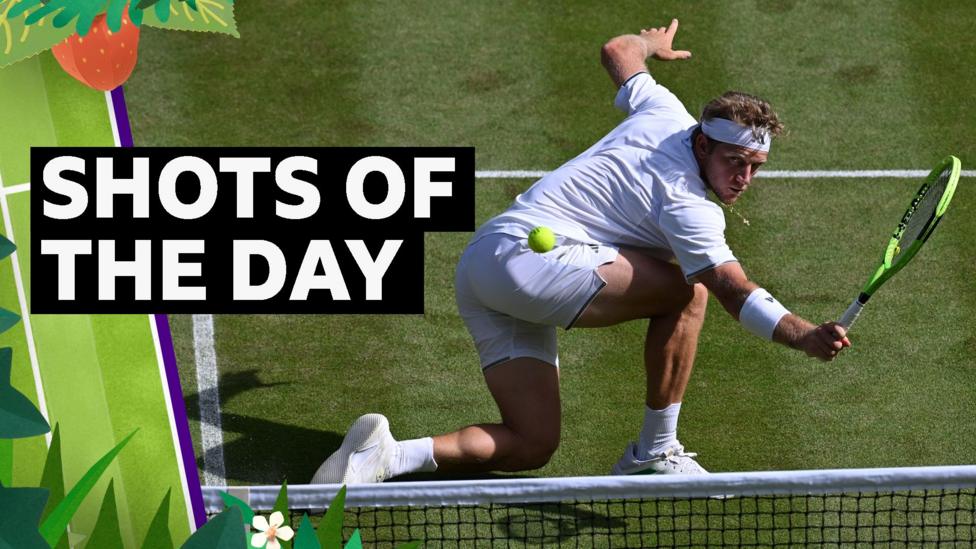
Wimbledon Day Seven: The Tactical Nuance Behind Simply Brilliant Shot-Making
Day seven at Wimbledon showcased how modern grass-court tennis blends raw power with chess-like positional intelligence.
De Minaur Finds His Grass-Court Groove on a Sweltering Wimbledon Afternoon
Alex de Minaur dismantled Adrian Mannarino in straight sets, signaling he is ready for a deep Wimbledon run.
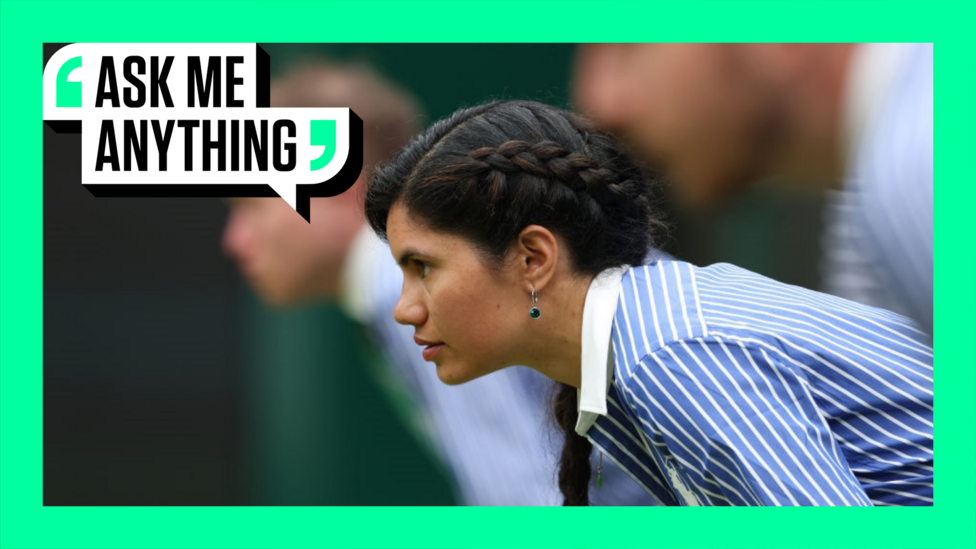
The Silence on the Grass: Wimbledon Bids Farewell to Line Judges
Wimbledon's embrace of electronic line calling ends centuries of tradition, reshaping the atmosphere of tennis's most storied tournament.