Zverev Believes Grass Awaits: The Audacity of a New Grand Slam Champion
Fresh off his Roland Garros breakthrough, Alexander Zverev carries rare momentum into Wimbledon — but grass demands a different beast entirely.
There is a particular lightness that descends upon a tennis player who has finally broken through the Grand Slam ceiling. It is not arrogance, not exactly. It is the removal of weight — the years of questions, the whispered doubts about mental fortitude, the cruel arithmetic of near-misses all dissolving in the champagne spray of a trophy ceremony. Alexander Zverev knows that feeling now. And he is letting the world know that he intends to carry it straight through the gates of the All England Club.
Speaking ahead of this year's Wimbledon Championships, the German declared that winning the title at SW19 is "definitely possible this year." Coming from most players, such a statement would register as routine pre-tournament optimism. Coming from Zverev, in this specific moment, it carries a different charge entirely.
The Weight That Lifted in Paris
For the better part of a decade, Zverev existed in a peculiar purgatory of tennis. He possessed the weapons — a thunderous serve that regularly exceeds 140 mph, a backhand that can dismantle opponents from both corners, and the kind of court coverage that belies his 6'6" frame. He had the pedigree, the work ethic, the team. What he lacked was the singular triumph that would validate the entire construction.
The 2020 US Open final, where he led Dominic Thiem by two sets before collapsing. The 2022 French Open semi-final against Rafael Nadal, where he suffered a devastating ankle injury that required surgery and sidelined him for months. The 2024 French Open final loss to Carlos Alcaraz, a five-set heartbreaker that seemed to confirm a grim pattern. These were not merely defeats. They were narrative events, each one tightening the noose of a storyline that branded Zverev as the most gifted player of his generation who simply could not win the biggest matches.
Then came Roland Garros 2025. Zverev's triumph on the Parisian clay did not just add a line to his CV. It rewired the psychological architecture of his entire career. The curse, if it ever was one, shattered under the weight of his own sustained excellence across seven rounds.
"When you finally hold that trophy, something changes permanently. You know you belong."
Why Grass Suddenly Looks Different
Zverev has never been a natural grass-court player, at least not in the way that certain champions have been. His movement, while vastly improved in recent years, still carries the slight hesitation of a man who grew up learning his craft on clay and hard courts. His results at Wimbledon reflect this — he has reached the semi-finals only once, in 2023, before losing to Alcaraz in four sets. He has suffered early exits and mid-tournament fades that suggested a fundamental discomfort with the surface.
But here is where the French Open victory changes the calculus. Zverev no longer needs to prove he can win a Grand Slam. He no longer needs to carry the psychological tax of being the best player without a major. That liberation, in theory, should unlock a freer, more aggressive version of himself on grass — a surface that rewards precisely the kind of first-strike tennis his game is built to produce.
His serve, already among the most potent on tour, becomes even more dangerous on a surface where the ball stays low and skids through the court. In his best grass-court performances, Zverev has averaged 15 or more aces per match, a number that can single-handedly tilt sets in his favor. His forehand, once a liability under pressure, has shown measurable improvement under coach Sergi Bruguera's guidance, with fewer unforced errors in crucial moments over the past twelve months.
The Tactical Equation
Wimbledon in 2025 presents a landscape that is both encouraging and treacherous for Zverev. Carlos Alcaraz, the defending champion, remains the bookmakers' favorite and the player most likely to stand in Zverev's path. Their rivalry has tilted decisively toward the Spaniard in Grand Slam encounters, with Alcaraz winning their last three major meetings.
Jannik Sinner, the world No. 1, will also arrive at the All England Club with serious aspirations, though his own grass-court credentials remain somewhat underdeveloped. Novak Djokovic, now 38, cannot be dismissed — his record at Wimbledon is the most decorated in the Open era, and his tactical intelligence on grass is unmatched even in his advancing years.
For Zverev, the path likely requires him to solve a problem that has haunted him against the top tier: closing out matches when the stakes are at their absolute peak. His French Open run demonstrated progress in this regard. He won multiple tight sets in the later rounds through a combination of aggressive returning and improved net approaches — a tactical wrinkle that could translate effectively to grass.
The Psychological Shift
There is a school of thought in sports psychology that suggests the first Grand Slam title is not the hardest to win. It is the easiest, comparatively, because everything after it carries less existential weight. Zverev appears to be subscribing to this philosophy. His public statements in the lead-up to Wimbledon radiate a confidence that feels earned rather than performed.
This is a man who has spoken openly about the mental toll of his near-misses, about the sleepless nights following the 2020 US Open collapse, about the dark months of rehabilitation after his Parisian ankle injury. He is not pretending those experiences did not happen. He is reframing them as the foundation upon which something better has been built.
The German tennis federation has noted a visible change in Zverev's demeanor during practice sessions — lighter, more willing to experiment, less burdened by the need to justify his talent. If that translates to the pristine lawns of Centre Court, he could be a more dangerous proposition than his grass-court record alone would suggest.
The Road Ahead
Wimbledon has a history of rewarding players who arrive with momentum and belief in equal measure. Goran Ivanisevic in 2001. Petra Kvitova in 2011. Even Alcaraz last year, building on his French Open triumph to claim the title. The pattern is not universal, but it is real: confidence, once properly channeled, becomes a weapon on grass in a way that it does not on any other surface.
Zverev's draw, his fitness, and his ability to adapt his clay-court form to a surface that demands sharper reflexes and lower trajectories will determine his fate. But for the first time in his career, he arrives at Wimbledon without a chip on his shoulder, without a question to answer, without a ghost to exorcise. He arrives simply as a Grand Slam champion who believes he can become a multiple Grand Slam champion.
Whether that belief proves prophetic or premature, the mere fact of its existence marks a new chapter in the story of Alexander Zverev. The best version of him has always been capable of winning Wimbledon. Now, at last, he might actually believe it — and that, on the grass of London in July, could make all the difference.
Editorial Integrity
This is an original SportPulse article written by our editorial team. All content is independently researched, written, and reviewed by our writers and editors before publication. We do not publish copied, aggregated, or syndicated content.
SportPulse is committed to original sports journalism. Read our editorial policy or contact us with any questions.
More Like This
All tennis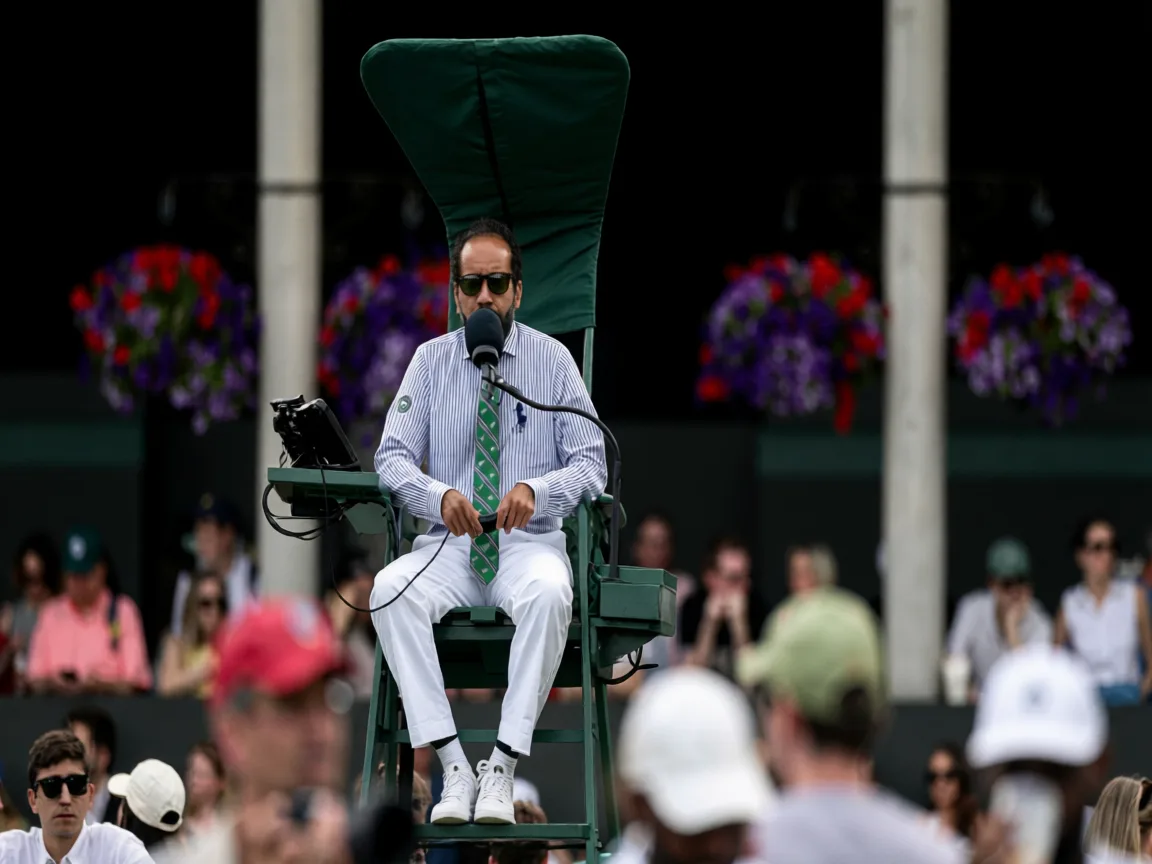
The Unsung Orchestrators: Life in the Wimbledon Umpire's Chair
Wimbledon's umpires endure pressure, weather, and biological reality. A deep dive into the hidden craft behind tennis's most prestigious officiating assignment.
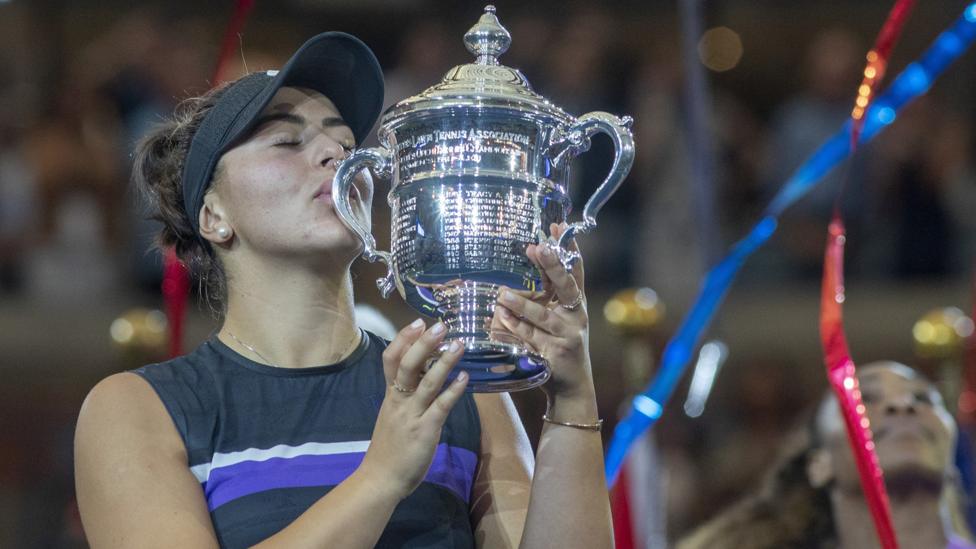
2,300 Days of Pain: How Andreescu Broke the Curse
Bianca Andreescu ended over six years of title drought, finally shaking off the curse that followed her stunning 2019 US Open triumph.
Guess the Tennis Star No. 4: A Puzzle for the Obsessed
Daily tennis trivia separates the casual fan from the connoisseur. Did you crack today's mystery player as quickly as your rivals?