Court of Broken Dreams: Inside Corfu's Most Disastrous Tennis Holiday
A budget tennis trip to Corfu promised sun, sport, and serenity. Instead, it delivered empty pools, stringless rackets, and chaos.
The Allure of the Court
There is a particular kind of madness that afflicts the recreational tennis player. It begins with the thud of a felt ball against a park fence and ends with the obsessive monitoring of weather apps. For 18 months, this delusion takes root in the damp soil of municipal courts, enduring rain-cancelled group lessons. The eventual result is a fixation on sunlight, a migratory urge to pack the rackets and seek out a court where the elements do not dictate the terms of engagement.
The dream is familiar and commercialised. It features a sweeping resort, sun loungers arranged with symmetrical precision, clay courts swept by invisible hands. This vision comes with a price tag that能使 a weekend warrior reconsider their financial priorities. The luxury tennis holiday is a cornerstone of the sport's aspirational branding. It is also, for the vast majority of enthusiasts, entirely off the table.
What remains is the DIY alternative. The pursuit of a cheap, sun-kissed court is driven by the same flawed logic that convinces players they are one new racket away from the professional tour.
The Gamble of a Budget Booking
In March, the Mediterranean is quiet. The tourist infrastructure is in a state of suspended animation between winter retreats and summer invasions. A cheap aparthotel on a Greek island seems like a strategic masterpiece. It promises spacious rooms, pretty gardens, a swimming pool, and the crucial centrepiece: a tennis court. The online listing is a masterclass in selective photography.
The decision is made, driven by sheer necessity. To play tennis abroad without remortgaging your life, you must go where the algorithms send you.
Arrival and the Architecture of Disappointment
Stepping off the plane in Corfu, the air carries the scent of wild herbs and diesel. The optimism is palpable. A holiday conjured from digital thumbnails is about to become a physical reality. The drive to the accommodation winds through olive groves, the anticipation building with every turn in the road. This is where the fantasy begins its slow, inevitable decay.
It starts with the pool. A swimming pool is a non-negotiable pillar of the sports holiday recovery routine. It is the cold plunge after the exertion, the social hub of the afternoon, the visual reward for surviving the flight. The reality is a concrete basin devoid of its essential element. No water. An empty crater reflecting the March sky, providing a stark preview of what was to come. The pool was merely the first symptom of a broader institutional neglect.
The Unstrung Racket
Tennis holidays are predicated on equipment. In the damp chill of a home court, players agonise over string tension, grip size, and the precise weight of their frames. When traveling, the assumption is that a borrowed racket will suffice. The aparthotel was supposed to provide the gear. It did, technically. The rackets existed. They were tangible objects.
They were, however, utterly useless. The rackets had no strings. They were skeletal frames, hollow reminders of a sport that requires its tools to be functional. A racket without strings is a philosophical object. It prompts meditation on absence. To hold a frame that cannot hit a ball is an exercise in frustrated geometry.
This absence of strings killed the central purpose of the trip. The concrete court, ringed by unkempt gardens, sat there as a silent monument to the failure of logistics.
The Amateur Hustle and the Reality of the Game
What drives otherwise rational adults to plan a sports pilgrimage predicated on a cheap aparthotel and borrowed equipment? It is the same impulse that fuels the £30 billion global sports tourism industry. It is the chase for the perfect rally. The amateur player is not looking to win trophies. They are looking for the rhythmic, hypnotic cadence of a baseline exchange. It is the visceral feeling of a ball connecting with the sweet spot.
Recreational tennis is an act of faith. You commit to the sport knowing that 90% of your attempts to hit a topspin forehand will end in failure. You persist because the 10% of shots that work feel transcendent. This faith extends to travel. You believe that a change of scenery will elevate your game. You convince yourself that the sun on your back and the sea breeze in your face will unlock a level of coordination that has eluded you in a Clapham park.
The Corfu trip was the ultimate test of this faith. The court was there. The sun was there. The desire was there. What was missing was the fundamental infrastructure that makes tennis possible.
Every day brought a new disaster.
The Family Affair
An empty pool and stringless rackets would be enough to derail a standard holiday. But this was a sports holiday, a format that demands a higher level of organisational competence. The family-run restaurant attached to the aparthotel was the third act of this tragedy.
The restaurant was supposed to provide the caloric fuel for athletic exertion. Carbohydrates are the lifeblood of the tennis player. But the family running the establishment seemed unaware of their role in the athletic ecosystem. At this stage in the holiday narrative, it would be redundant to catalogue the full extent of the culinary failures. Suffice it to say, the experience fell short of the nutritional and spiritual requirements of the recovering athlete.
The Lasting Lessons of a Holiday Gone Wrong
The great tennis trips are built on an unspoken contract between the player, the court, and the environment. When that contract is broken, the ensuing chaos forces a reassessment of what is truly important.
This trip to Corfu, despite the litany of disasters, was not a complete failure. It was an education in the reality of modern sports tourism. It exposes the fragility of the budget dream. To travel for sport is to surrender control to unseen forces. To travel cheaply is to concede any right to complaint when the swimming pool is a concrete husk and the rackets are mere ornaments.
The sport is the only constant. A court with no net, a racket with no strings, a pool with no water. These are the obstacles. The test is whether the desire to play survives the infrastructure.
Editorial Integrity
This is an original SportPulse article written by our editorial team. All content is independently researched, written, and reviewed by our writers and editors before publication. We do not publish copied, aggregated, or syndicated content.
SportPulse is committed to original sports journalism. Read our editorial policy or contact us with any questions.
More Like This
All tennis
The Wimbledon Mirror: Sinner, Serena, and the Self
Wimbledon is a test of identity as much as skill, revealing whether you carry the glacier calm of Sinner or the fire of Serena.
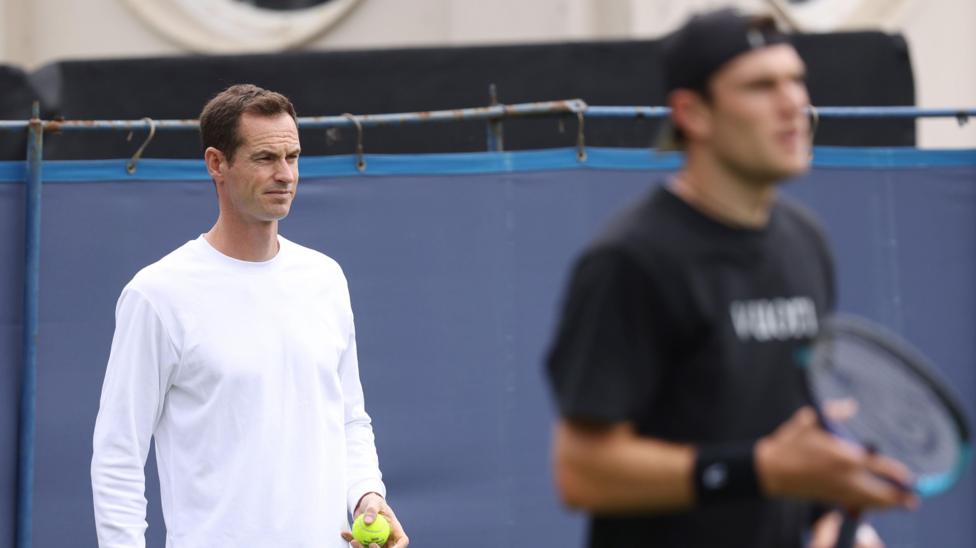
Murdy Tempted Back: Coaching Draper and the Shadow of a Serena Return
Andy Murray opens up on coaching Jack Draper, the void of retirement, and whether a Serena-style comeback could ever tempt him back on court.

Sinner's Wimbledon Coronation: From Paris Ruin to Grass Court Empire
Jannik Sinner turned a humiliating Paris collapse into a fifth Grand Slam title, redefining his game on Wimbledon's lawns.