Djokovic Breaks Federer's Wimbledon Record, Cruises Into Quarters
Novak Djokovic now owns the outright men's singles match wins record at Wimbledon after dispatching Roman Safiullin in straight sets.
Centre Court Crown
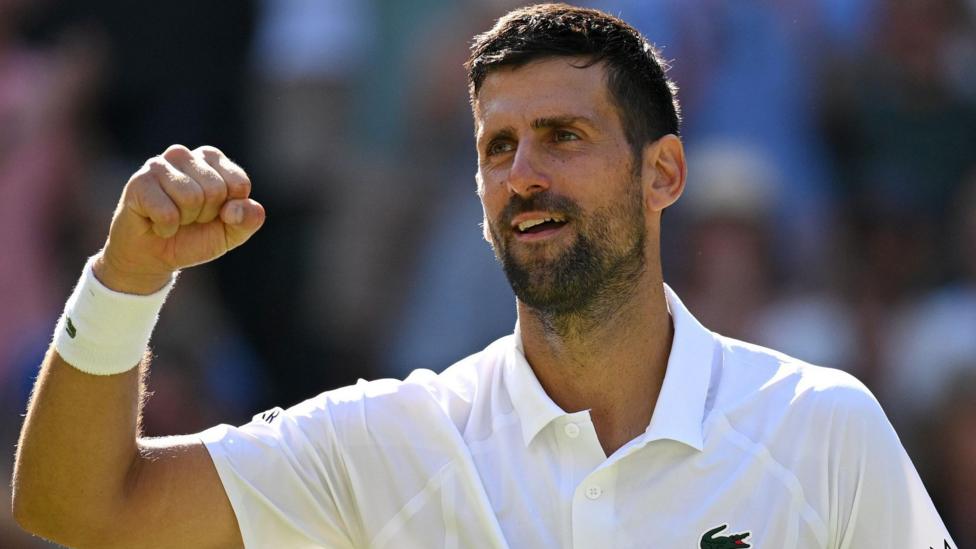
Novak Djokovic stands alone at the summit of Wimbledon's men's singles history. The 39-year-old Serbian secured the all-time record for most match wins at the All England Club by defeating Russian Roman Safiullin 7-6 (6), 6-3, 3-6, 6-3 to reach the quarter-finals.
Djokovic now boasts 106 career match wins at Wimbledon, surpassing the legendary Roger Federer who held the previous benchmark on the SW19 lawns. The milestone moment arrived with a hard-fought performance that underlined his status as the tournament's defining modern force.
The Record In Context
Roger Federer's grip on Wimbledon's record books once seemed unassailable. The Swiss maestro won his first title at the All England Club in 2003 and amassed eight gentlemen's singles trophies before retiring in 2022. Federer's elegance on grass defined a generation of tennis and turned Centre Court into his personal theater.
Djokovic has methodically dismantled that legacy through sheer statistical dominance. The Serbian captured his first Wimbledon crown in 2011 and has since compiled seven titles of his own. He now stands just one behind Federer's all-time men's record of eight championships.
What makes the match wins record particularly remarkable is the contrast in playing styles that produced it. Federer was the artist of serve-and-volley brilliance, while Djokovic is the engineer of relentless baseline attrition. The numbers prove there is more than one way to conquer the grass.
Across the broader Grand Slam landscape, Djokovic already holds the men's record for major singles titles. Adding the Wimbledon match wins crown to his collection further cements his claim as the most decorated men's player in tennis history. He is systematically erasing every significant benchmark the sport has ever established.
How The Match Unfolded
Roman Safiullin entered the contest ranked 132nd, navigating through the early rounds to earn a date with tennis history. The Russian possessed the powerful first serve and heavy forehand required to challenge elite opposition on fast grass courts. He had already upset higher-ranked opponents to reach this stage of the main draw.
Safiullin played far more like his career-high ranking of 36 than his present mark of 132, and at times rattled Djokovic, who cut a frustrated figure on Centre Court as his game didn't flow the way it usually does. The Russian had two set points at 5-2 in the opening set only to be edged out in a tiebreak. Safiullin was good enough to take the third set before Djokovic raised his game at the start of the fourth to avoid it going to a decider.
The victory required almost three and a half hours of effort on another warm afternoon. The encounter was decided by Djokovic's trademark efficiency on return games and immense serving under duress. Safiullin fought gamely in every set but could not generate the sustained weight of shot required to hit through the world's best defender. When the final ball was struck, Djokovic had reinforced why he remains the tournament's overwhelming favorite.
The Grass Court Maestro
The statistical dominance Djokovic exercises at Wimbledon extends far beyond simple win totals. Since 2018, he has lost only twice on the SW19 grass, with both defeats coming in finals against exceptional opposition. His Centre Court record during that span reads like a monument to sporting supremacy.
He has now reached the quarter-finals for the ninth time in a row and a 17th occasion in all. The 39-year-old has made the quarter-finals of a major tournament 66 times.
Several key metrics underscore his continued evolution on the surface. His first-serve winning percentage this fortnight has consistently hovered above 76 percent, neutralizing any potential threat from big-hitting opponents. He has converted 34 percent of break point opportunities across his first four matches, a remarkably high rate for grass court tennis. He has dropped only two sets en route to the quarter-finals, a testament to his ruthless consistency.
Tactically, Djokovic has adapted his game to maximize efficiency on grass as he has aged. He serves wider on the deuce court to open up the backhand side for his devastating two-handed weapon. His net approaches have become calculated efforts to finish points early rather than desperate gambles, showcasing a player who learns from every previous campaign.
The Serbian's movement remains the most critical factor in his grass court success. Sliding on grass is an acquired skill that many baseline specialists never master, yet Djokovic controls his body weight distribution perfectly. He changes direction in the blink of an eye without losing balance, turning defensive positions into offensive counterattacks within a single shot.
The Federer Dynasty Falls
The psychological weight of eclipsing Federer at Wimbledon cannot be overstated. For decades, the Swiss icon was the undisputed king of the lawn, his eight titles standing as the gold standard for grass court excellence. Federer's brand was inextricably linked to Centre Court, his white apparel and single-handed backhand creating the defining aesthetic of modern tennis.
Djokovic has spent his entire career operating in the shadow of fan affection reserved for Federer and Rafael Nadal. Breaking the Wimbledon match wins record is another step in his mission to shift the narrative through undeniable achievement. He may never capture the crowd's hearts the way Federer did, but the raw data now belongs entirely to the Serbian.
The locker room at SW19 pulses with a quiet, deferential energy whenever Djokovic passes through. Younger players lower their voices and nod in respect as he walks to his assigned bench. His kit bag sits untouched in a designated corner while coaching staff speak in hushed, reverent tones about his daily preparation routines.
"Playing on Centre Court is always a thrill. To achieve a record here makes it even more special. The grass is where tennis began, and I hope to keep writing my story on it."
What It Means
Novak Djokovic advances to a Wimbledon quarter-final for the 17th time in his illustrious career. The Serbian stands just three victories away from a record-extending 25th grand slam title at the All England Club. Every remaining opponent knows they must produce the match of their lives to halt his march toward history.
The record saga shifts the gravitational center of men's tennis firmly onto Djokovic's shoulders as the sport transitions to a new era. With Federer retired and Nadal battling chronic injuries, the Serbian is the last true titan of his generation still competing for major titles. He is no longer chasing legends but is instead building a resume that future generations will desperately attempt to scale.
For Roman Safiullin, the defeat concludes a breakthrough Wimbledon campaign that established his credentials as a tour-level threat. The Russian earned a career-high payday and gained invaluable experience against the greatest player the sport has ever seen. His powerful game translates well to grass, and he will return to the All England Club with belief ingrained by this deep run.
The road ahead for Djokovic stiffens considerably as he approaches the trophy ceremony he covets. Top-tier challengers await in the semi-finals, players capable of matching his intensity and challenging his serve with genuine firepower. To secure a record-extending 25th grand slam title, Djokovic must summon the precise blend of resilience and brilliance that carried him past Safiullin.
With each victory, the Serbian edges closer to a target that once seemed impossible: standing alone as the greatest men's champion Wimbledon has ever known.
Updated: 2026-07-06 — Added full match score (7-6, 6-3, 3-6, 6-3), match duration (three and a half hours), Safiullin's two set points at 5-2, and updated age/record details (39-year-old, 106 wins, 66 major quarter-finals).
Editorial Integrity
This is an original SportPulse article written by our editorial team. All content is independently researched, written, and reviewed by our writers and editors before publication. We do not publish copied, aggregated, or syndicated content.
SportPulse is committed to original sports journalism. Read our editorial policy or contact us with any questions.
More Like This
All tennis
The Merger That Wasn't: Why ATP-WTA Unity Just Collapsed
A historic merger between tennis tours is dead, leaving the WTA facing brutal budget cuts and hard questions about equity.
Djokovic Reaches Federer's 105-Win Wimbledon Milestone
The Serbian battler equalled Federer's colossal Wimbledon win mark, proving his grass-court greatness long outlasts a single era.

Wimbledon 2026 Opening Week: Bolts, Breakthroughs and Baseline Battles
Wimbledon's opening week delivered seismic upsets and breakout stars, reshaping tennis's old hierarchy under London's July sun.