Russell Seizes Austrian GP Glory After Verstappen-Norris Collision Explodes
George Russell inherited victory in Spielberg after a furious duel between Verstappen and Norris ended in contact and tears.
A Duel That Disintegrated
The Austrian Grand Prix delivered what Spielberg's short, savage circuit always threatens to produce: a title-fight collision that scattered carbon fiber across the Styrian hills and left the championship picture looking radically different from how it stood 71 laps earlier. George Russell inherited the victory after Max Verstappen and Lando Norris made contact while disputing the lead, a moment that will dominate post-race debriefs for weeks.
The Red Bull Ring is unforgiving by design. At just 4.318 km, it is the shortest full-length circuit on the calendar, and its combination of long straights, heavy braking zones, and a DRS-saturated layout means cars spend an extraordinary amount of time within touching distance of each other. The three DRS zones give the following car a genuine weapon, but they also create a dangerous paradox: the attacker gets close enough to attempt a pass, yet the defender retains enough pace to counterattack on the following straight. Neither driver gives ground. Neither can afford to.
For roughly 20 laps, Verstappen and Norris traded blows with the intensity of a boxing championship round. Norris, on fresher rubber and armed with a McLaren that had shown supreme race pace all weekend, kept probing the inside at Turn 3 and the outside at Turn 4. Verstappen, defending with the relentless aggression that has defined his career, covered every move. The tension was visible in the onboard footage: both cars twitching under braking, both drivers using every centimeter of track and then some.
The Contact
The decisive moment came with approximately 10 laps remaining. Norris launched another attack into Turn 3, getting his front wing alongside Verstappen's rear wheel. Verstappen moved to cover the inside, and the two cars touched. Norris sustained significant damage to his front wing and left-front suspension, forcing him to retire. Verstappen limped on with a wounded car but later received a 10-second time penalty and two penalty points on his superlicence for causing the collision.
The stewards' decision was swift and unequivocal. Verstappen's defensive move was judged to have left insufficient room, a verdict that will do nothing to quiet the debate about his wheel-to-wheel ethics. It also underlined a recurring theme of the 2024 season: when the car behind is genuinely fast enough to challenge, Verstappen's margin for error evaporates, and his instinct to defend at all costs becomes a liability.
The Lucky Winner
Russell had been running a quiet, disciplined race in third position, keeping his Mercedes in clean air and managing his tyres through the stint cycles. When the carnage unfolded ahead, he was perfectly placed to sweep through. His victory was not handed to him; Mercedes had executed a near-flawless strategy, and Russell's tyre management over the final stint was textbook. But there is no pretending he would have beaten a healthy Verstappen or Norris on pace alone.
Oscar Piastri finished second for McLaren, a result that cushioned the blow of Norris's retirement but also highlighted what might have been. Piastri drove with composure, never quite matching Norris's outright pace but avoiding the kind of overcommitment that cost his teammate. Carlos Sainz completed the podium for Ferrari, another solid haul for a driver who knows his seat is under threat from Lewis Hamilton next season.
Hamilton himself came home fourth in the second Mercedes, losing out to Sainz in the closing laps after a strategy that left him on older tyres in the final stint. Verstappen, despite the penalty, salvaged fifth place, a result that kept his championship lead intact but trimmed it significantly.
Strategy Breakdown
McLaren's Gamble
McLaren rolled the dice on an aggressive undercut strategy for Norris, pitting him early in the second stint to gain fresh rubber and the ability to attack Verstappen. On paper, it was the correct call: the MCL38 had shown superior low-fuel pace, and the undercut at Spielberg is powerful because the pit lane is relatively short and the out-lap gains are amplified by the circuit's tight lap times.
The strategy worked in terms of pace. Norris emerged from his second stop with enough grip to reel Verstappen in at roughly 0.4 to 0.5 seconds per lap. But it also meant he had to make the pass on track rather than through the pit window, putting him in the firing line for exactly the kind of collision that occurred. McLaren's pit wall calculated the risk and backed their driver. The reward never came.
Mercedes' Patience
Mercedes played the long game. Russell ran a conservative middle stint, staying out longer than the McLarens and Red Bulls before switching to the hard compound for the final run. This gave him fewer laps on fresh rubber but ensured he was not caught in the crossfire of the Verstappen-Norris battle. It was a strategy predicated on others making mistakes, and it paid off spectacularly.
Red Bull's Defensive Posture
Red Bull's strategy was entirely reactive. With Verstappen struggling for rear grip in the high-speed corners, his engineers opted to cover McLaren's moves rather than dictate the race. The problem was structural: Spielberg's layout rewards cars that can generate downforce efficiently through the fast sweeps of Turns 6-7 and the penultimate corner, and the RB20 was showing signs of degradation in exactly those areas. Verstappen was driving beyond the car's natural balance, which is precisely why his defensive moves became increasingly desperate.
By the Numbers
- Russell's win was his first of the 2024 season and Mercedes' first since the 2023 season finale in Abu Dhabi
- Verstappen's 10-second penalty dropped him from what would have been a podium position to fifth
- Norris retired for the first time in 2024, ending a run of consecutive points finishes that stretched back to the previous season
- The McLaren double-podium (Piastri P2, effectively P1-P2 in pace terms) reinforced the team's status as the closest challenger to Red Bull
- Ferrari scored Sainz P3 and Leclerc in the points, a damage-limitation weekend given the car's struggles with high-fuel balance
Championship Implications
Verstappen's lead in the drivers' standings took a hit but remains substantial. The real damage is psychological. This is the second time in recent races that a wheel-to-wheel battle with Norris has ended in controversy, and the narrative that Verstappen cannot handle genuine, sustained pressure is gaining traction.
For Norris, the retirement is a gut punch. McLaren had the fastest car in Spielberg and walked away with nothing for their lead driver. The constructors' championship picture, however, remains fascinating: McLaren's combined haul with Piastri's second place keeps them firmly in the fight with Red Bull, whose second car continues to underperform.
Russell, meanwhile, has reminded Toto Wolff that the 2025 seat alongside Hamilton's successor is not a foregone conclusion. This was a victory built on patience, execution, and racecraft, qualities that every team principal values above raw speed.
What's Next
The paddock heads to Silverstone for the British Grand Prix, a circuit that will reward the aerodynamic efficiency of the McLaren and the high-speed balance of the Mercedes. Verstappen will be looking to reassert dominance, but after Spielberg, the question is no longer whether he can be beaten on pace. It is whether he can handle the pressure when someone does.
Updated: 2026-06-29 — Added detail that Russell's victory cut into teammate Kimi Antonelli's championship lead.
Update:
安德鲁·本森分析拉塞尔胜利的信心提升效应。
Editorial Integrity
This is an original SportPulse article written by our editorial team. All content is independently researched, written, and reviewed by our writers and editors before publication. We do not publish copied, aggregated, or syndicated content.
SportPulse is committed to original sports journalism. Read our editorial policy or contact us with any questions.
More Like This
All f1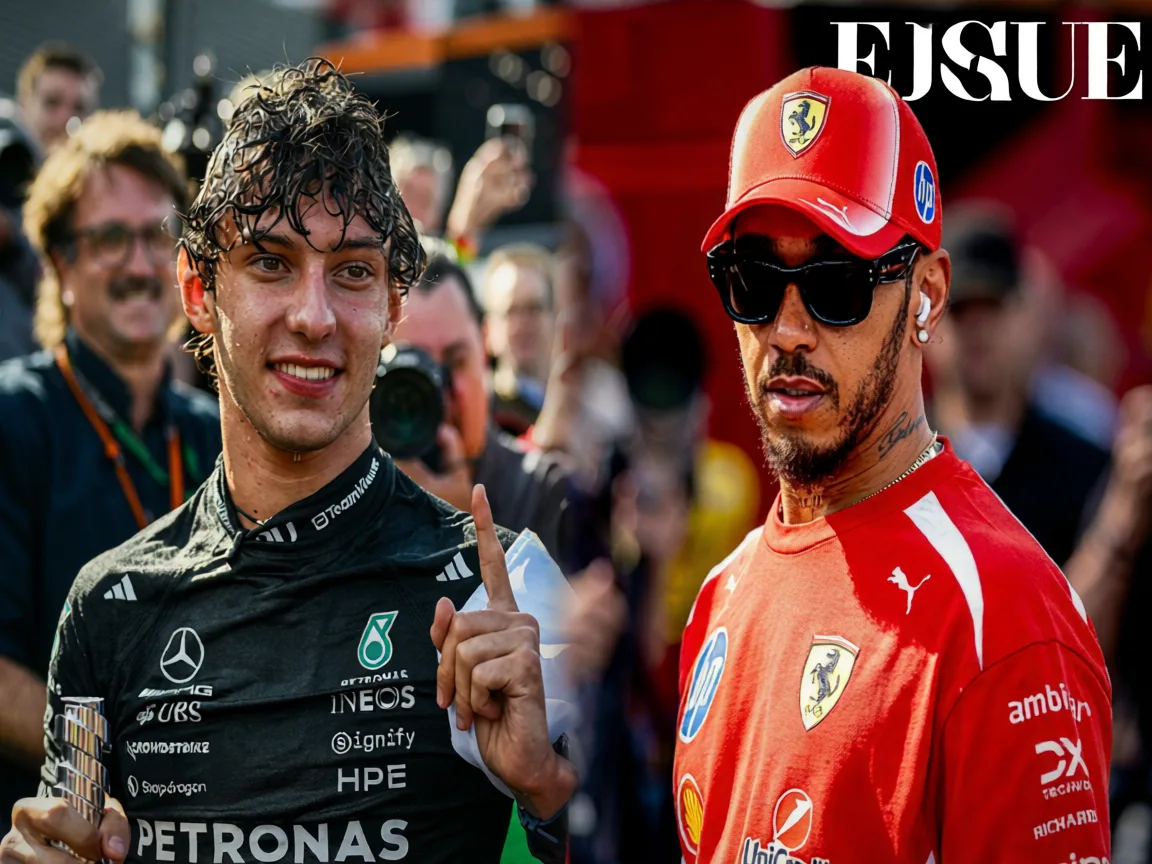
Antonelli Shines as Hamilton Struggles Through Italian GP Chaos
Andrea Kimi Antonelli delivered a near-perfect weekend while Lewis Hamilton endured a drama-filled afternoon at Monza.
Monaco: The Circuit That Breaks Every F1 Engineering Playbook
Monaco's serpentine streets demand a radical engineering reset — and reward teams who master low-speed chaos over raw pace.
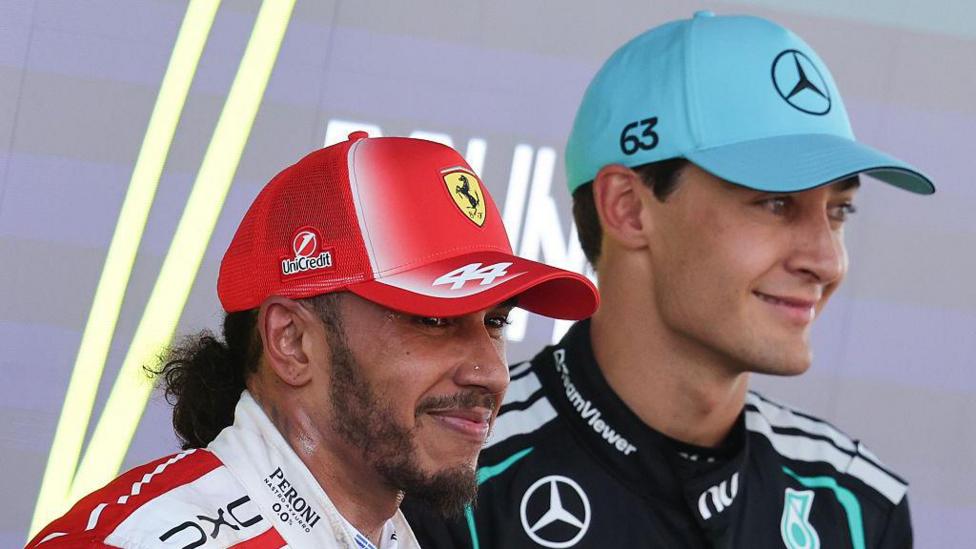
Russell Eyes Hamilton and Ferrari as Championship Dark Horse in 2025
Mercedes driver George Russell names Lewis Hamilton's Ferrari switch as the biggest title threat heading into the new season.