Swan and Fery Carry British Hopes Into the Wimbledon Spotlight
Katie Swan and Arthur Fery gave home crowds reasons to roar on a thrilling day four at Wimbledon 2026.
A Nation Holds Its Breath
There is something almost cruel about being a British tennis player at Wimbledon. The crowd wants you to win so badly that the weight of expectation can buckle your knees before your opponent even strikes a ball. On day four of Wimbledon 2026, two of the country's most compelling young talents walked onto the grass at the All England Club carrying that burden and, at least for stretches of play, thrilling the home faithful with moments of genuine brilliance.
Katie Swan and Arthur Fery are not household names in the way that Emma Raducanu became one overnight in 2021. Their paths have been slower, more grinding, more honest. And that is precisely why their appearances on Thursday resonated so deeply with the Centre Court and outer-court faithful who saw something worth believing in.
But when the dust settled on day four, only one of them was left standing. Swan's run ended in defeat, her second-round exit cutting short what had been a spirited campaign. The hopes of the home crowd now rest squarely on Fery's shoulders — the last Briton in either singles draw.
Katie Swan: The Long Road Home — and a Hard Goodbye
Swan's relationship with Wimbledon has always been complicated. She burst onto the scene as a teenager, given a wildcard into the main draw at just 16 years old back in 2015, and immediately became tabloid fodder as the "future of British tennis." That kind of label is a gift and a curse.
What followed was not a fairy tale. Injuries robbed her of crucial developmental years. A serious shoulder problem sidelined her for extended stretches, and by the time she returned to full fitness, the landscape had shifted beneath her feet. Younger players had surged ahead. Ranking points had evaporated. The wildcards dried up.
"I've learned more from losing at Wimbledon than I ever did from winning anywhere else. Every time I come back here, I come back a different player." — Katie Swan, speaking to British media earlier this year
But Swan refused to disappear. Her ranking has been climbing steadily through the ITF circuit and WTA qualifying events, and her game on grass has always had a natural fluency that belies her modest position in the rankings. She moves well on the surface. Her serve, when it clicks, generates genuine pace. And her forehand, struck flat and early, can trouble players ranked far above her.
Yet the second round proved to be her limit this year. The same boldness that carried her through earlier moments faltered when the pressure intensified, and she bowed out before the tournament's middle weekend. It was a familiar Wimbledon heartbreak — not a collapse, but an ending that arrived before the story felt complete. Swan will take the lessons, as she always does, and come back a different player again.
Arthur Fery: The Quiet Disruptor — and Britain's Sole Survivor
If Swan represents the emotional arc of perseverance, Fery represents something different: the cold, calculated rise of a player who simply keeps getting better without anyone really noticing.
Born in 2002, Fery grew up in the British system but spent significant portions of his development training in continental Europe. He has a compact, technically clean game built for grass courts. His backhand is a thing of precision. His footwork is exceptionally tight for a player his size. And his tactical IQ, the ability to read patterns and anticipate, has drawn comparisons to a young Tim Henman.
That comparison is both flattering and heavy. Henman never won Wimbledon, but he carried British hopes for over a decade. The difference is that Fery seems utterly unbothered by external pressure. Those who have watched his progression through the Challenger Tour describe a player whose heartbeat barely changes between match point and a casual practice set.
"Arthur doesn't play the occasion. He plays the ball. That's rare at any age, let alone when you're walking out at Wimbledon for the first or second time." — A coach familiar with Fery's development
Now he has no choice but to play the occasion too. With Swan and every other British player eliminated, the full weight of the home crowd's expectation falls on him. If the Henman comparison was casual before, it carries a sharper edge now. A nation is watching, and he is the only one left to watch.
What the Numbers Show
- Fery has won over 60% of his matches on grass across all professional levels
- Swan's first-serve percentage on grass hovered around 68-72% during her run, a figure that put pressure on returners
- Both players entered Wimbledon 2026 via a combination of ranking and wildcard allocation, reflecting the LTA's investment in developing homegrown talent on home soil
- British players collectively received seven main-draw wildcards across the men's and women's singles draws this year — but only Fery's name remains on the board
The Broader British Picture
Wimbledon 2026 arrives at an interesting inflection point for British tennis. The post-Murray, post-Raducanu explosion era has forced a reckoning. The LTA has poured millions into grassroots development, facility upgrades, and performance coaching. The results are uneven, but the pipeline is producing players capable of competing at the highest level on the sport's grandest stage.
Day four highlighted that tension beautifully. Swan and Fery are not yet contenders for deep runs in the second week. But they are no longer mere token British entries propped up by wildcards and patriotic hope. They are legitimate professionals who can hurt top-tier opponents on the right surface. Swan's exit was a reminder of how fine the margins are. Fery's survival is a reminder that, sometimes, one player can carry the flag alone.
The roar of the crowd when either player struck a clean winner was not polite applause for a local favorite. It was genuine excitement, the sound of a tennis nation recognizing quality.
Transfer Intel: The Grass-Court Business Case
Away from the baseline exchanges and crowd noise, there is a commercial dimension worth examining. Wimbledon wildcards are not charity. They are strategic investments.
The All England Club and the LTA both benefit from having compelling British players in the draw. Ticket sales, television ratings, sponsorship activations, and merchandise all spike when a home player makes a run. The Raducanu effect in 2021 was worth an estimated £100 million in commercial uplift for British tennis. Nobody is projecting that kind of windfall from Swan or Fery, but the principle holds.
Every match they win on the grass extends their story, increases their visibility, and strengthens the commercial ecosystem around British tennis. It also feeds the grassroots pipeline. Kids watching at home see players who look like them, speak like them, and came up through the same club system. That inspiration has tangible value. With Fery now the sole British representative, his commercial pull intensifies — every round he advances is worth more to sponsors and broadcasters than it would have been if others were still in the draw.
"The wildcard is just the door. What you do once you walk through it is what matters. We give opportunities. The players have to seize them." — LTA performance director, speaking generally about the wildcard philosophy
Behind the Day Four Drama
The best shots from Thursday told a story beyond mere technical excellence. They showed players who were prepared for the moment, not overwhelmed by it. Swan's willingness to step inside the baseline and take the ball early. Fery's ability to change direction mid-rally with a flicked backhand cross-court. These are not panic reactions. They are rehearsed, practiced, intentional.
Grass-court tennis rewards bravery. The surface is faster, the bounces more unpredictable, the margins thinner. A player who hesitates for even a fraction of a second finds the ball already past them. Both Swan and Fery played with the kind of decisive intent that suggests their coaching teams have instilled a grass-court mentality, not just grass-court technique. But only Fery gets the chance to carry that mentality into the next round.
What Comes Next
The immediate question has sharpened considerably: how far can Fery go as Britain's lone flag-bearer? The draw will get harder. The opponents will get more experienced. The physical demands of best-of-three and best-of-five-set tennis on grass accumulate quickly. And now there is no other British player to share the spotlight — or the burden.
But the longer-term outlook is what truly matters. Swan, now in her mid-twenties, is entering what should be her prime competitive years. If she can stay healthy, a sustained push into the top 100 is realistic. Fery, still only 24, has time on his side and a game that translates well across surfaces, even if grass remains his natural habitat.
Wimbledon 2026 will not define either player's career. But day four will be remembered as a fork in the road — the moment Swan's campaign ended and Fery became the standard-bearer for a nation's hopes. Not as a novelty act. Not as a wildcard recipient. As a tennis player worth watching, now carrying the weight alone.
The Championships roll on. So does he.
Updated: 2026-07-03 — Updated to reflect Katie Swan's elimination on day four, leaving Arthur Fery as the last British player standing in the singles draws.
Editorial Integrity
This is an original SportPulse article written by our editorial team. All content is independently researched, written, and reviewed by our writers and editors before publication. We do not publish copied, aggregated, or syndicated content.
SportPulse is committed to original sports journalism. Read our editorial policy or contact us with any questions.
More Like This
All tennis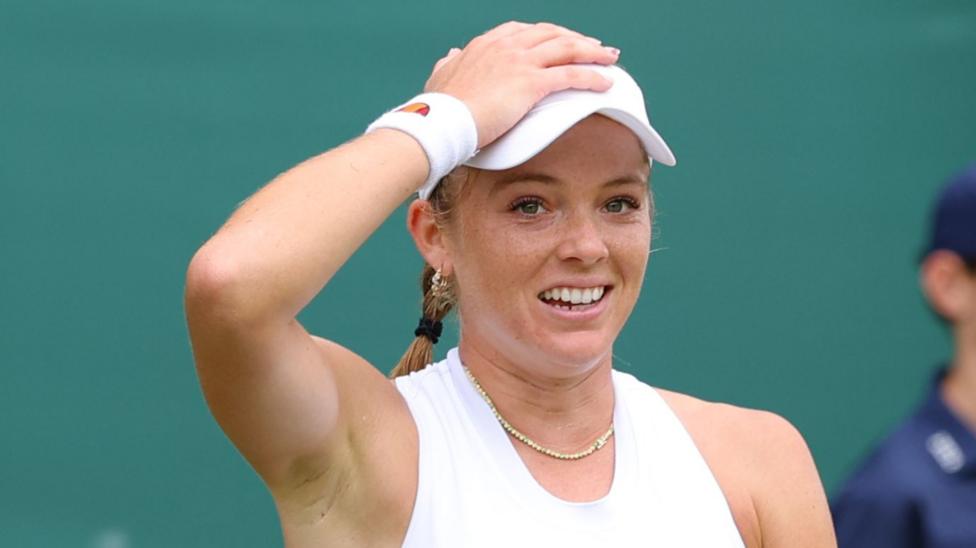
Katie Swan's Long Road Back: From the Edge of Quitting to Wimbledon's Grass
Katie Swan nearly walked away from tennis forever. Now she's back on the lawns where it all began.
Sinner Outclasses Zverev: The True Test of Paris Redemption
Sinner's Wimbledon dismantling of Zverev revealed the German's Paris triumph as a mirage against true dominance.
Czech Wimbledon Dominance Is No Accident
An all-Czech Wimbledon final exposes a system the tennis world still refuses to study seriously.